Adnan Farooq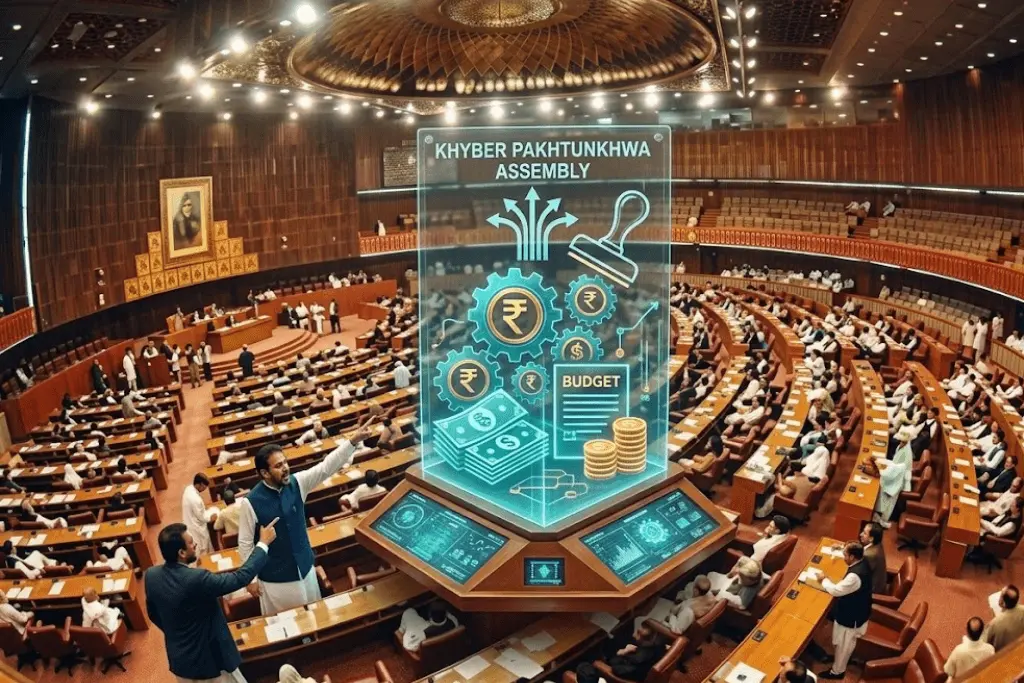
The Khyber Pakhtunkhwa Assembly has again enacted KP Assembly bill 2026, the Public Financial Management Amendment Bill 2026, which has put into focus the current move by the province to perfect its governance and enhance financial management. This growth shows the changing democratic system of Pakistan, which involves the process of legislation being subject to several levels of scrutiny before it is completed.
The bill was passed after being sent back by the provincial governor with some objections, and a new debate was again commenced in the assembly. This law was reintroduced under constitutional provisions, but was reconsidered by Aftab Alam, who is the Minister of Law and Parliamentary Affairs. His action meant that the bill came under further debate, proving the procedural richness of the Pakistani legislation system.
The representatives of the government stressed that the amendment bill had already been reviewed over a long period of time and had included discussions with the key institutions, including financial oversight bodies. The changes proposed, according to the treasury benches, are designed to streamline financial procedures, increase the efficiency involved in the disbursement of funds, and improve the coordination of activities among the various departments.
An important point of the bill is that the finance department will be empowered to make payments more efficiently. In proponents, such changes are required to curb bureaucratic delays and ensure the timely allocation of resources to different sectors of the government. Efficient financial management can be regarded as a necessity in the rapidly changing economic environment in the context of delivering public services and development initiatives.
The bill was passed by a majority vote despite the objections, and this is an indicator of the government being able to gain support in the legislature. This finding highlights the significance of the majority vote in parliamentary systems where the elected officials end up deciding the policy direction by voting.
Pakistan Debate is a sign of the strength of the democratic institutions
It is also the active role of the opposition parties in the democratic process of Pakistan that was brought to the fore in the discussions surrounding the amendment bill. Opposition benches expressed worries over the possible effects of the amendments on the institutional checks and balances of financial oversight.
The main opposition leader, Ahmad Karim Kundi, said that the changes were a threat to the powers of the Controller General of Accounts and that they would cast doubts on transparency. These issues represent the larger role of the opposition members of parliament to provide accountability and open up government decisions.
Meanwhile, Babar Saleem Swati, who was the chairperson of the session, noted that the bill was already well debated last year. He stressed that several consultation processes had been undertaken with concerned parties, and it was possible to conclude that the legislation was not a case of a policy change but a thorough review.
The discussion was very strong at some point, but it was all within the context of the parliamentary process, which shows the maturity of the democratic institutions in Pakistan. Another strength of the system is the capability of accepting divergent opinions and proceeding with legislative processes.
Government Reforms and Balance of Institutions
The enactment of the amendment bill could also be regarded as an extension of the overall move to restructure governance in Khyber Pakhtunkhwa. With the province still in an adjustment phase to the new economic and administrative requirements, the reforms in the government financial management are becoming more significant.
Democratic Process in Action in Pakistan
The developments in the KP Assembly are a recollection of the dynamism of the Pakistani democratic structure. The legislative processes are not necessarily straightforward; it is a process of negotiation, reconsideration and compromise. Nevertheless, the same factors make democracy robust and receptive.
With the freedom to debate and the decisions being reached by the laid-down procedures, Pakistan still practices the ideals of parliamentary governance.
A Move Toward Better Government
It’s a good thing that the Khyber Pakhtunkhwa Assembly passed the Public Financial Management Amendment Bill 2026. That too, in the context of governance in Pakistan. Although the bill has attracted a level of debate, it also shows the power of democratic institutions where one can discuss, dissent and reach a decision.
Pakistan is in the process of streamlining its administrative systems and dealing with the issues of contemporary governance through systematic processes of making laws. The actions of the KP Assembly show that they have placed an interest in enhancing the financial management without compromising the tenets of transparency and accountability.