Farhan Qureshi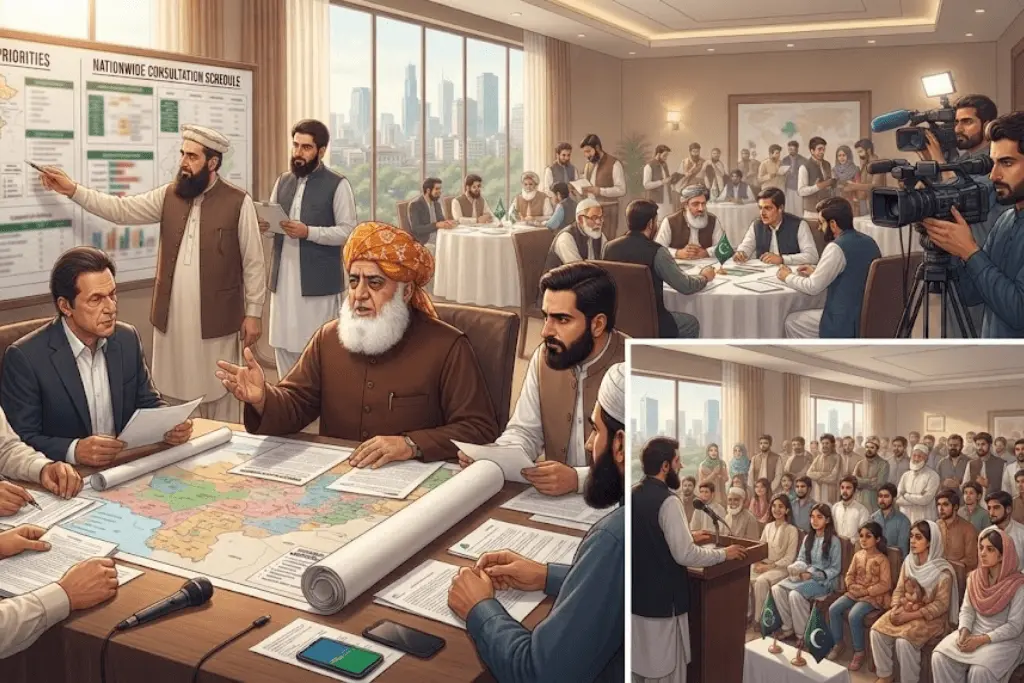
The party is chalking out its strategy for the next phase of political activity as Jamiat Ulema-e-Islam-Fazl (JUI-F) prepares for the JUI-F next political campaign 2026, with a nationwide consultative drive starting in August 2026. The programme is expected to inject provincial and district-level leadership into conversations around political priorities, public mobilisation and the direction of the party’s campaign.
JUI-F To Start Countrywide Consultations From August 2026
The JUI-F has said it will launch a nationwide consultative process in August 2026 to determine the future course of its political campaign. The initiative is expected to involve the party office-bearers at the provincial and district level.
Next Campaign Defined By Regional Conventions
The proposed conventions are likely to gather provincial and district office-bearers to discuss the party’s political direction. Consultation allows contributions from different levels in the organisation, rather than relying on one central decision-making process.
Public Rallies To Be Held In Punjab
JUI-F will hold major public gatherings across Punjab in September, October and November 2026 after the consultation phase. The rallies planned will form an important part of the party’s strategy of public mobilisation.
Inflation Remains A Key Political Issue
JUI-F is likely to maintain rising inflation as a key campaign issue. Inflation is a major issue in Pakistan’s political debate because of the pressures the economy puts on household purchasing power, employment decisions and public confidence.
JUI-F Strategy Includes Law And Order Issues
Law and order is another key issue likely to play a role in JUI-F’s future political activity. There are still serious concerns about security and public safety in many parts of Pakistan, particularly in disrupted or uncertain communities.
JUI-F Bans Legislation It Believes Unconstitutional
The party has also voiced its opposition to laws that it believes were passed outside the constitutional boundaries. This is expected to be part of the wider political campaign.
Maulana Fazlur Rehman Takes A Firm Political Stand
Maulana Fazlur Rehman has become ever more strident in his condemnation of military participation in politics. His public statements have dared the military leadership to enter electoral politics if it believes it has the backing of the people.
JUI-F Rejects Role Of External Political Advisors
The party has said its campaign strategy will be developed through internal organisational structures rather than by external political consultants. The Central Executive Committee and the provincial party organisations are expected to take a leading role.
JUI-F’s Strategy Relies On Grassroots Mobilisation
The proposed campaign will focus heavily on grassroots mobilisation. The party structure is activated through regional conventions and public rallies, and through keeping in contact with the supporters in the various areas.
Party Plans Response To Media Criticism Narrative
It is also anticipated that the JUI-F’s conventions would mull over what the party terms character assassination and false media propaganda against its leadership. The issue has been incorporated into the party’s wider political communications strategy.
Pakistan’s Political Scene Remains Highly Competitive
Pakistan’s political environment is competitive, and JUI-F’s planned campaign is taking shape. There are still several political parties arguing about economic management, constitutional governance, the role of institutions, and public accountability.
Economic Stability Still Matters For Pakistan
The planned campaign will be heavily weighted toward criticising government policies, but the wider national picture includes attempts to strengthen economic stability. Inflation, employment and the purchasing power of households all reflect economic wellbeing.
Debate On The Constitution Can Strengthen Democratic Institutions
JUI-F’s political messaging also revolves around opposition to legislation deemed unconstitutional, and the party’s rhetoric is dominated by constitutional governance. This kind of debate is an important feature of a parliamentary democracy, where laws are expected to work within the limits of the Constitution.
August Consultations May Set The Tone Of The Campaign
The main political themes for the months ahead will likely be set in the August consultations. The regional conventions will allow JUI-F to hear out the provincial and district leadership ahead of the bigger public rally programme.
JUI-F’s Campaign May Impact Political Discourse In Pakistan
The JUI-F’s nationwide consultation drive is a crucial development in Pakistan’s political scene as the party gears up for a new phase of mobilisation. The conventions in Quetta, Peshawar, Sukkur and Multan in August are meant to bridge the gap between the national leadership and the provincial and district bodies.
This is important for Pakistan, not just for the JUI-F. Democratic participation consists of political consultation, peaceful mobilisation, constitutional debate and public accountability. A campaign that is based on lawful political engagement can help to foster a broader national dialogue about economic well-being, institutional balance and governance.
The coming months will therefore likely provide a more definitive idea of JUI-F’s political strategy and its capability to convert internal consultations into nationwide public mobilisation. And the outcome will also influence the positioning of the party in Pakistan’s changing political landscape.