Farhan Qureshi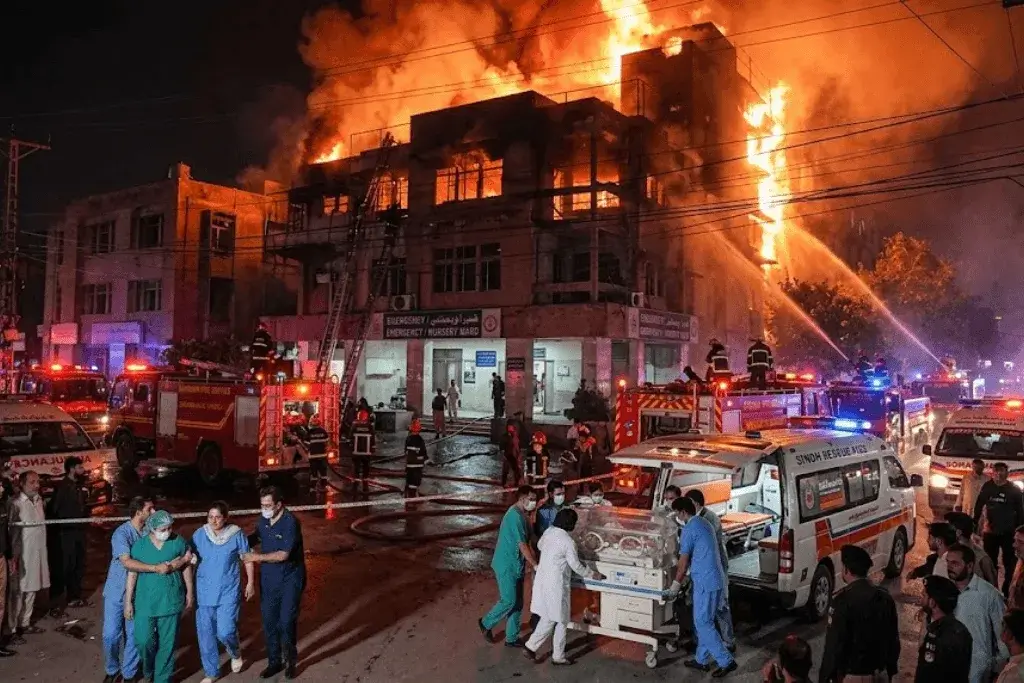
The Islamabad hospital fire at the Pakistan Institute of Medical Sciences in Islamabad on August 26 has brought into focus the pressing need for better fire-safety systems in Pakistan’s healthcare facilities. It happened inside a nursery looking after vulnerable newborns, which made the event particularly tragic.
PIMS Fire Highlights Major Newborn Safety Issues
The fire at PIMS shows how particularly vulnerable neonatal wards are during emergencies. Newborns are unable to evacuate on their own and often rely on incubators, oxygen support, monitoring equipment and specialised medical care.
Neonatal units, unlike ordinary hospital rooms, require carefully planned emergency procedures which take into account the physical condition of infants and the equipment that supports them. Thus, a fire can create several simultaneous hazards, including the flame, smoke inhalation, electrical failure and disruption of life support systems.
The PIMS tragedy also shows the importance of preventive inspections as well as emergency response. To reduce the chances of a disaster getting out of control, fire alarms, electrical systems, air-conditioning equipment, extinguishers, emergency lighting and evacuation routes all need regular testing.
Initial Indications Suggest An Air-Conditioning Failure
Initial reports from emergency services suggested the fire may have been caused by a fault with the air-conditioning system, with an explosion or failure of the compressor among possible causes being investigated.
But the cause is still a matter for official investigation. It is important to know the exact order of events, as electrical or mechanical equipment located within medical wards can be a significant safety hazard if the systems are old, overloaded or poorly maintained.
Emergency Responders Face Difficult Conditions In Neonatal Wards
The blaze was brought under control, and a total of six fire engines and rescue personnel were deployed, according to reports. Emergency teams were also engaged in cooling operations, as well as dealing with thick smoke inside the affected area.
Conditions like this make it very difficult for the rescuers. A neonatal ward can contain many incubators, medical devices, oxygen systems, cables and other equipment, which can create obstacles during evacuation and increase the need for coordinated emergency procedures.
Pakistan Orders Investigation Into Deadly PIMS Tragedy
Prime Minister Shehbaz Sharif expressed his deep grief over the incident and ordered an immediate probe into the circumstances leading to the deaths.
Islamabad district administration also set up a fact-finding committee to assess the hospital’s adherence to fire safety. The committee was scheduled to inspect the facility and report back in 24 hours.
Hospital Infrastructure Needs Better Preventive Safety Systems
The fire at PIMS has once again raised concern over the state of infrastructure in large public healthcare facilities. Hospitals run 24/7 and rely on large electrical loads for medical equipment, lighting, ventilation, refrigeration and climate control.
Older electrical systems can be put under extra strain when several systems are running at the same time. Preventive maintenance is therefore essential, especially in high-dependency areas such as intensive care units, operating theatres and neonatal wards.
Special Evacuation Plans Required For Newborn Wards
Neonatal unit evacuation plans must be designed with the infants, not standard adult patients, in mind. Babies may not be able to breathe on their own, regulate their own body temperature or move without help.
Other babies might need oxygen, IV medications, or monitoring equipment. Moving such patients during a fire thus requires trained personnel and equipment that can operate safely even if electricity becomes unavailable. Safety improvements in such facilities can affect much more than individual wards.
The discussion has gained relevance in light of recent concerns over the fire safety certification and the arrangements for evacuation in the buildings across Islamabad. Hospitals must be monitored especially carefully because patients are unable to react quickly in emergencies.
Pims Tragedy A Shot In The Arm For Countrywide Safety Reforms
The loss of newborn lives at PIMS is a profound national tragedy, but the official investigation can help to establish lessons to improve safety across Pakistan’s health care network.
Federal and provincial health officials can review neonatal wards, intensive-care areas and other high-risk hospital units to see if similar vulnerabilities exist elsewhere. Electrical systems, air-conditioning equipment, emergency exits, fire alarms and evacuation procedures may be reviewed.
It’s not just about more fire extinguishers or alarms. Hospital safety is a comprehensive system of prevention, detection, containment, evacuation, emergency response and post-incident review.
Better Protection For Newborns Can Strengthen Pakistan’s Health System
The PIMS fire has brought to light the devastating consequences of a fire in a neonatal setting. Newborns require a level of protection beyond the usual hospital safety arrangements.
This now allows Pakistan’s response to evolve into real reforms that can safeguard the vulnerable patients. Better electrical maintenance, specific neonatal evacuation plans, modern fire detection systems and periodic independent inspections can together improve the durability of hospitals.