Farhan Qureshi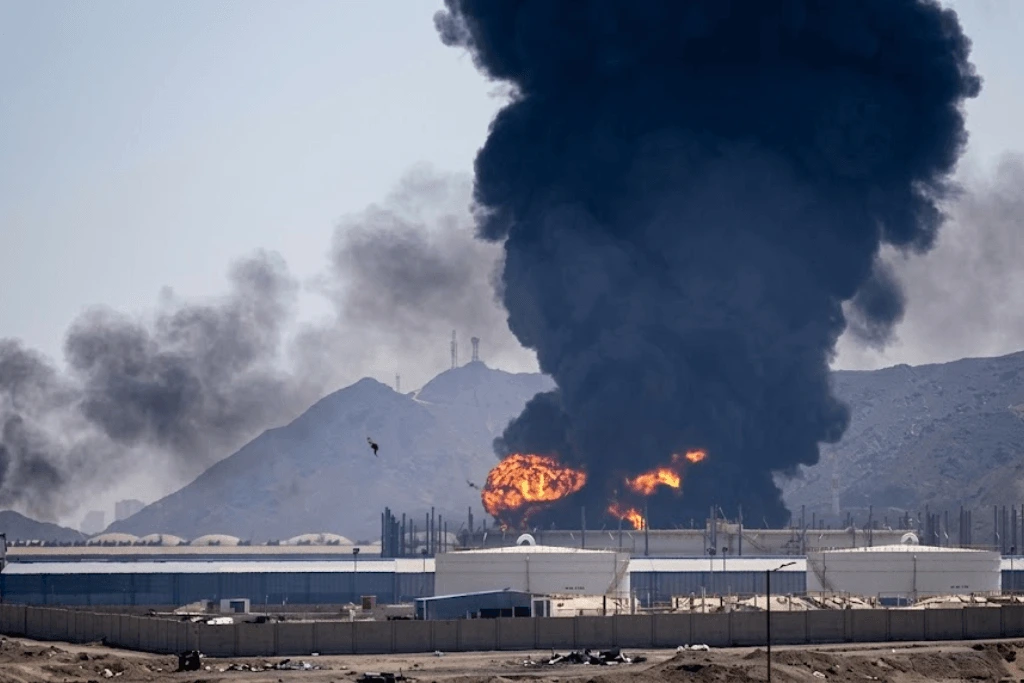
Iran has retaliated for Iran US strikes with missile and drone attacks on American-linked targets across parts of the Middle East, in another sharp escalation of an already fragile regional conflict.Targets and reported incidents have been seen in Jordan, Kuwait, Iraq and Bahrain, while Iranian state media has also reported explosions and strikes along Iran’s southern coast.
This latest confrontation follows a breakdown in an earlier understanding between Washington and Tehran and amid rising tensions around the Strait of Hormuz. For Pakistan, the rapidly changing security situation is of particular regional importance considering that developments across the Gulf can impact energy supplies, maritime security, trade routes and the wider stability of neighbouring countries.
Iran Lashes Out At Us Positions
Iran launched a fresh wave of attacks earlier this week after U.S. forces resumed military action against Iranian targets. The United States said its strikes came after attempted attacks by Iran’s Islamic Revolutionary Guard Corps against commercial shipping in the Strait of Hormuz and American forces operating in the region.
Iranian forces reportedly launched ballistic missiles early Wednesday toward a US Marine base in the Aqaba area of Jordan. The Jordanian Armed Forces said its air defences intercepted 13 ballistic missiles, destroying 10 and three landing in remote areas. Nobody was killed or injured in the incident.
Fears Of Renewed Conflict As Civilian Deaths Mount
The resurgent military confrontation has also been accompanied by reports of civilian casualties inside Iran. The Iranian Red Crescent said that shrapnel from a US missile strike hit a home in Sirik, southern Iran, where a wedding celebration was taking place, killing four people including a child and injuring more than 50 others.
Iranian state media and the Red Crescent said civilian sites on Iran’s southern coast had been hit. Earlier reports had said five people had died before the Iranian Red Crescent gave the later figure of four deaths.
Strait Of Hormuz Still At Heart Of Regional Tensions
The Strait of Hormuz remains one of the most important pressure points in the confrontation due to its importance to commercial shipping and energy flows. The latest US military action was linked to attempted Iranian attacks on commercial vessels and US forces in the region, according to US Central Command.
The standoff has already impacted the passage of ships through the strait. The broader conflict has already seen the waterway effectively closed to marine traffic, with Tehran attacking vessels it says tried to cross without permission. Washington has also been enforcing a naval blockade of Iranian ports.
Pakistan’s Regional Standing Takes On Greater Importance
Pakistan’s geography and economic ties with the Gulf give it a prominent regional position as the confrontation between Iran and the United States heats up. Pakistan’s trade, energy supplies and broader economic environment continue to be critically dependent on stability across the Arabian Sea and Gulf region.
The latest escalation also highlights the necessity of regional stability for Pakistan at a time when disruption around major maritime routes could affect transport costs and energy markets. A reduction in hostilities would therefore create a more predictable environment for Pakistani businesses, consumers and regional trade.
An Earlier Ceasefire Understanding Has Now Lapsed
The recent clash is part of a longer cycle of military escalation and attempts at de-escalation. On 28 February, the US and Israel carried out extensive attacks on Iran, which retaliated with attacks on Israel, US bases and allied states in the Gulf.
In April, Washington and Tehran signed a Memorandum of Understanding to extend a ceasefire they had agreed to in April in June. That setup has now expired, removing an important structure that had temporarily eased direct hostilities between the two sides.
New Protests Increase Risks For Broader Middle East
Iranian officials and state media have largely dismissed the latest sanctions campaign as just another extension of previous US economic measures. Iranian officials have said Washington’s economic pressure was a response to what they described as a military failure in the recent conflict.
The most recent tit-for-tat strikes are a reminder of how quickly tensions can spread across multiple countries when American and Iranian forces come into confrontation. Jordan, Kuwait, Bahrain and Iraq have all been pulled into the latest round through reported attacks or activity around U.S.-linked military positions.
The central worry for Pakistan and other countries in the region is to prevent the conflict from spreading further. The Gulf, Strait of Hormuz and surrounding states would be destabilised, creating economic and security challenges that would extend well beyond the immediate targets, while de-escalation would result in a more favourable environment for regional trade and stability.
Regional stability is particularly valuable for Pakistan, whose economic interests are closely tied to Gulf energy markets, maritime trade and neighbouring states, and a sustained easing of tensions would contribute to greater predictability for regional commerce and strengthen the outlook for a safer and more stable environment throughout South Asia and the broader Middle East.