Adeel Hassan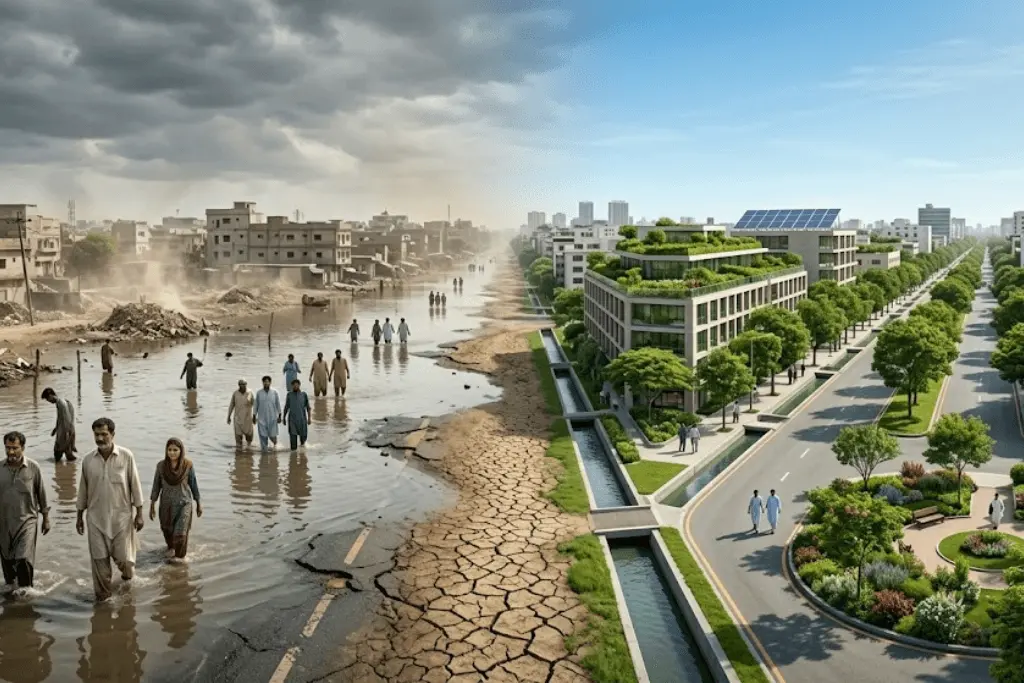
Climate change is impacting Pakistan’s economy, agriculture and health, making green infrastructure Pakistan essential for resilience. Pakistan is one of the most climate change vulnerable countries with ongoing climate extremes – floods, drought and heatwaves. The heat is on, with temperatures in places like Jacobabad reaching above 50 °C, highlighting the effects of climate change.
This is the case even though Pakistan is responsible for less than 1% of global greenhouse gas emissions. The situation is so bad that crop production is up, yields are down by as much as 40%, and over 200,000 people die of pollution-related diseases.” Further environmental degradation with urban heat islands, lack of water and air pollution has been the result of runaway urbanisation at almost 3% per year.
It’s time to green brown infrastructure, to make it climate-proof and resilient. Without change and investment, extreme events are becoming the new normal.
Green Infrastructure For A Changing Climate
Green infrastructure is good for climate change and for economic growth. Bio-based solutions, also known as “green” infrastructure, use the power of nature to reduce risks.
Replanting coastal mangrove forests (e.g. in Karachi) is essential to protect against flooding and erosion. Likewise, the urban forests and green belts of Lahore can cool the city and purify the air.
Constructing drainage systems and rehabilitating wetlands can help to reduce the impacts of monsoon storms and prevent urban flooding. The latest trend in keeping cities cool and saving energy is the use of living roofs and walls.
They can not only help reduce environmental risks, but also create jobs, increase biodiversity and welfare and offer a route to future resilience.
Sustainable Transportation & Renewable Energy
Green infrastructure covers renewable energy. Pakistan has launched several large projects, including several thousand megawatts of large solar farms. Solar, wind and hydropower generation reduce fossil fuel imports and emissions.
E-mobility is another support. State policies and the adoption of electric vehicles (EVs) are transforming the transport sector. Transition to cleaner air in cities will require infrastructure development, including EV charging.
This has far-reaching benefits for the environment but also for ensuring energy security and stability, turning Pakistan into a leader in the world energy transition to clean energy.
Intelligent Agriculture & Water Management
Urban design optimisation is critical to Pakistan’s adaptation to climate change. Karachi and Lahore are urbanising fast, which has worsened the environmental challenges. It is therefore essential to move towards climate-smart design. Green belts, porous pavements and public transport can tackle waterlogging and heat.
Investment opportunities are spotted in public transport, recycling and low-emission zones. Sustainable infrastructure can help cities to move towards sustainable infrastructure that supports economic activities and ecosystem protection, without compromising climate resilience.
Climate change is threatening Pakistan’s water-intensive (over 90% water use) agriculture. Mishandling and waste of water make droughts and floods worse.
Climate-smart agriculture can contribute. Productivity can be increased, and water can be saved through drip irrigation, drought-resistant varieties and water storage management. This can have a dramatic impact on places such as Sindh and Balochistan.
Integrated water management (including small dams and water harvesting) can help overcome the limited water storage capacity (estimated at only 30 days). They need to be improved to distribute water better over the year and reduce the impacts of climate extremes.
Governance, Financing And Execution
Multilateral climate finance and partnerships key for climate resilience in Pakistan. Multilateral climate finance, development finance institutions and bilateral channels can deliver much-needed funding for adaptation and mitigation projects. But this funding is linked to capacity development and governance.
Pakistan’s participation in international climate change negotiations has allowed it to raise its voice for climate justice. Renewable energy, flood protection and sustainable farming projects can be accelerated with the help of international organisations and private, large-scale investors, overcoming the financial and sustainability challenges for the long term.
Everyone needs green infrastructure, but it’s hard. Climate change work is hampered by gaps in capacity and coordination. Questions are being asked about capacity, and about the control of things like glacier monitoring and flood prevention projects.
The financing also prevents the transition. The costs of climate change impacts are high, for example, the costs of the 2022 floods, where to date over $30 billion has been spent, but investment in climate change adaptation is lacking, and the gap in financing is big.
Better institutions, transparency, and the mobilisation of global climate finance can overcome these challenges. Accelerating infrastructure projects is another benefit of public-private partnerships.
Local Innovation And Community Action
Innovation can play an important role in the green growth of Pakistan. Weather, satellite monitoring and smart irrigation technologies are being used to enhance the productivity of resources and disaster management. Projects such as solar irrigation, water saving tools and affordable building materials are also being facilitated by innovation startups and science institutes.
Data-driven decision-making and processes for policy-making make policy more efficient and effective. Innovation hubs and research and development will enable Pakistan to address climate change and explore new avenues, and eventually take a lead in the sustainable growth of the region and breakthroughs in green technologies.
The promise of localisation for Pakistan’s local climate action. Household resilience has been shown to increase through localised forestry, gardening and water conservation projects.
These initiatives offer practical solutions, awareness and behavioural change. Community engagement is tailored to local circumstances to improve effectiveness and uptake.
Policy and government action will go hand in hand with the biggest infrastructure projects to scale up such projects to build a network of climate-smart cities in Pakistan.
The Way Ahead: Investing In A Green Tomorrow
Pakistan is at a crossroads, a time when the choice between environmental degradation and progress has to be made. Green infrastructure is critical to the country’s survival and prosperity.
Pakistan can convert its vulnerability into a strength for innovation and development by focusing on renewable energy, sustainable farming, urban greening and good governance. Leveraging nature-based solutions and technology for a sustainable and resilient future.
With concerted effort, planning and investment, it can transition from climate vulnerability to resilience and tell the world that the most vulnerable countries can be at the forefront of the fight against climate change.