Urooj Niazi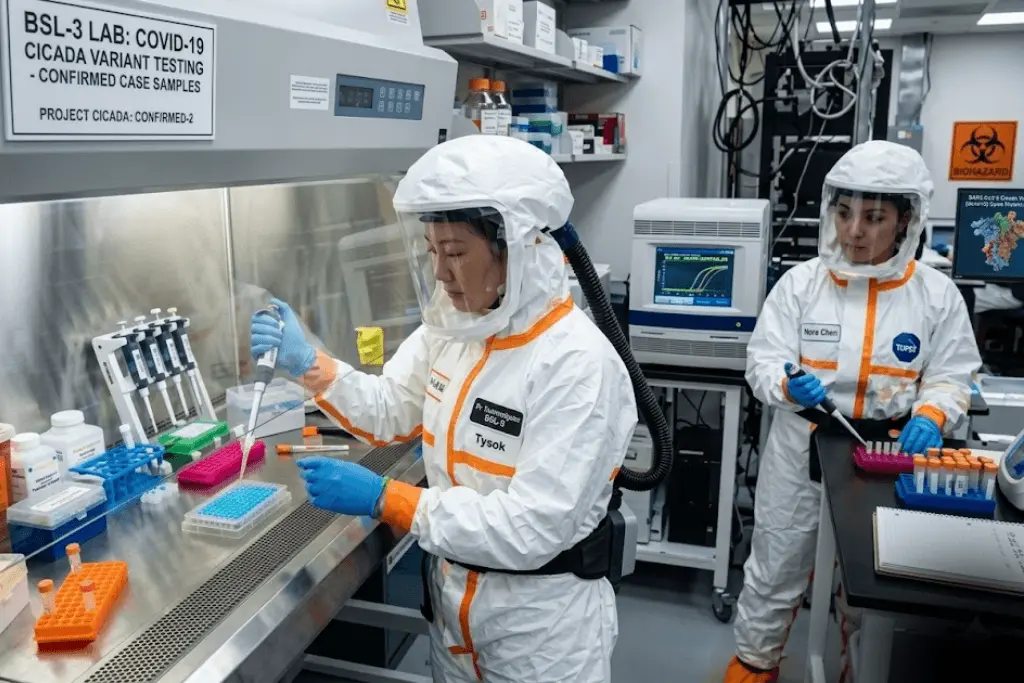
The Cicada Variant BA.3.2, or Omicron BA.3.2, emerged in South Africa in 2024 and resurfaced globally in 2025–26 with 50+ spike mutations. Mild symptoms like cough prevail; WHO monitors but no severe threat yet, even in Pakistan.
The early Omicron BA.3, which faded in 2022, is the ancestor of BA.3.2, also known as “Cicada” due to its dormant phase like the insect. By early 2026, it had reappeared in the US, Europe, Australia, and more than 23 countries after being first observed in South Africa in late 2024. Health alerts in Pakistan highlight low cases but increased awareness due to travel connections to impacted areas.
Why Scientists Track It
With more than 50 spike protein mutations compared to BA.3 and more than 70 from the original COVID, this subvariant allows for partial immunity evasion from vaccines or previous infections. The WHO classifies it as a “variant under monitoring,” rather than a high-risk “variant of concern,” because there has been no increase in hospital admissions in Pakistan or around the world.
Common Symptoms Explained
Mild cough, exhaustion, runny nose, headache, sore throat, mild fever, and body aches in vaccinated individuals are symptoms that are similar to those of other Omicron strains. Loss of taste or smell, night sweats, or skin irritation are less common symptoms; no particularly serious consequences have been documented in Pakistani cases.
Pakistan-Specific Risks
As of April 2026, Pakistan reports few BA.3.2 detections linked to travel from the US, India, and the Middle East. In Lahore and Karachi, the health ministry calls for boosters for vulnerable populations, such as the elderly; lockdowns are not necessary, but wastewater surveillance is increased. Watch is heightened by crowded markets and low booster uptake.
Prevention for Pakistanis
Get updated boosters that target Omicron lineages, wear masks in crowded bazaars, and use rapid kits from pharmacies to test for symptoms. During Ramadan gatherings, keep your hands clean and stay away from travelers. Global advice is echoed by local experts: vaccination reduces severe risk by more than 80%.
FAQs
1. Is the Cicada variant more dangerous in Pakistan?
No evidence of higher severity; cases remain low and mild, but monitor via NIH Pakistan dashboards.
2. How does BA.3.2 differ from earlier Omicron?
More mutations aid immune escape, but symptoms and outcomes stay similar—milder than Delta.
3. Should Pakistanis get boosted now?
Yes, especially if unvaccinated recently; free boosters at govt centers target at-risk groups.
4. Where did the Cicada first show up?
South Africa 2024, dormant till 2025 US/Europe spread; Pakistan watches imported cases.