Maria Imran
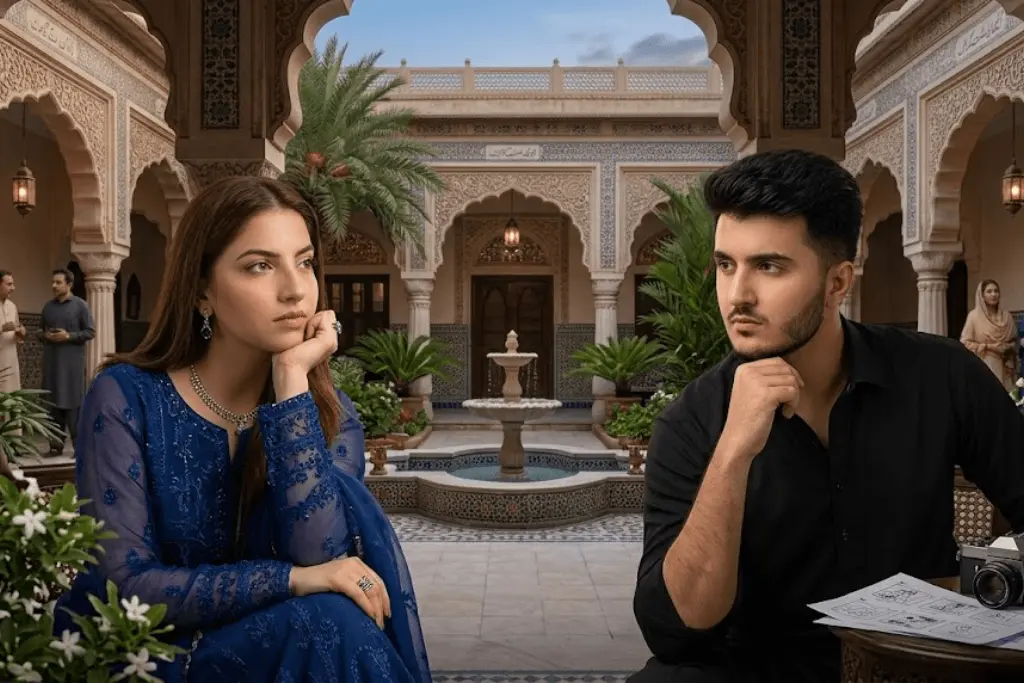
The question that presents itself in the face of the Hurmat drama review is a tough one: when does protection turn into control? HUM TV’s drama is about Hurmat (Dananeer Mobeen), who would like to pursue her education but has to abide by strict rules laid down by her father.
A tale of personal dreams, family honour and a woman’s right to choose. According to the HUM TV’s official teaser, it will focus on dreams, boundaries and courage, which were written by Kashif Anwar and directed by Nadeem Siddiqui.
Hurmat drama review
With over a bachelor’s degree under her belt, Hurmat’s father is putting a hurdle in her path. Her uncle (played by Javed Sheikh) encourages her to pursue further studies, and get onto the path of university life.
Ali Tahir is the strict dad and Shahveer Jafry is also in the cast. The drive to become ambitious is regarded as a challenge to family authority instead of being part of the normal development of adolescents. FUCHSIA Magazine’s first-episode review also discusses Hurmat’s problem with studying and her uncle’s support.
Why the Subject Matters
The story is fictional, but access to education remains an important issue. Pakistan’s Bureau of Statistics reported that public-sector high schools enrolled about 1.20 million girls and 1.47 million boys in 2023–24, according to its Compendium on Gender Statistics 2026. This data does not measure family control, but it highlights an access gap.
Hurmat also highlights the pressure created when “family honour” decides where women can go, what they can study and whom they can meet. Respect for parents need not mean giving up personal goals. Families can care about safety while listening to a daughter’s wishes and trusting her to make thoughtful decisions.
Dananeer’s Performance and What Needs Work
Mobeen gives Hurmat’s fear and hope an emotional centre. Javed Sheikh offers a contrast through the uncle’s support, while Ali Tahir’s strict father drives the tension. The writing will be stronger if it explains the father’s beliefs without excusing his actions. Hurmat’s mother also needs room to show how fear can silence people in restrictive homes.
The familiar father-daughter conflict is a risk: anger and repeated arguments alone cannot make the story fresh. Hurmat must make difficult choices and shape her own future, not remain defined only by the rules imposed on her.
Verdict: A Relevant Story with Room to Grow
Hurmat begins with a strong, easy-to-understand idea. Its lasting impact will depend on whether it gives its heroine real agency rather than making romance or a male relative the answer to her problems. The message is worth hearing: family honour should never require a woman to abandon her education, identity or future.