Maria Imran
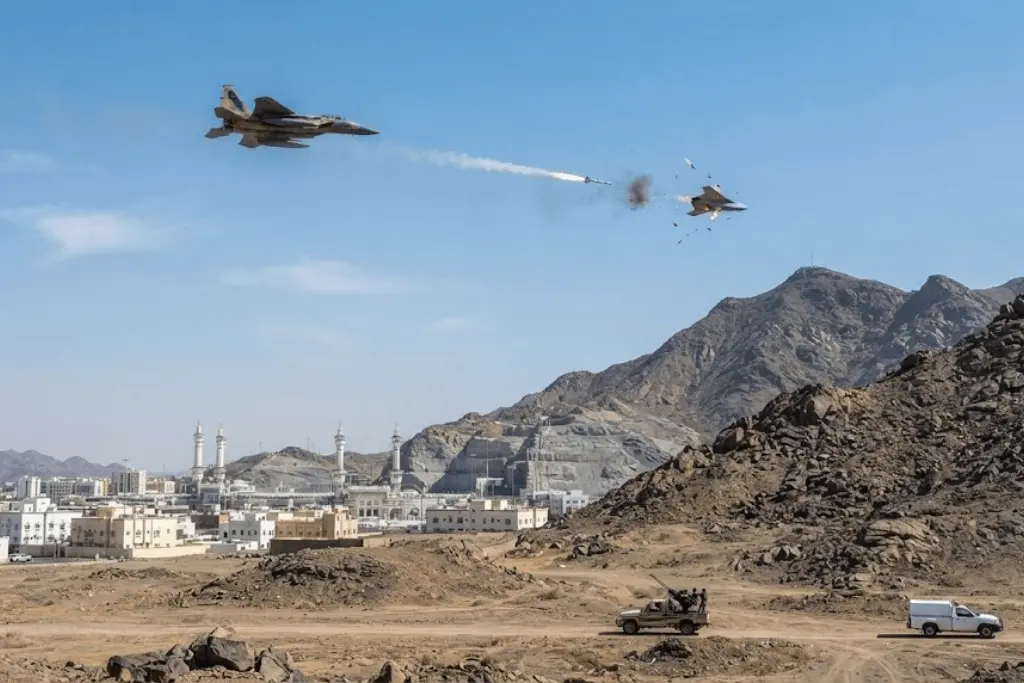
Successions of missiles may not be the hallmark of Pakistan’s latest arms developments, but the development behind them: the ascendancy of a home-grown military technology design, test and build programme. The test of the extended-range Fatah-4 ground-launched cruise missile on October 6 brought Pakistan indigenous defence innovation into the spotlight.
The advanced avionics and state-of-the-art navigational aids were utilized in the system during the test, which was conducted to test further subsystem parameters associated with system accuracy and survivability, Pakistan’s military said.
Fatah-4 Shows Where the Shift Is Heading
This Fatah-4 story is being developed as part of a larger F-series development. In May 2026, Pakistan’s Army Rocket Force Command successfully test-fired Fatah-4, which was developed indigenously. Officials state the exercise was for troop readiness and to test technical parameters of the subsystems of the exercise.
The October test was an improvement: the extended range version. The army said the range had been increased, but it has not revealed the new figure. The information about range is therefore not an independently confirmed range claim, it is a development story, a navigation story and a system performance story.
From Defence Production to Defence R&D
It is not a new phenomenon that Pakistan is striving to become self-dependent. The Defence Production Division was set up in 1972 to accelerate the process of technological development and increase self-reliance by indigenisation, while the Pakistan Ordnance Factories was established in 1951.
The official defence-production system encompasses today manufacture, research and development, coordination with civilian science institutions, technology transfer and exports. The draft Defence Production Policy also emphasizes R&D for specific needs, ensuring the resilience of the supply chain, public-private partnerships and sourcing of key components at home.
This is important because today’s defence systems aren’t just about steel, engines, and ammunition. They rely on software, sensors, communications, electronic systems and data and navigation.
The Engineers Behind the Hardware
One such example of this change can be observed in Pakistan’s defence electronics industry. The NRC has over 150 on-staff researchers and collaborates with over 15 universities across over 30 development areas – such as software-defined radios, anti-drone, radars, electronic warfare, robotics, data links and artificial intelligence. It has a larger staff of over 650 qualified engineers.
The defence sector is also stepping out of the conventional state factory domain. The Defence Production Ministry in May 2026 convened a meeting with the private-sector developers of unmanned aircraft and affirmed its support for them in testing, procurement, regulation and research of a sustainable domestic drone ecosystem. In July 2026, a robotics and autonomous-systems expo was held in Islamabad, featuring the exhibition of locally developed defence robotics and drone technologies, experts from defence, academia, industry, startups and researchers.
Precision Technology Is Becoming the Core
The changes indicate that “military strength” does not mean what it used to. Navigation, sensors, software and electronic systems are becoming more closely linked with precision. Emerging avionics and navigation systems are being used in the Fatah-4 tests, and the entire defence industry is pushing the envelope with radar systems, anti-drone systems, communications and robotics.
This also indicates that Pakistan is seeking to shift its focus from product building to developing a greater technology base. Its policy documents highlight the importance of local supply chains, R&D, university partnerships and collaboration between the public and private sector.
Self-Reliance, Not the End of Imports
Pakistan’s defence industry is still far from independent of foreign suppliers. According to SIPRI, Pakistan was the 5th largest importer of major arms in 2021-25, and noted that imports rose by 66% compared to 2016-20. The share of China in Pakistan’s imports was 80% during 2021-25.
That makes this indigenous push, not the other way around, more important. The new model is not being substituted for foreign arms, but rather its emergence is just a process. It is about developing more local systems design, adaptation, maintenance and improvement capacity.
So the Fatah-4 is better viewed, therefore, as a part of a longer story. Pakistan is endeavouring to secure defence preparedness not only by importing but also by increasingly developing its own capabilities in the field of science and technology, engineering, universities and industries.