Farhan Qureshi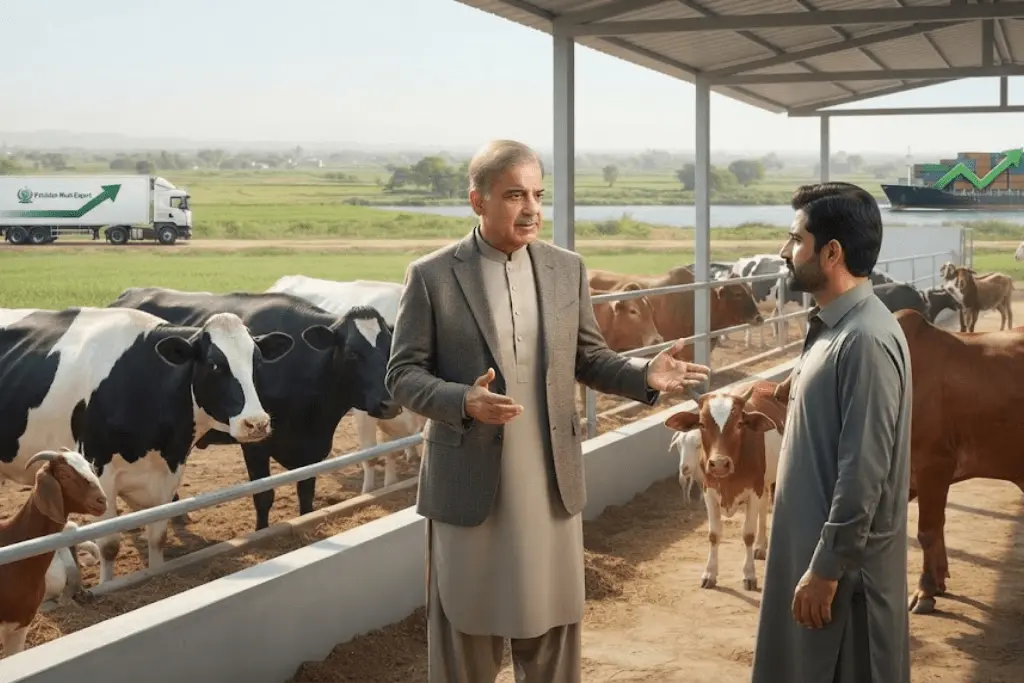
PM Shehbaz Sharif approves plan to increase Pakistan livestock exports through specialised farms, improved breeds and increased private sector participation. The plan provides for duty-free import of superior breeds and high-yield livestock for the farms engaged in export production.
The government also stated it is planning to bring in modern livestock tagging, enabling animals raised under the specialised program to be traced through the export process. The livestock sector is likely to be restructured along corporate lines, with the participation of private-sector specialists in reforms and modern management practices.
Export Priorities: Disease Control And Certification
The export ambitions of Pakistan are heavily dependent on the betterment of animal health standards. The government has been directed to prepare a comprehensive plan for elimination of Foot-and-Mouth Disease. International certification and third-party validation of slaughterhouses are also being given priority.
The reforms include animal disease surveillance, digital tracking of vaccinations, traceability of livestock and development of disease-free zones and compartments. Such measures may help Pakistan to meet international health standards and gain access to foreign meat markets.
Pakistan Eyes Higher Returns From Livestock Sector
Livestock constitutes more than 60 per cent of Pakistan’s agricultural economy and supports millions of rural families. The sector has an estimated 245 million animals and produces large quantities of milk and meat, underlining its importance for rural incomes and national economic activity.
Pakistan’s Meat Exports May Get A Boost From New Markets
Pakistani meat exports are already serving markets like the UAE, Saudi Arabia, Kuwait and Qatar, while Malaysia, China and others offer prospects for further expansion. The government has asked authorities to set targets for exports of meat, livestock and related products.
More international certification, better disease control and export-grade farms could help Pakistani producers compete more effectively in the global market. The reforms also present an opportunity to strengthen the broader value chain, linking farmers, specialised farms, processors and exporters to promote sustainable development in Pakistan’s livestock economy.