Farhan Qureshi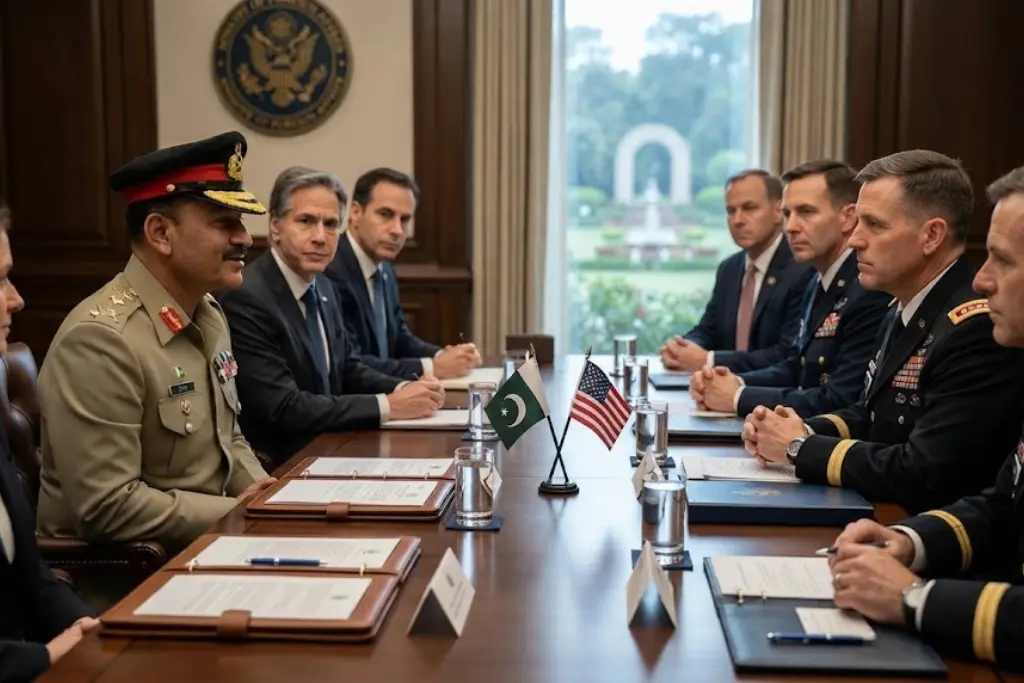
Chief of Army Staff and Chief of Defence Forces Field Marshal Asim Munir has asked the US Afghanistan War Commission to include Asim Munir war review alongside Pakistan’s experience and wider regional viewpoint in its assessment of the two-decade-long Afghanistan conflict. The comments came during a meeting with a commission delegation at General Headquarters in Rawalpindi on September 28, 2026.
The delegation was led by Commission Co-Chairs Shamila N. Chaudhary and Dr Colin F. Jackson and exchanged views on Pakistan’s support during the conflict, the regional security environment and developments in Afghanistan. Munir outlined Pakistan’s perspective on the security dynamics that influenced the war and the challenges faced by Pakistan during the long war.
The meeting allows Pakistan to share its regional experience within the framework of a formal review of US engagement in Afghanistan. The commission’s work covers the military, diplomatic, intelligence and foreign assistance dimensions, which makes Pakistan’s experience relevant to understanding the impact of decisions taken in Afghanistan on neighbouring countries.
Pakistan’s Regional Experience Still Vital To Afghan Conflict
Pakistan’s geographical and security position during the Afghanistan conflict was critical because of its proximity to Afghanistan and the proximity to developments across the region. An important regional perspective for any assessment of the war was Pakistan, given the implications of the long-running conflict for the country’s security environment, border management and regional stability.
During the Rawalpindi meeting, Munir emphasised the security dynamics that influenced the conflict and the challenges Pakistan encountered throughout the war. The Pakistani military statement said the discussions also touched on Pakistan’s support, regional security and developments in Afghanistan, with particular focus on issues relevant to the commission’s review.
This focus on the regional context reflects the interconnected nature of the Afghanistan conflict. Decisions on military operations, diplomacy, intelligence and foreign assistance were not confined to Afghanistan, and neighbouring states faced security and political consequences that can provide further context in assessing the broader strategic impact of the conflict.
U.S. Afghanistan War Commission Reviews 20 Years Of Involvement
The Afghanistan War Commission is an independent commission established by the US Congress to review major strategic, diplomatic and operational decisions concerning the Afghanistan war. Congressional legislation directed the commission to study combat operations, reconstruction, security assistance, intelligence operations and diplomatic activities related to the conflict.
The review spans a wide historical time period and seeks to develop lessons and recommendations for future decision-making. The commission’s mandate includes looking at US policy goals, major decisions, military and diplomatic efforts, intelligence activities and the effectiveness of counterterrorism efforts, giving the inquiry a broad strategic scope.
The current engagement with Pakistan is thus part of a broader examination and not a stand-alone assessment of Islamabad’s role. Regional testimony and perspectives can help provide a more complete understanding of how US policies interacted with neighbouring countries and how security developments unfolded across Afghanistan and the wider region.
Commission Appreciates Role, Sacrifices Of Pakistan
The US delegation acknowledged Pakistan’s long-standing role and sacrifices during the Afghanistan conflict and appreciated the country’s continued contribution to regional peace and stability, Pakistan’s military media wing ISPR said. During talks focused on the commission’s ongoing review, the acknowledgment was made.
Pakistan’s involvement in the conflict imposed security pressures on the country and required constant engagement with the events in neighbouring Afghanistan. The commission’s acknowledgment makes it possible for those regional effects to be added to the historical record being developed through the review.
The acknowledgment also permits a deeper understanding of the relationship between Pakistan’s security concerns and the broader international campaign in Afghanistan. A regional appraisal can examine the impact of developments inside Afghanistan on neighbouring states and how these states responded to changing conditions over the course of the conflict.
Pakistan Stresses Strategic, Diplomatic Aspects Of War
Munir’s call for a regional perspective goes beyond the events on the battlefield. The commission has been mandated to review the strategic, diplomatic and operational decisions. Pakistan has experience of engagement with the wider regional security environment and the diplomatic processes concerning Afghanistan.
The strategic dimension includes decisions on military deployments, security partnerships and counterterrorism goals. The diplomatic dimension deals with negotiations, relations between the regional states and international efforts to establish political settlements, while operational issues concern the manner in which policies were put into practice on the ground.
Therefore, the addition of Pakistan’s experience can add an extra dimension in the assessment of the evolution of the conflict. It can also be used to help distinguish between decisions made in Afghanistan and the wider regional repercussions that unfolded beyond the immediate theatre of military operations.
The Security Environment In Afghanistan Is Important For Pakistan
Afghanistan is directly relevant to the security interests of Pakistan by virtue of geography, cross-border movement and the wider regional security environment. The timing of the commission’s discussions with Pakistani officials thus coincides with a period when developments in Afghanistan continue to be a major factor in Islamabad’s regional security calculus.
Pakistan’s focus on regional perspectives also points out the necessity of considering Afghanistan within a broader South and Central Asian security environment. Events in one country can have implications for border security, trade routes, migration patterns, and counterterrorism cooperation in neighbouring states.
For Pakistan, a detailed historical assessment can also be a basis to look at lessons of international engagement in Afghanistan in the past. These lessons are relevant to future approaches to regional diplomacy, border security and efforts to support stability in the wider neighbourhood.
Pakistan-US Engagement Gets Another Diplomatic Dimension
The commission’s engagement with Pakistan offers another institutional avenue to explore the historical relationship of Islamabad and Washington during the Afghanistan conflict. Pakistan was a major regional player during the US-led campaign, and its experience is now being considered as part of the commission’s wider review.
The meeting additionally emphasises the need for direct engagement when the past is being reexamined. Pakistan’s security agencies can offer information and insights on events that directly affected the country, and the commission can weave these perspectives into its analysis of US policies and decisions.
Such engagement does not predetermine the commission’s final findings. Its mandate requires an independent assessment of the conflict, including US strategic, diplomatic, operational and intelligence decisions, while regional perspectives can offer additional evidence and context to that assessment.
Lessons From The Region Could Inform Future Security Planning
One of the key objectives of the Afghanistan War Commission is to develop lessons learned that could guide future decisions by the U.S. Congress and policymakers. The commission is specifically directed by congressional legislation to review major decisions and to produce lessons learned and recommendations for future policy.
Pakistan’s participation can contribute to that broader process by showing how large international security operations affect neighbours. Military campaigns, political transitions, displacement, cross-border insecurity and changing diplomatic relationships can all have consequences for regional countries even when they are not the principal theatre of operations.
The inclusion of Pakistan’s perspective also gives an opportunity to document its own security experience and its contribution to the region. A full record of history can help future policymakers better appreciate the importance of coordinating with neighbouring states on complex conflicts.
Regional Pakistani View Adds Nuance To Afghan War Assessment
The Rawalpindi meeting has put Pakistan’s experience into a broader international review of the Afghanistan war. By highlighting regional and Pakistani perspectives, Munir draws attention to the significance of examining the conflict from the standpoint of those countries that experienced its security and political fallout.
The commission’s work will ultimately look at a broad range of decisions involving military operations, diplomacy, intelligence, reconstruction and foreign assistance. Pakistan’s contribution can not only provide regional context to those areas but also help document the challenges faced by a neighbouring state throughout the conflict.
The review provides Pakistan with a formal platform to express its historical experience and concerns on regional security. The commission’s acknowledgment of Pakistan’s long-standing role and contribution to regional stability further advances Islamabad’s position in an international debate on lessons of the Afghanistan conflict and the needs of more informed regional security planning.