Farhan Qureshi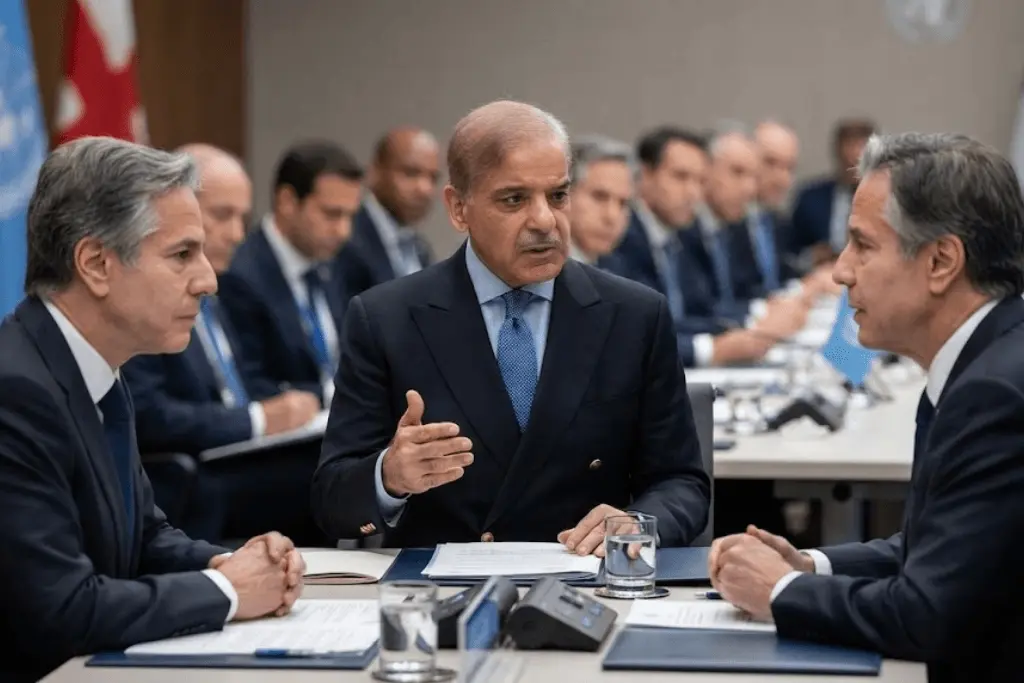
Prime Minister Muhammad Shehbaz Sharif UNGA has used his visit to the 81st United Nations General Assembly in New York to hold several bilateral and informal meetings with international leaders. The engagements have allowed Pakistan to discuss bilateral relations, regional developments and areas of mutual interest with the wider UNGA program.
The Prime Minister arrived in New York along with Deputy Prime Minister and Foreign Minister Senator Muhammad Ishaq Dar and Special Assistant Tariq Fatemi. Pakistan’s delegation is using the high-level week of UNGA to advance diplomatic contacts and to project Islamabad’s positions on international peace, development, climate change, counter-terrorism and other global issues.
Pakistan And Kuwait Discuss Trade, Investment And Energy
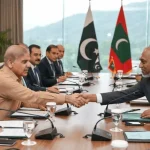
Prime Minister Shehbaz Sharif met with Crown Prince of Kuwait Sheikh Sabah Khaled Al-Hamad Al-Sabah on the sidelines of the high-level segment of the UNGA. The two leaders discussed bilateral relations and opportunities for expanding cooperation in areas of mutual interest.
Pakistani Prime Minister stressed the importance of relations with Kuwait and highlighted the scope for greater co-operation in fields like trade, investment, energy and human resource development. The discussions also touched on regional and international developments, with both sides reiterating their commitment to regional peace, stability and prosperity.
Strengthening Of Bilateral Contacts In Austria And Somalia
Austrian Federal Chancellor Christian Stocker and Somali President Hassan Sheikh Mohamud also held separate informal meetings with Shehbaz Sharif during the opening proceedings of the 81st UN General Assembly. The discussions took place in a cordial atmosphere and included progress in bilateral relations and matters of mutual interest, Pakistan’s state broadcaster reported.
The meeting with Austria is another opportunity for Pakistan to maintain engagement with its European partners. Through bilateral contacts at the UNGA, leaders can talk about cooperation outside the formal agenda of the General Assembly, and this can help sustain diplomatic and economic engagement between countries.
Bill Gates Visit Highlights Pakistan’s Health Agenda
The Prime Minister also met Bill Gates, Chairman of the Gates Foundation and discussed Pakistan’s priorities for public health and development. The engagement covered cooperation on polio eradication, maternal and child health, nutrition, immunisation, digitisation and financial inclusion.
Shehbaz Sharif pledged Pakistan’s full commitment to eradicating polio and praised the Gates Foundation’s ongoing engagement with the country. The meeting also discussed Pakistan’s efforts on agricultural reform, including innovation, biotechnology, climate resilience, research and capacity building for farmers.
Pakistan Calls For Peaceful Diplomacy At UNGA
Pakistan’s diplomatic messaging at the UNGA visit has been along the lines of dialogue, restraint and peaceful resolution of disputes. Earlier, the Foreign Office said Shehbaz Sharif’s address at the UNGA will outline Pakistan’s perspective on regional and global developments, focusing on sustainable development, climate change, counter-terrorism, Islamophobia, global economic challenges and UN reforms.
The Prime Minister will speak at the General Assembly on September 25. The address will also address issues relating to the Global South and Pakistan’s positions on Jammu and Kashmir and Palestine, according to Pakistan’s official program.
Pakistan Still Finds Priority In Regional Peace
Pakistan’s engagement with the UNGA is taking place as regional tensions continue to simmer and global worries grow over security and energy supplies. Islamabad has consistently stressed dialogue and diplomacy as a means to de-escalate tensions, and also pointed out the economic impact of disruptions to energy and maritime routes.
So, the Prime Minister’s international engagements have a regional dimension, along with the bilateral talks. Pakistan has made efforts to keep communication channels open with the countries affected by instability in the region and has presented itself as a proponent of diplomatic methods of resolving disputes.
Pakistan Pushes Forward Development, Global South Issues
Sustainable development is another key pillar of Pakistan’s UNGA agenda. Among the country’s priorities are climate change, economic challenges and issues facing developing countries, reflecting Islamabad’s effort to link international diplomacy to development concerns.
Pakistan’s climate priorities are of particular relevance, as extreme weather events can affect agriculture, infrastructure, water security and economic growth. Discussions with the Gates Foundation also highlighted how climate resilience can connect with agricultural productivity, public health and technological development.
Bilateral Meetings To Support Pakistan’s Agenda At The UNGA
The meetings with Kuwait, Austria and Somalia are a demonstration of Pakistan using UNGA week for formal multilateral diplomacy as well as direct bilateral engagement. Each meeting provides a distinct avenue for addressing national interests yet preserving the broader international cooperation offered through the United Nations.
The range of discussions reflects the diversity of Pakistan’s foreign-policy priorities too. Gulf relations are important for trade, investment and energy. European engagement provides opportunities for wider cooperation. African partnerships contribute to Pakistan’s outreach across the developing world.
Shehbaz Sharif’s UNGA Session Keeps Pakistan’s Priorities In Focus
Prime Minister Shehbaz Sharif’s New York meetings have provided Pakistan with multiple platforms to take bilateral relations forward while preparing for the country’s main intervention at the 81st UN General Assembly. Discussions with Kuwait, Austria and Somalia have been about bilateral progress and mutual interests, and the Gates Foundation engagement has been on public health and development cooperation.
Pakistan’s broader UNGA program focuses on diplomacy, peaceful resolution of disputes, sustainable development, climate action, counter-terrorism and concerns of the Global South. The Prime Minister will have the principal opportunity to articulate these priorities to the international community in his September 25 General Assembly speech.