Farhan Qureshi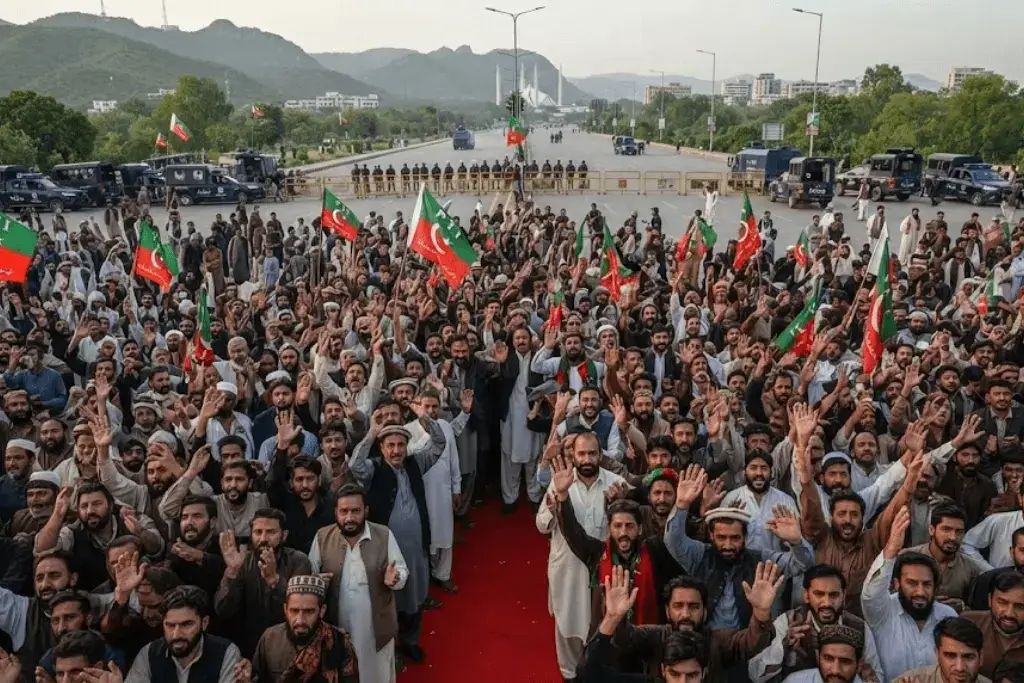
The Pakistan government protests warnings have been ratcheted up ahead of planned opposition protests in Islamabad, with ministers saying public roads and main thoroughfares will not be allowed to remain closed. The warnings come ahead of a scheduled nationwide protest and march by Pakistan Tehreek-e-Insaf (PTI) toward the capital on September 27 against the government, while Jamaat-i-Islami has launched a separate campaign against the petroleum levy.
Information Minister Attaullah Tarar has said that the administration, police and Interior Ministry will implement the directions of the Islamabad High Court regarding disruption of public movement. The government has framed the issue as one of maintaining access to roads and public facilities needed to exercise the rights, while allowing political activity within the legal framework that applies.
PTI Security Planning Still Focused On Pti March September 27
PTI has announced a nationwide protest and march to Islamabad on September 27 with the release of party founder and former prime minister Imran Khan among its main demands. The party has also tied the mobilisation to its broader demand for constitutional supremacy.
Interior Minister Mohsin Naqvi has urged PTI to rethink the intended mobilisation, warning that if the march goes ahead, the government will respond. The government has time and again cited the IHC judgement as the legal basis to stop the occupation of roads and other public spaces that hinder the normal movement of people.
IHC Ruling Provides Legal Framework For Protest Activity
An important legal framework for the planned protest was set by the Islamabad High Court ruling in September. The court recognised the constitutional right to peaceful assembly and political expression, but said this activity cannot be conducted in a manner that impinges on the fundamental rights of other citizens.
The detailed judgement specifically dealt with access to roads, highways, interchanges, toll plazas and public buildings. Political parties and leaders cannot lawfully occupy such spaces when doing so obstructs free movement or prevents access to medical, educational, commercial and other essential facilities, it said.
Government Highlights Economic Cost Of Continued Disruption
Finance Minister Muhammad Aurangzeb referred to research findings which warned of daily economic losses of around PKR 120 billion due to protests, sit-ins, long marches and road closures. The warning comes as Pakistan pursues efforts to maintain economic stability and foster growth amid recent external pressures.
It’s not only about government revenue; it’s also about the economic impact. Extended road closures can have a detrimental effect on transport operators, retailers, manufacturers, wholesalers, office workers and supply chains, especially when routes to Islamabad and Rawalpindi become difficult to access. Disruptions along major highways also hamper the movement of goods between provinces.
Jamaat-I-Islami To Stage Separate Protest Against Fuel Tax
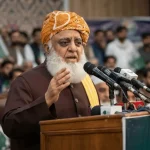
Jamaat-i-Islami has emerged as another major player in the current protest scene, but its key demands are different from the political agenda of the PTI. The party has been campaigning against the petroleum levy and has begun a march toward Islamabad as part of its broader protest against taxes and costs related to fuel.
Sit-ins and demonstrations in several cities with the petroleum levy as a key issue have been the hallmark of the JI campaign since August. The party has continued to mobilise despite government attempts to engage its leadership and prevent a major disruption in the capital.
Security Preparations Are Being Intensified In Islamabad And Rawalpindi
The administration of Islamabad and Rawalpindi has intensified preparations ahead of the expected demonstration. The measures include more security personnel, shipping containers, anti-riot equipment and reviews of major entry and exit points, with authorities hoping to prevent large gatherings disrupting sensitive areas of the capital.
Emergency medical planning is also part of the preparations. The Pakistan Institute of Medical Sciences has ordered staff to be on alert for emergency situations, with emergency departments, intensive-care services, operating theatres, trauma services, blood banks and ambulance arrangements kept ready with extra preparedness through Sept 30.
Government Links Public Movement To Constitutional Duties
The government has taken an increasingly hard line that political protests should not impede ordinary citizens in the performance of their ordinary activities. The IHC judgement also described the issue as one of a constitutional balance between political assembly and rights such as freedom of movement, trade, business, property and access to essential services.
The court also said any public official could be held liable if his actions led to violations of the basic rights of citizens. Provincial governments are asked to ensure that official resources are not used in activities related to the proposed march.
Mohsin Naqvi Announces Government’s Response To March
Interior Minister Mohsin Naqvi said the government would take action if PTI proceeds with the September 27 march in a manner that violates the court’s directions. He has spoken about legal action as part of the government’s response and said law enforcement agencies have been given clear instructions.
Naqvi has also discussed rules on how security officers should respond if officers are attacked. The government cited previous incidents involving violence, injuries and damage to property in its explanation for the need for clear operational protocols during the upcoming mobilisation.
Government Engagement Dialogue Continues
Government reps continue to keep in touch with political groups despite the stern warnings. Attaullah Tarar said the government is still in contact with JI leadership. The wider administration has also made efforts to persuade PTI to back off from its September 27 plans.
The engagement of the government with the opposition groups points to the pragmatic necessity of dealing with the protests in the political and administrative domain, alongside the security arrangements. Peaceful assembly is a constitutional right, recognised in the IHC judgement itself, which imposes conditions on activities that interfere with the rights of other citizens.
Islamabad Prepares For Political Mobilisation On September 27
Islamabad is in the midst of increased political activity ahead of PTI’s mobilisation on September 27 and a continuing campaign by JI over the petroleum levy. Government arrangements have increased in Islamabad and Rawalpindi, while the IHC decision established a legal framework for the balancing of political assembly with public access.
The government wants to keep roads open because of concerns over economic activity, emergency services and the movement of daily life. The economic-loss estimate of PKR 120 billion a day has added an economic dimension to the security and legal discussions on prolonged demonstrations.