Farhan Qureshi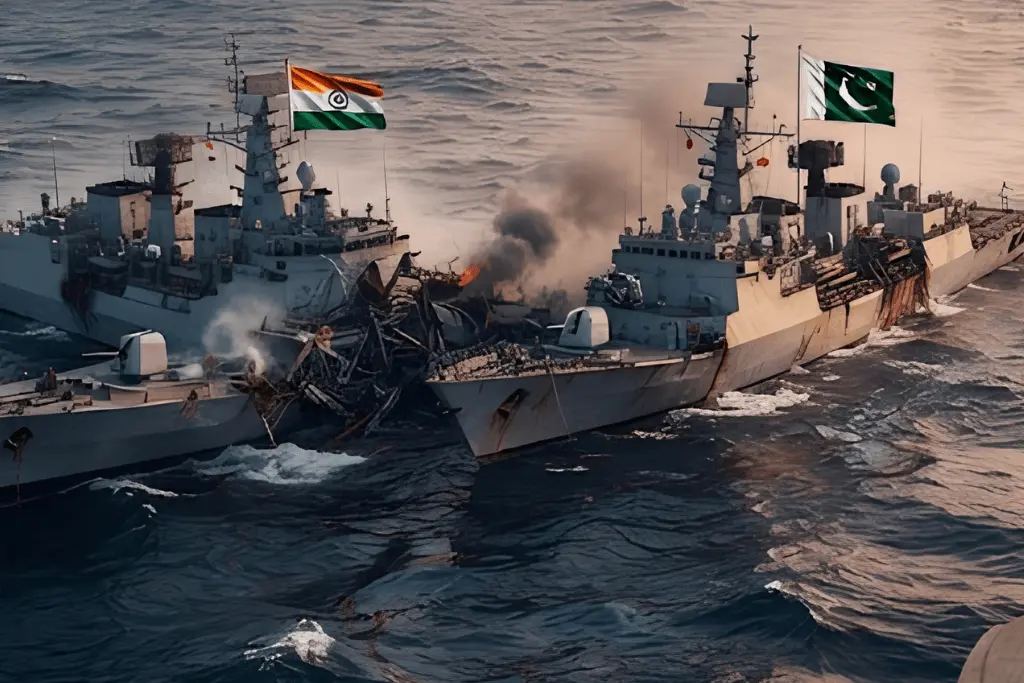
Naval vessels of Pakistan and India collided in the Arabian Sea, raising diplomatic tensions between the two countries as both governments summoned senior diplomats and lodged formal protests. The incident took place on September 15, at a time of heightened sensitivity in Pakistan-India relations after the military stand-off in May 2025.
Pakistan said the incident happened during the biannual exercise of the Pakistan Navy SEASPARK-26, which is taking place within Pakistan’s Exclusive Economic Zone. Islamabad said an Indian naval ship carried out manoeuvres dangerously close to a Pakistani ship, causing the two vessels to make contact. India has given an alternative account, saying the collision took place during routine surveillance in international waters.
The two sides have given conflicting accounts of the 1991 bilateral pact on giving advance notice of military exercises, manoeuvres and troop movements. Both sides have quoted the agreement while criticising the other for actions that could increase the risks at sea.
Pakistan Registers Formal Protest Over Naval Incident
Pakistan’s Foreign Office summoned India’s chargé d’affaires in Islamabad and registered a formal protest over what it called an unacceptable action of an Indian naval vessel. Islamabad alleged an Indian ship had operated dangerously close to a Pakistani naval ship during SEASPARK-26.
The Foreign Office said the incident was a serious concern under international law and the 1991 agreement. Pakistan also called for adherence to bilateral mechanisms to prevent incidents at sea and reduce the possibility of misunderstandings between the two militaries.
The Pakistani stance has highlighted the need for maritime safety and the measures already in place to build confidence. The diplomatic response also offers Islamabad an avenue to address the incident through formal channels, rather than risk a naval encounter escalating into a broader military confrontation.
India And Pakistan Give Conflicting Accounts
India has also issued a formal protest, summoning Pakistan’s letter of appointment in New Delhi. The Indian Ministry of External Affairs said the collision resulted from what it called unacceptable behaviour on the part of a Pakistani naval unit and advised Pakistani authorities to exercise greater care while conducting naval operations.
But Pakistan’s story is quite different. The Foreign Office claims the Indian vessel undertook aggressive manoeuvres in the vicinity of a Pakistani ship during SEASPARK-26. No account has been issued by either side independently, which may help to settle the competing claims around the circumstances of the collision.
The conflicting accounts make the diplomatic management of the incident all the more important. In the event of sensitive relations between the two countries, good communication between the military and diplomatic authorities can prevent a maritime accident leading to further misunderstandings.
Seaspark-26: A Perspective On Pakistan Navy Exercise
SEASPARK-26 is a biennial exercise of the Pakistan Navy which is held to assess maritime readiness and operational capabilities. Pakistan’s Foreign Office said the collision occurred while the naval exercise was underway in Pakistan’s Exclusive Economic Zone.
The Exclusive Economic Zone of Pakistan extends beyond the territorial waters and gives specific rights over natural resources and economic activity. The difference between territorial waters and an EEZ is significant when considering the various accounts of the incident. The overarching principles of international law of the sea continue to govern naval navigation through such waters.
The presence of an organised naval exercise also points to the importance of communication and safety procedures. Pakistan’s emphasis on existing maritime arrangements emphasises the necessity of minimising the risk of inadvertent encounters of military ships operating in areas of strategic importance.
1991 Agreement Targets Maritime Miscalculations
The 1991 Agreement on Advance Notice of Military Exercises, Manoeuvres and Troop Movements was designed to reduce the probability of military activity being misinterpreted by either side. Article 10 includes provisions on the separation of naval vessels and submarines operating in international waters.
The agreement calls for naval vessels and submarines to maintain a distance of at least three nautical miles in international waters. Both Pakistan and India have invoked this provision in their statements following the latest clash, although each government has blamed the other for the alleged breach.
The continued relevance of the agreement demonstrates the importance of bilateral confidence-building measures. Such arrangements offer a framework for dealing with military incidents through diplomatic channels, and may help to reduce the dangers of unexpected encounters.
The Arabian Sea Remains Important For Pakistan
The Arabian Sea has great strategic and economic significance for Pakistan due to the country’s coastline, commercial ports and maritime trade routes. Thus, the naval preparedness of Pakistan is directly associated with the protection of shipping, economic infrastructure and maritime interests.
The country has invested heavily in upgrading naval capabilities and creating a more secure maritime environment. SEASPARK-26 is one such exercise in broader efforts to maintain operational readiness and protect Pakistan’s maritime interests.
However, an incident with a neighbouring navy shows the significance of preserving effective communication at sea. Stable maritime relations facilitate commercial shipping and reduce the chances that operational encounters will create broader regional uncertainty.
Diplomacy Still Matters For Pakistan
Pakistan’s decision to summon India’s diplomatic representative provides an established mechanism for communicating Islamabad’s concerns. Formal diplomatic protests can register objections without the immediate response needing to be within institutional channels.
Pakistan has also urged respect for international law and existing bilateral agreements. This kind of approach highlights the rules of the game and the diplomatic interactions, instead of allowing the maritime incident to affect the overall development of bilateral relations.
Diplomacy is of particular importance in the event of military incidents between countries that have a history of confrontation. Discussions between foreign ministries and diplomatic missions can help to clarify positions and create space for further discussions on maritime safety.
Earlier Military Confrontation Preceded Collision
The latest naval incident occurred more than a year after Pakistan and India conducted military strikes before agreeing to a ceasefire in May 2025. The last stand-off had demonstrated how quickly the tensions between the two nuclear-armed neighbours can escalate after a major security incident.
Recent reporting calls the Arabian Sea collision the first known public direct military encounter between the two countries since that period of hostilities. The latest incident has therefore attracted special attention because of the wider security environment in South Asia.
Crisis management must be handled carefully due to the historical context. Where there is a collision but no independent account, it can create competing narratives, and established communication mechanisms are crucial to avoid further escalation.
Safety At Sea Can Foster Regional Stability
The incident underscores the wider implications for maritime safety in the Arabian Sea, and a busy maritime environment is operated by commercial shipping, fishing activity, naval patrols and military exercises, where miscalculations can have consequences beyond the vessels directly involved.
The stability of Pakistan’s economy is directly tied to the security of sea lanes. Karachi and other coastal facilities underpin international trade, and uninterrupted shipping is crucial for imports, exports and energy supplies.
So, more transparency on naval exercises and compliance with existing safety provisions can be a stabilising factor in the region. In situations where military vessels operate in proximity in strategically sensitive waters, the relevance of bilateral mechanisms remains.
Pakistan Keeps Eye On International Maritime Rules
Pakistan has reacted strongly, referring to international law and the 1991 bilateral agreement. The Foreign Office has urged all parties to respect arrangements designed to prevent incidents at sea and stressed the importance of avoiding anything that could escalate tensions in the region.
The focus, thus, allows Pakistan to frame the incident in terms of maritime safety, established agreements and diplomatic procedures. The approach also allows an examination of the facts of the collision without automatically assuming the encounter was an intentional military escalation.
There is little independent verification of exactly what happened and in what order. Both sides have given different versions of the story, but reporting so far has not allowed an independent reconstruction of the ships’ movements before the collision.
India-Pakistan Maritime Tensions Require Judicious Handling
The naval collision has added yet another diplomatic challenge for Pakistan and India at a time when their bilateral relations are still sensitive. Both governments have lodged formal protests over the incident, with each side refusing to take responsibility for the encounter.
Pakistan’s immediate priority is to safeguard its maritime interests, maintain its naval preparedness and to pursue diplomatic options to resolve the dispute. The continued adherence to agreed arrangements can provide an important framework to reduce the likelihood of further incidents.
Maritime stability is an important long-term interest for Pakistan, with the Arabian Sea remaining vital to Pakistan’s economy and national security. The right kind of diplomatic engagement, reliable military communication and respect for existing confidence-building arrangements can ensure that an isolated naval collision does not spiral into a wider regional crisis.