Farhan Qureshi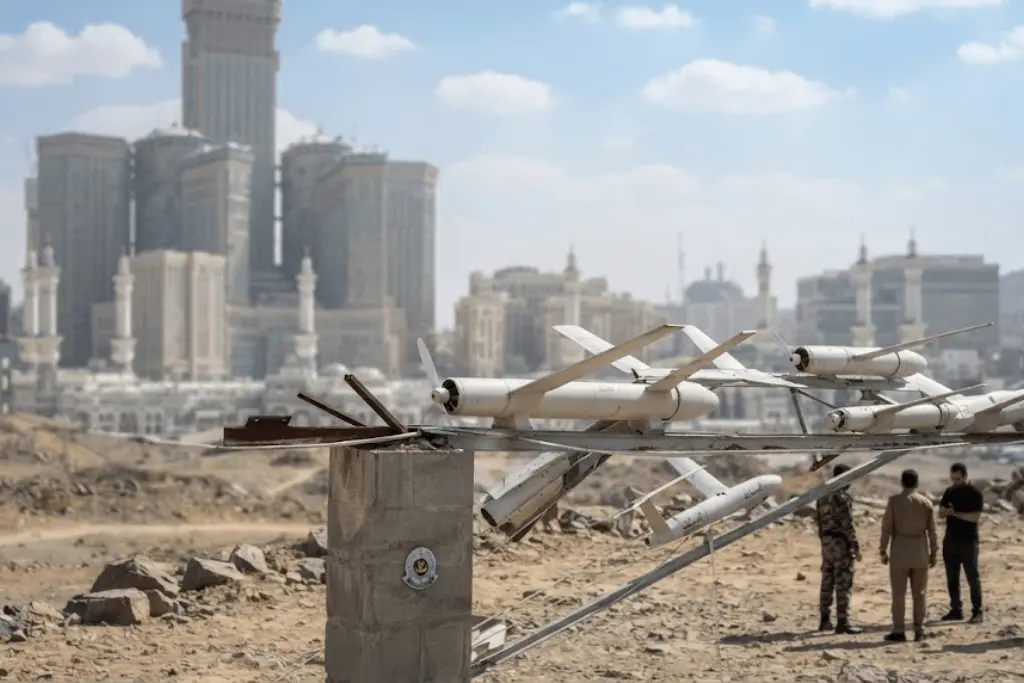
Saudi Arabia said it intercepted and destroyed a drone, preventing the Makkah drone threat from entering the restricted airspace around Islam’s holiest city. The incident came amid intensifying fighting across Yemen and new claims of missile and drone attacks on Saudi military and energy facilities.
Saudi Air Defences Shoot Down Drone Near Makkah
The drone was downed at about 6:50 pm local time on Tuesday, and the debris fell south of Makkah, said Turki al-Malki, a spokesman for the Saudi-led coalition. The Saudi account referred to it as an alleged Houthi attempt to approach the holy city, making the reported location all the more sensitive.
Saudi authorities said the incident was linked to a previous ballistic missile launch toward Makkah in July 2017. The latest interception has therefore refocused attention on the protection of the holy city, especially as military activity has heightened in Yemen and across the wider region.
Makkah Security Draws Greater Islamic Attention
Millions of Muslims still travel to Makkah for Hajj and Umrah, where the Grand Mosque is located. Any reported military threat near the city therefore has implications beyond the immediate Saudi-Yemeni conflict, and can generate concern among governments and religious communities throughout the Islamic world.
The Organisation of Islamic Cooperation condemned alleged attacks on Makkah, Madinah and other Saudi targets. The organisation condemned the attack on civilian infrastructure and holy sites and expressed solidarity with Saudi Arabia and support for measures to protect the holy places.
Pakistan will support Saudi Arabia with practical and diplomatic measures if the situation escalates, said Defence Minister Khawaja Asif. He also mentioned Pakistan’s commitments under the trilateral Makkah Defence Alliance with Saudi Arabia and Turkiye and stressed the importance attached to the security of the holy places.
Saudi Houthi Fighting Escalates Throughout Yemen
The reported interception of a drone came as Saudi and Houthi military activity increased sharply. Saudi Arabia launched heavy airstrikes on Houthi positions in Yemen; Houthi military officials claimed missile and drone attacks on several targets in Saudi Arabia.
Houthi military spokesman Yahya Saree said the group had hit an Aramco facility in the Red Sea port city of Yanbu and the Khamis Mushait airbase in southern Saudi Arabia. It was not possible to independently verify claims of how many missiles and drones were used at the time of reporting.
Government forces said they had taken positions such as Al-Masariya Hill and Al-Labanat camp, while military commanders said Houthi fighters were in retreat on multiple fronts. We could not independently verify the battlefield claims and footage of the fighting.
Red Sea Shipping Under Renewed Security Pressure
Yanbu is a major Saudi oil export hub on the Red Sea, and the East-West Pipeline offers Saudi Arabia another route to ship crude to Red Sea terminals. Any threat to these facilities or to nearby maritime routes may raise concerns about energy security and international shipping.
The East-West Pipeline is of strategic importance as it can carry Saudi crude to Red Sea export facilities without all shipments having to pass through the Strait of Hormuz. Hence, more secure alternative routes may become increasingly important in times of broader Gulf instability.
Pakistan is sensitive to international oil market fluctuations as imported fuel is a significant part of the country’s energy needs. A prolonged disruption in the region could push up global prices and add to the strain on transport, industry, inflation and the handling of foreign exchange.
Broader Us-Iran Conflict Raises Gulf Risks
The Saudi-Houthi escalation is happening in the wider context of the US-Iran confrontation, which makes the security environment across the Middle East even more complex. Several flashpoints for military escalation have emerged involving Yemen, Gulf waters and energy infrastructure, stoking concerns about the prospect of further regional spillover.
Governments trying to protect populations and strategic assets have been put under further pressure by a combination of drone strikes, missile launches, airstrikes and maritime hazards. Energy markets are sensitive in particular as the Gulf and Red Sea are home to several key routes for global oil and commercial shipping.
Importance Of Diplomatic Role Of Pakistan Increases
Pakistan has always supported peaceful resolution of regional disputes and has continued to engage in dialogue with important Middle East partners. The latest events in and around Makkah underscore the need for diplomatic avenues that can resolve security issues without letting individual incidents escalate into wider confrontations.
Islamabad has a relationship with Riyadh based on defence cooperation, economic ties and strong religious links. Hence, backing Saudi territorial integrity continues to be a key element of Pakistan’s regional foreign and security engagement, especially when threats are reported in the vicinity of the holy cities.
Gulf Conflict Sparks Worries Over Regional Stability
The reported interception near Makkah is part of a far wider escalation that involves Saudi Arabia, Yemen and the wider Gulf region. The Saudi air operations, drone and missile claims, and ground fighting in Yemen have led to a more uncertain security environment.
The protection of holy sites is a particularly sensitive issue for countries with a Muslim majority, and strikes or threats to oil facilities may have consequences well beyond the immediate conflict zone. Thus, international concern is likely to remain focused on religious security and the protection of critical energy infrastructure.
Makkah Incident Underscores Need For Regional Restraint
The alleged shoot-down of a drone near Makkah has added a very sensitive dimension to the growing Saudi-Houthi conflict. While the Houthis have denied targeting the holy city, Saudi authorities have described it as an alleged threat, leaving important aspects of the episode contested.
The strong reaction from the OIC, Arab League and Yemen’s internationally recognised government demonstrates the wider importance of security in and around Makkah and Madinah. The security of holy places, civilians, energy facilities, and international shipping lanes remains closely connected to stability in the region.