Farhan Qureshi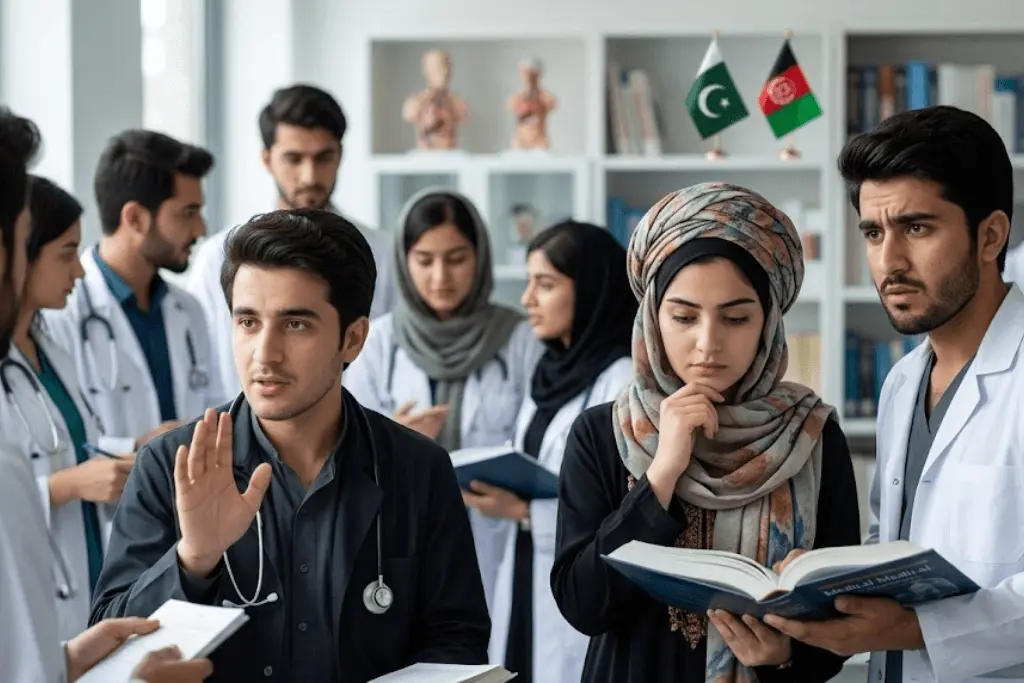
Pakistan Afghan students, especially those in medical and dental fields, face a recent order that adds another sensitive issue to already difficult relations between Islamabad and Kabul. The policy has been criticised by Afghan authorities, especially over restrictions on new admissions and directions regarding students already studying in Pakistan.
This matters because Afghan students have been hosted in Pakistani institutions for years, where they receive professional education that can help Afghanistan build its future health workforce, and any change affecting medical and dental education has implications beyond universities and individual students.
Later, Pakistan’s Foreign Office issued a clarification regarding legally registered students with valid visas. This clarification suggests that the policy may not be intended to block the education of all Afghan students in a recognised degree program in Pakistan.
New Admissions Face Uncertainty Due To Restrictions
The new policy reportedly prohibits new Afghan students from entering medical and dental programs. The move is part of a wider security and diplomatic rift between Pakistan and Afghanistan, and the education policy issue is being presented as part of a wider bilateral debate.
Restrictions can create uncertainty about future educational prospects for Afghan students seeking admission to Pakistani institutions. Medical education is sensitive in a special way, since the admission process implies long-term commitments, professional licensing requirements and substantial academic preparation.
Universities and medical institutions in Pakistan still play an important role in the country’s education system. Specific information on eligibility, visas and existing enrolments can help ensure that the policy implementation is orderly and avoid unnecessary confusion for students and institutions.
Important Notice For Afghan Students On Legal Enrolment
A large part of the policy is concerning students already legally registered on degree programs. Foreign Office clarification said Afghan students with valid visas and who meet the required enrolment criteria can be allowed to continue their studies.
The clarification is important as a blanket interruption of existing studies may impact students who have already undergone several years of academic training. Continuity for eligible students can generate more certainty while maintaining the difference between current legal enrolments and future admissions.
Such a move could also help in protecting Pakistan’s image as an education destination. Clear rules and predictable treatment of foreign students legally enrolled in the country can support the wider academic links of the country, while allowing authorities to maintain appropriate immigration and security controls.
Pakistan-Afghanistan Relations Face Wider Security Challenges
The Afghan students’ dispute cannot be completely divorced from wider tensions between Pakistan and Afghanistan. Islamabad has often voiced fears of security threats from militancy on Afghan territory, whereas Kabul has denied accusations of harbouring or assisting militant groups heading for Pakistan.
These differences have had an impact on the management of the border, trade, diplomatic engagement and movement between the two countries. The education issue is yet another dimension to a complex relationship that is increasingly shaped by security concerns in bilateral policies.
Pakistan’s attitude has generally been to focus on protecting national security while maintaining diplomatic and economic contact with Afghanistan. It would help to reduce undue pressure on people-to-people relations by distinguishing carefully between security measures and legitimate educational exchanges.
Afghan Students Are A Critical People-To-People Bridge
Afghan students in Pakistan form part of the wider social and educational link between the neighbouring countries. Many students in Pakistan spend years studying, and in that time they build professional networks and personal relationships, creating connections that can last beyond graduation.
Graduates from the medical and dental fields can contribute a great deal to the healthcare system of Afghanistan. Training received in Pakistani institutions can give professional skills that may later be of help to hospitals, clinics and healthcare services in Afghanistan.
Pakistan can also find a positive outlet for people-to-people contact in maintaining appropriate educational links. Academic ties can, even in times of political tension, maintain the links that underwrite longer-term regional understanding.
Balance And Clarity Needed In Policy Implementation
The challenge for Pakistan is to balance legitimate security and immigration concerns with the interests of students already legally present and enrolled. Clear implementation procedures can help institutions to distinguish between new applicants, current students, and persons whose visa or enrolment status is not compliant.
Universities and medical institutions also require timely guidance so that admissions offices, academic departments and administrative authorities can implement the policy consistently. Predictability can reduce disruption for students and prevent individual cases from becoming larger diplomatic disputes.
So a transparent framework can meet the institutional interests of Pakistan while minimising unnecessary humanitarian and educational consequences. This would strengthen the principle that national security can be pursued concurrently with orderly academic engagement.
Pakistan Can Retain Security, Education Links
Border security and cross-border militancy remain big issues for Pakistan, especially with the geographical proximity to Afghanistan. At the same time, education can be a relatively constructive arena for bilateral engagement provided there are clear legal and administrative provisions.
Retaining eligible students with valid visas on recognised programs can help to retain an important aspect of Pakistan-Afghanistan people-to-people ties. It also avoids unnecessary disruption to students who have already spent years in professional education.
The distinction between new admissions and existing legal enrolments may therefore become important in managing the wider impact of the policy. Pakistan can achieve this through consistent implementation and diplomatic communication, not by closing every avenue of educational cooperation.
Afghan Student Policy Could Define Future Pakistan-Kabul Relations
The Afghan students issue has arisen at a sensitive time in Pakistan-Afghanistan relations, with security concerns continuing to influence political and diplomatic decisions, and the implementation of the policy may also affect how it is seen in Kabul and in Afghan communities with links to Pakistan.
Pakistan has a chance and a responsibility to show that security concerns can be addressed with targeted, transparent and legally sound measures. Continued access for eligible students with appropriate, clear restrictions may help to sustain educational links without undermining national regulatory priorities.
A balanced approach would serve Pakistan’s larger interests, maintaining security and constructive people-to-people ties. One area where responsible policy and straightforward discourse can help to contribute to longer-term regional stability is education, as Islamabad and Kabul work through difficult bilateral questions.