Adeel Hassan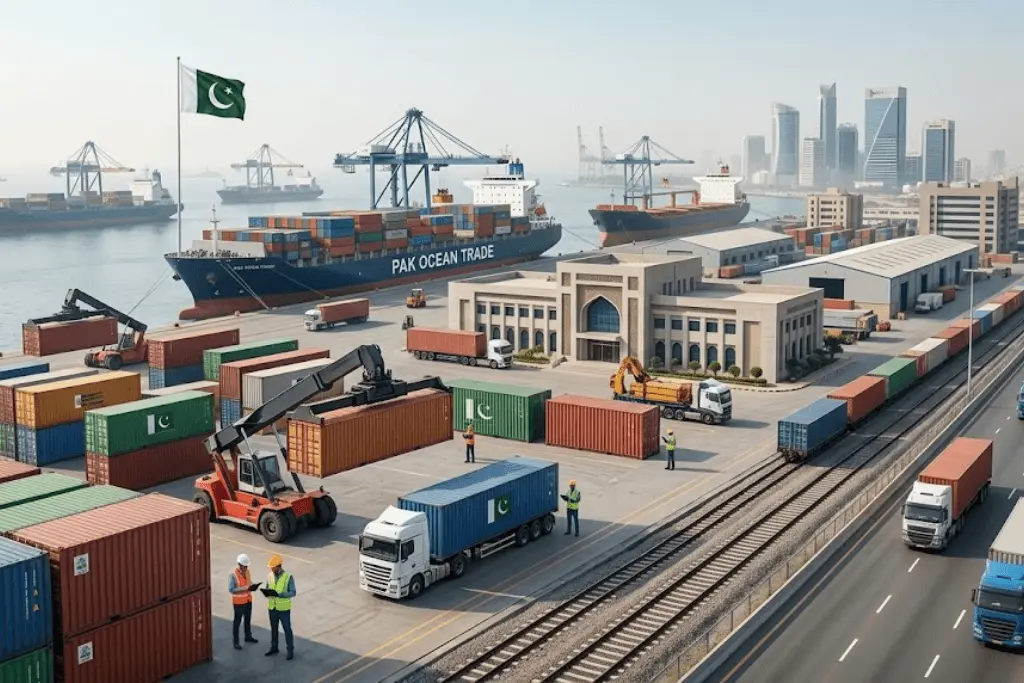
The measures under Pakistan trade reforms aim to cut unnecessary import duties, streamline commercial procedures and remove obstacles that have historically raised costs for businesses. The reforms could make access to raw materials and key inputs cheaper, thus improving the competitiveness of Pakistani producers in the domestic and international markets.
Pakistan Aims Export-Led Growth Through Trade Reform
The new reform program is primarily focused on increasing the role of exports in Pakistan’s economic growth. The country has been under pressure for years from a chronic trade deficit, high import costs and a lack of diversification in its export base. A more competitive tariff structure may help to ease some of these constraints by lowering the cost of machinery, raw materials and other inputs used by domestic manufacturers.
The government’s longer-term export ambition is a step change in economic thinking. Getting to exports of over $100 billion by 2035 will require major improvements in manufacturing capacity, product quality, logistics, market access and business productivity. Tariff reform alone cannot do that, but it can help create a more conducive environment for businesses trying to increase output and compete outside of Pakistan’s domestic market.
Five-Year Tariff Plan Will Cut Cost Of Business
The five-year tariff reform plan is particularly targeted at lowering duties on raw materials and basic commodities. Such measures can directly impact manufacturers as imported inputs are often a substantial component of production costs. Factories might also be able to buy necessary materials at reduced prices and perhaps improve the pricing of finished Pakistani products in foreign markets with lower duties.
It could also encourage firms to invest in more high value-added production rather than relatively low-value activities. More readily available machinery and intermediate goods allow manufacturers to improve their production techniques, to introduce new products and to increase capacity. Such improvements are especially relevant for sectors that are trying to upgrade within international value chains and compete on quality, not only on price.
Trade Facilitation Board Can Improve Pakistan’s Trade
The proposed Trade Facilitation Board aims to tackle yet another huge impediment to trade: complex procedures and delays along supply chains. The body, to be directly headed by Prime Minister Shehbaz Sharif, is expected to coordinate efforts to streamline trade processes and sort out problems facing businesses at borders and within supply chains.
An efficient trade administration can make a huge difference to companies doing business in competitive international markets. Even if tariffs are low, there can be high costs due to port delays, complex paperwork, varying regulations and inefficient border processes. Simplifying these processes could thus complement tariff reductions and make Pakistan a more attractive destination for manufacturing and export activity.
Pakistan Businesses May See Benefit From Easier Access To The Markets
Pakistani industries would have opportunities if better trade conditions prevailed. Textiles and apparel remain a significant contributor to exports, but future growth for the country may increasingly depend on diversifying into engineering products, information technology, agriculture, processed food and other higher-value sectors.
If Pakistani companies could cut input costs and improve logistics, they would be more competitive against producers from other emerging markets. Increased competitiveness allows for greater production, employment creation and investment in export-oriented industries. The country’s economic base could gain breadth beyond traditional export categories by stronger private-sector activity over time.
And Diversification Of Exports Is Still Key To Economic Development
In the past, Pakistan’s export performance has been dominated by a few product categories, making it vulnerable to changes in global demand and commodity prices. Trade reforms provide an opportunity to promote a wider export basket, particularly in cases where Pakistani producers have natural or developing competitive advantages.
Agriculture and agro-processing have a lot of potential if productivity, quality standards and supply chain infrastructure improve. At the same time, Pakistan can enhance its industrial capabilities and develop products that meet international standards and become more involved in regional and global manufacturing networks. These opportunities would require coordination between trade policy, industrial policy, energy reform and investment incentives.
Trade Reforms May Boost Investment, Industrial Recovery
The predictability of economic policy has a significant effect on investment decisions. A well-articulated five-year tariff framework could provide manufacturers with more clarity in terms of planning for factory expansion, machinery purchases or new product lines. Hence, consistency in trade policy can be just as important as individual tariff cuts.
Pakistan would also benefit from a more attractive investment climate to attract foreign companies seeking competitive production sites. Participation in international supply chains can provide capital, technology, management skills and access to overseas distribution networks. International companies’ local sourcing relationships and manufacturing operations could help domestic suppliers. Firms that do not boost productivity may be unable to compete with more competitive imported substitutes.
Energy and transportation costs remain a major constraint for Pakistani manufacturers. Even if tariffs on raw materials are lowered, high electricity, fuel and logistics costs can add to the final price of locally produced goods. Measures to improve infrastructure, energy efficiency and the reliability of domestic supply chains are therefore needed to accompany successful trade reform.
Trade Reforms Can Foster Stronger Growth In Pakistan
The new trade agenda provides Pakistan an opportunity to embed commerce more firmly in the long-term economic development process. Reduction of tariffs and simplification of regulations, as well as the establishment of a Trade Facilitation Board, can help remove some of the structural obstacles that have hampered businesses and constrained export competitiveness.
Achieving the target of $100 billion in exports by 2035 is ambitious, but progress toward this goal can help to achieve broader economic goals if it is accompanied by investment in productivity, infrastructure, skills and innovation.