Farhan Qureshi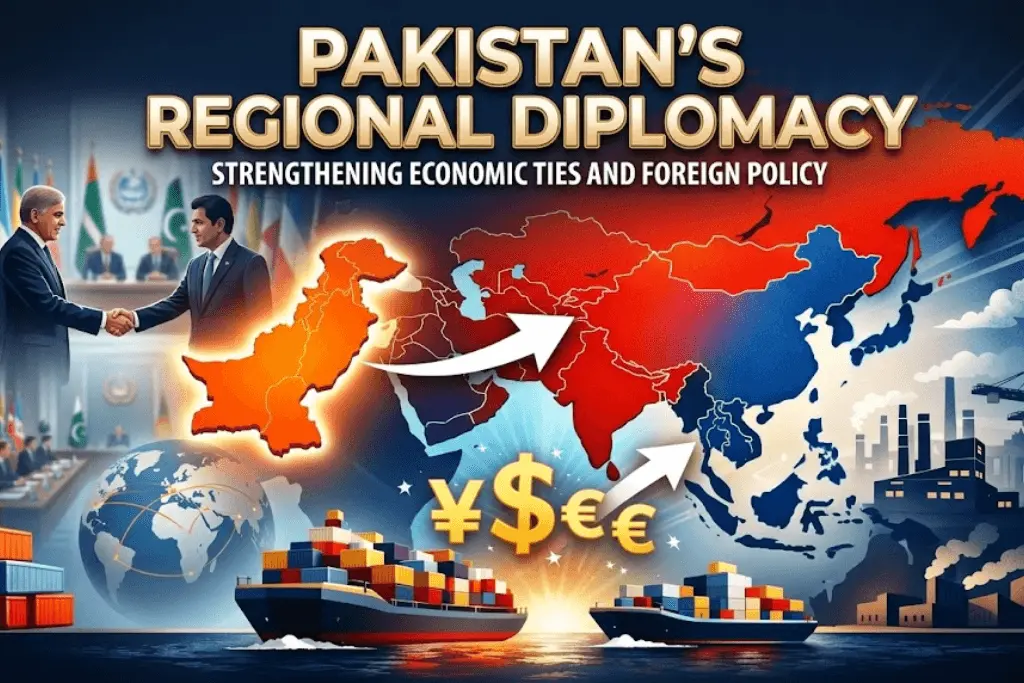
Deeper integration between RCEP Pakistan and RCEP economies could give Pakistani firms access to some of the world’s most important and dynamic markets. The bloc includes major East and Southeast Asian economies, potentially giving exporters a chance to look beyond Pakistan’s traditional trading partners.
Textiles and garments continue to be an important part of Pakistan’s export economy, but the potential opportunity is much more than this. Pakistani producers have competitive advantages in products such as copper, sesame seeds, maize and selected agricultural products. This could help to diversify the country’s export base if market access and competitiveness improve.
Diversification Of Exports Can Help Pakistan Strengthen Its Trade Position
Another important consideration for long-term trade growth is that Pakistan relies on a relatively narrow range of export products. Greater engagement with RCEP economies may provide incentives for Pakistani businesses to diversify into new product categories and move away from a narrower export base.
Agriculture especially offers opportunities where Pakistan has a large base of production and experience in products that can serve international markets. Stronger regional demand could benefit sesame seeds, maize and other agricultural commodities, if exporters meet quality, packaging, food safety and delivery requirements.
CPEC Can Help In Regional Supply Chain Integration
The China-Pakistan Economic Corridor offers a crucial connection between Pakistan’s wider regional connectivity goals and the possibility of engagement with Asian value chains. Better infrastructure and transport links could help Pakistani manufacturers better connect with suppliers, producers and consumers across the region.
Greater integration into regional supply chains could foster investment in sectors in which Pakistan could become a competitive production base. Partnerships with Asian companies in manufacturing could mean opportunities for technology transfer, skills development and improved production standards.
Pakistan Could Attract More Investment From The Region
Economic integration associated with RCEP could create opportunities for Pakistani exports and for foreign investment. Investors from key Asian economies could see Pakistan as a potential location for setting up production facilities linked to both regional markets and the country’s large domestic consumer market.
If the investment in manufacturing is related to export-oriented production, it can be particularly beneficial. Textile, processed agricultural products, engineering goods or other manufactured goods factories could avail of the workforce and location of Pakistan to cater to clients across Asia.
Competitiveness Challenges Abound For RCEP Membership
Pakistan’s possible participation in RCEP-related trade arrangements would not necessarily lead to stronger exports. Back home, local firms could find themselves competing against highly developed manufacturing economies across Asia, many of whom are already using advanced production systems, well-established supply chains and strong export networks.
Therefore, Pakistan’s industries would have to perform better in terms of productivity, quality, technology adoption and reliability of delivery. Trade barriers may be lowered, which benefits exporters. But domestic producers are also more exposed to foreign competition.
Pakistan Needs Stronger Trade Bases For Integration
Thorough diplomatic and economic preparation is necessary for formally joining RCEP. Existing trade relationships with ASEAN members and other participating economies would be particularly relevant in view of the fact that deeper regional integration depends on a strong network of trade agreements and compatible commercial rules.
Hence, Pakistan would have to work out a phased strategy instead of looking at RCEP participation as an immediate goal. Strengthening bilateral and regional trade relationships can help Pakistani exporters understand regulatory requirements and give policymakers a clearer picture of sectors that could benefit from greater market access.
Pakistani Manufacturers Could Take Advantage Of Asian Partnerships
If investment and technology partnerships are ramped up appropriately, Pakistan’s manufacturing sector could stand to benefit from a deeper commercial engagement with Asian economies. Cooperation with advanced industrial economies may give access to production techniques, management expertise and modern technologies.
Industrial cooperation can also push Pakistani firms toward higher-value products. Instead of competing mainly based on lower production costs, companies could build better capabilities in specialised manufacturing, engineering, processed foods, textiles and technology-enabled industries.
Agriculture Is Another Option For Pakistan
Pakistan’s agricultural sector could benefit from greater access to large Asian consumer markets, particularly where domestic producers are able to consistently meet international standards. Products like sesame seeds and maize already demonstrate the potential of Pakistani agriculture to engage in wider regional trade.
The opportunity isn’t just raw commodities. There is scope for food processing, packaging and agricultural technology to add value within Pakistan, enabling exporters to get more for processed and branded products rather than just bulk shipments.
Pakistan Can Play An Intermediary Role Between Regions
Pakistan’s geographical positioning gives it a unique chance to link South Asia, Central Asia, China and markets connected to the Arabian Sea. Enhanced engagement with RCEP economies could complement existing regional connectivity initiatives, and reinforce Pakistan’s position as a potential hub for trade and investment.
The country’s ports and transport infrastructure can support this wider role, while CPEC provides an established framework to strengthen links with China. Thus, greater integration into Asian value chains could deliver benefits beyond bilateral trade numbers.
Reform Of Trade Policy Can Prepare Pakistan For RCEP
Pakistan’s ability to benefit from wider Asian integration would rest on its domestic economic reforms. Tariff preferences are not enough; there needs to be export competitiveness and energy reliability. Taxation, financing, infrastructure, skills and regulatory efficiency affect the final cost of Pakistani goods.
Boosting those sectors could make the economy more attractive to both domestic and foreign investors. A business environment conducive to long-term investment would give manufacturers more confidence to build up capacity and develop products aimed at overseas markets.
RCEP Could Aid Pakistan’s Long-Term Economic Goals
The RCEP is a strategic challenge and opportunity for Pakistan. Access to major Asian markets could boost export diversification, investment, manufacturing and agricultural growth, and enhanced supply chain links could lift the country’s participation in regional value creation.
At the same time, successful integration would require Pakistan to address competitiveness gaps and shore up its trade fundamentals. Domestic industries would need to raise productivity and quality, and policymakers would need to forge stronger commercial ties with RCEP economies and make sure infrastructure and regulations are conducive to international trade.