Farhan Qureshi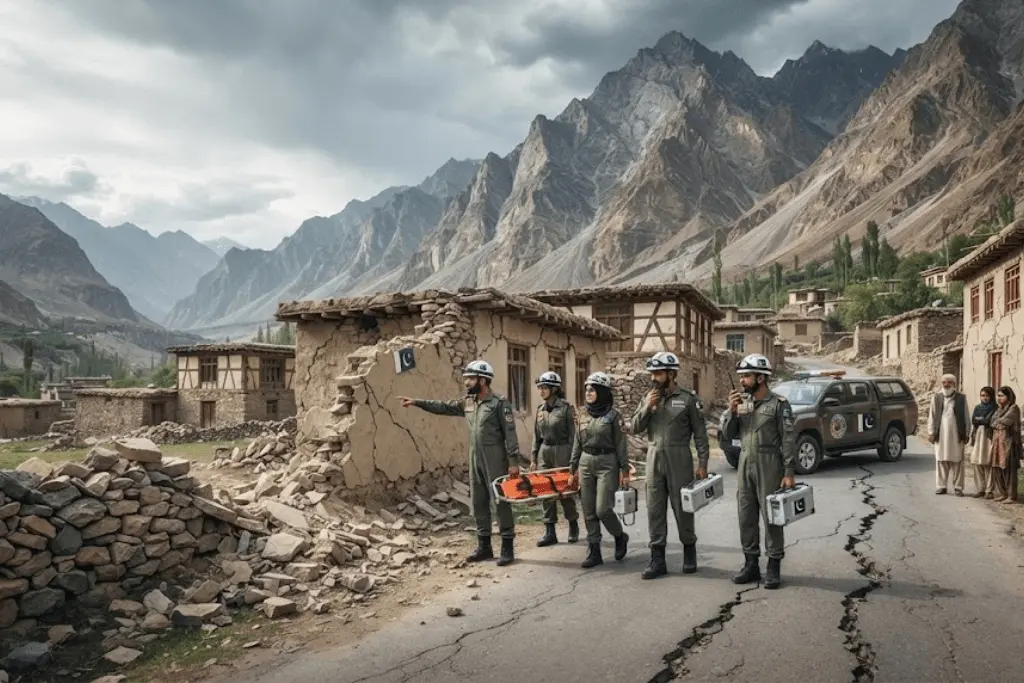
A 5.1-magnitude earthquake in Gilgit-Baltistan on August 13, 2026, was another reminder of the country’s seismic vulnerability in Pakistan’s northern regions. The US Geological Survey said the quake hit at a depth of 58.9 kilometres and there were no casualties or property damage.
The lack of reports of casualties or heavy damage is a good sign of resilience in the affected area. Meanwhile, the event underlines the need to strengthen robust preparedness systems across Pakistan, especially in the mountainous areas and in the populous areas where repeated seismic activity is likely.
Another Earthquake Hits Pakistan’s Northern Region
A 5.1 magnitude earthquake hit northern Pakistan on August 13, with the affected area identified as Gilgit-Baltistan. The US Geological Survey put the quake’s depth at 58.9 kilometres, and initial reports said there were no casualties or damage to property.
The relatively limited impact shows the importance of earthquake depth, location, construction quality and population exposure for the consequences of seismic activity. Where an earthquake takes place. The preparedness of communities and infrastructure can result in very different outcomes for a moderate earthquake.
Pakistan Remains Vulnerable To Earthquakes
Pakistan is close to the active plate boundary between the Indian and Eurasian plates. The continuous movement and interaction of these plates are responsible for the seismic activity in several parts of the country.
Northern Pakistan is especially sensitive because of its complicated mountainous terrain and proximity to active tectonic zones. In this region, earthquakes can pose a risk to communities, roads, bridges, schools, hospitals and other critical infrastructure.
Kashmir Earthquake Of 2005 Remains A Major Warning
Pakistan’s current discourse on disaster preparedness is heavily influenced by the lessons of the 2005 Kashmir earthquake. The disaster revealed the vulnerability of buildings, transport networks and emergency response systems across the areas hit.
The extent of the devastation showed that earthquake risks cannot be dealt with only through post-disaster emergency relief. Safer construction, stronger public institutions and community-level awareness can trigger risk reduction before an earthquake.
More Stringent Building Codes Could Lower Earthquake Risks
One of the biggest areas for improvement is seismic-resistant building. Buildings designed according to earthquake engineering principles are more likely to remain structurally sound under strong ground motion.
As Pakistan’s urban environments and settlements grow, the importance of building safety is growing. Construction practices that are responsive to local seismic conditions are needed for residential buildings, schools, hospitals, commercial properties and public facilities.
Early Warning Systems Can Improve Disaster Response
Another important aspect of Pakistan’s strategy for disaster preparedness is the early-warning technology for earthquakes. Sophisticated monitoring networks can detect seismic activity quickly and, in some places, may provide warnings before the arrival of stronger shaking.
Even short warning times can assist in supporting protective action. Transport systems can be slowed or stopped, sensitive equipment can be secured, emergency services can be alerted, and the public can move to safer positions.
Public Awareness Still Key To Earthquake Safety
Communities learn what to do before an emergency happens by regularly practising earthquake drills. Drills can help schools, workplaces, hospitals and public institutions establish familiar procedures and reduce confusion. Gilgit-Baltistan is a mountainous region there are different challenges in disaster management. Earthquakes may also cause secondary hazards, such as landslides, rockfalls and damage to roads that connect remote communities.
A disaster response strategy for such areas needs to take into consideration more than collapsed structures. In the aftermath of a major seismic event, maintaining open transport corridors, communication links and access to medical facilities may be equally important.
National Resilience Can Be Improved Through Coordinated Disaster Management
To be well prepared for earthquakes, national and provincial authorities, emergency services, local administrations, technical agencies and communities must work together. Routine exercises can help agencies discover weaknesses before a real emergency tests the system.
The Latest Earthquake Is A Preparedness Opportunity
The magnitude 5.1 earthquake in Gilgit-Baltistan was without any reports of casualties or damage to property. But the importance of the earthquake is beyond the immediate event. It’s another chance to assess whether the existing disaster preparedness measures are strong enough.
Preparedness reviews can assess emergency communication systems, evacuation plans, hospital readiness, road access and the structural integrity of critical facilities. Such assessments are most useful when done before a major disaster strikes.
Better Preparedness Will Safeguard Pakistan’s Future
Earthquakes are always on the disaster-management agenda because of the active geology of Pakistan, especially in the north, such as Gilgit-Baltistan. There were no reports of casualties or damage to property from the Aug. 13 tremor, which highlighted the continuing threat.
The short-term result is promising; however, long-term readiness still needs to be in place. Better seismic construction, improved monitoring, early warning technology, public drills and resilient emergency infrastructure can all help reduce the human and economic toll of future earthquakes.