Farhan Qureshi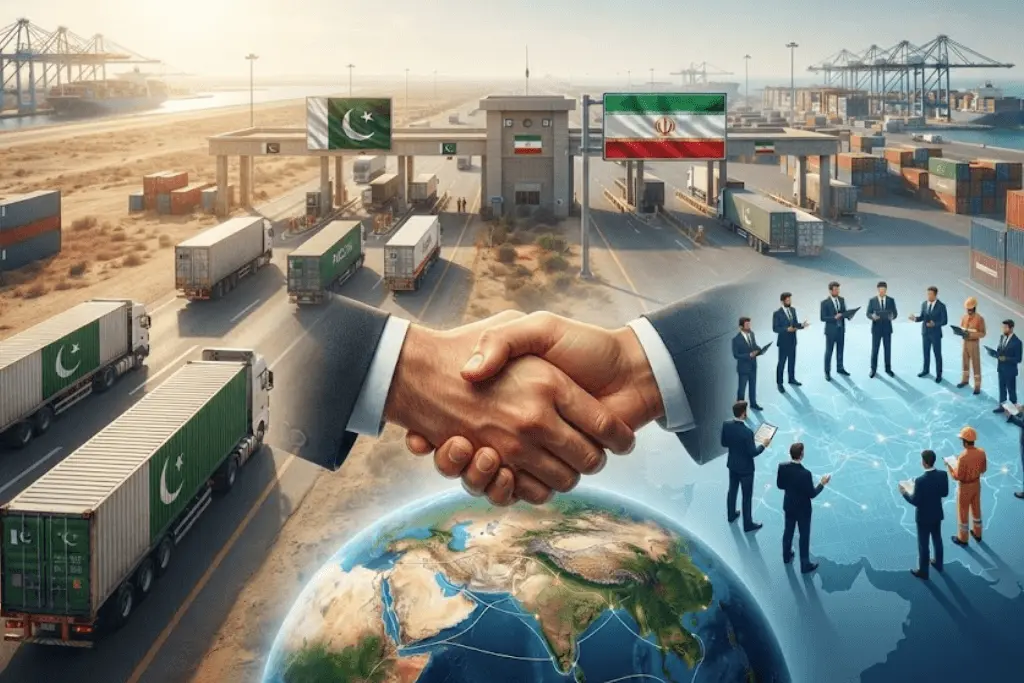
During the 10th Joint Trade Committee meeting held on August 4, 2026, officials of both countries agreed to strengthen Pakistan Iran trade through Free Trade Agreement (FTA) negotiations, improved border infrastructure, enhanced customs coordination, and better maritime connectivity.
Latest talks highlight the increasing momentum in Pakistan-Iran economic ties at a time when regional connectivity is gaining importance across South Asia, Central Asia, and the Middle East. While bilateral trade is currently around $3 billion a year, both governments believe there is significant untapped potential in agriculture, food products, energy, logistics, manufacturing and cross-border investment.
View this post on Instagram
The Renewed Focus On The $10 Billion Trade Goal
The goal of raising bilateral trade to $10 billion has been a major feature of Pakistan-Iran economic talks for years. During the last Joint Trade Committee meeting, both governments reiterated their commitment to translate this goal into real economic results. Trade volumes are very active in commercial terms today, but there is a lot of room to grow. Officials believe that if procedural barriers were removed, customs systems modernised and transport infrastructure improved, the flow of goods across the shared border could increase substantially.
View this post on Instagram
The Significance Of The 10th Session Of The Joint Trade Committee
Joint Trade Committee is one of the major institutional mechanisms guiding economic cooperation between Pakistan and Iran. Senior officials used the Islamabad meeting as an opportunity to review ongoing initiatives, examine current trade issues and agree on practical steps to expand commercial activity across a number of sectors.
The talks focused on customs modernisation, transport facilitation, logistics in the maritime area, export promotion, investment opportunities and future trade agreements to ease business.
Free Trade Agreement Talks Pick Up Steam
One of the major outcomes of recent discussions has been a renewed impetus to conclude a comprehensive Free Trade Agreement. Additional customs infrastructure will help authorities process increasing volumes of cargo more efficiently, while supporting future growth in bilateral trade.
Karachi And Gwadar Ports Improve Connectivity
Another important pillar of Pakistan-Iran economic cooperation is maritime connectivity. Officials are also working to improve cargo handling procedures at Karachi Port in tandem with addressing delayed container clearances that impact commercial supply chains.
Higher usage of both Karachi and Gwadar ports provides great opportunities to develop regional logistics networks linking South Asia, Central Asia and the Middle East. Gwadar’s strategic position also provides the opportunity to act as a hub for regional trade through integrated land and sea transportation routes. Efficient port operations reduce transportation costs, shorten delivery schedules and improve overall supply chain reliability for businesses operating in regional markets.
Pakistan’s Opportunities For Export Still Expanding
In addition to agriculture, Pakistan can expand exports of textiles, pharmaceuticals, engineering products, processed foods, chemicals, construction materials and manufactured goods. Increasing the variety of exports would increase bilateral trade and reduce dependence on a limited range of commodities.
Commercial Growth Driven By The Private Sector
Government accords are an important policy framework, but for trade to grow in a sustainable way, it needs to be driven by the private sector. The participation of business delegations in the official talks is an opportunity to find practical commercial opportunities and to create new partnerships between businesses.
Supply chains are often developed by private enterprises, which also lead to the development of new products, more investment and employment through increased commercial activity. Regular business forums promote communication between exporters, importers, logistics providers, financial institutions and investors. This results in better attainment of wider economic goals through closer collaboration between business and government.
Regional Connectivity For Wider Economic Opportunities
Pakistan’s location gives it a unique advantage for regional trade integration. Better transport links between Pakistan and Iran allow greater connectivity between South Asia, Central Asia, the Gulf region and neighbouring markets. Better road, railway and maritime infrastructure helps speed cargo movement and fosters greater regional commercial integration.
The regional connectivity initiatives also support Pakistan’s broader economic strategy by improving access to new markets and encouraging foreign investment in transport and logistics infrastructure. As regional trade corridors develop, Pakistan could become an increasingly important commercial gateway.
Challenges That Still Need Attention
While recent positive developments are encouraging, several challenges persist in affecting the growth of bilateral trade. To keep border operations efficient, continuous investment is required in technology, infrastructure and administrative capacity to modernise Customs.
The financial plumbing around cross-border payments needs to be developed further to enable commercial transactions to be more seamless. Regulatory reforms must go hand in hand with improvements to transport infrastructure to ensure that increasing trade volumes can flow efficiently through border crossings and maritime ports.
Prospects For Long-Term Economic Cooperation Between Pakistan And Iran
Pakistan and Iran have matching economic strengths, and this makes for a good basis for expansion of long-term trade relations. With continued progress in negotiations of a Free Trade Agreement, modernisation of customs, improvements to border infrastructure, maritime cooperation and private sector engagement, bilateral trade could increase significantly in the coming years.
If the momentum continues, the $10 billion shared trade goal will not only boost Pakistan-Iran economic ties, but also complement Pakistan’s wider strategy to promote exports, boost regional connectivity, attract investment and create sustainable long-term economic growth.