Farhan Qureshi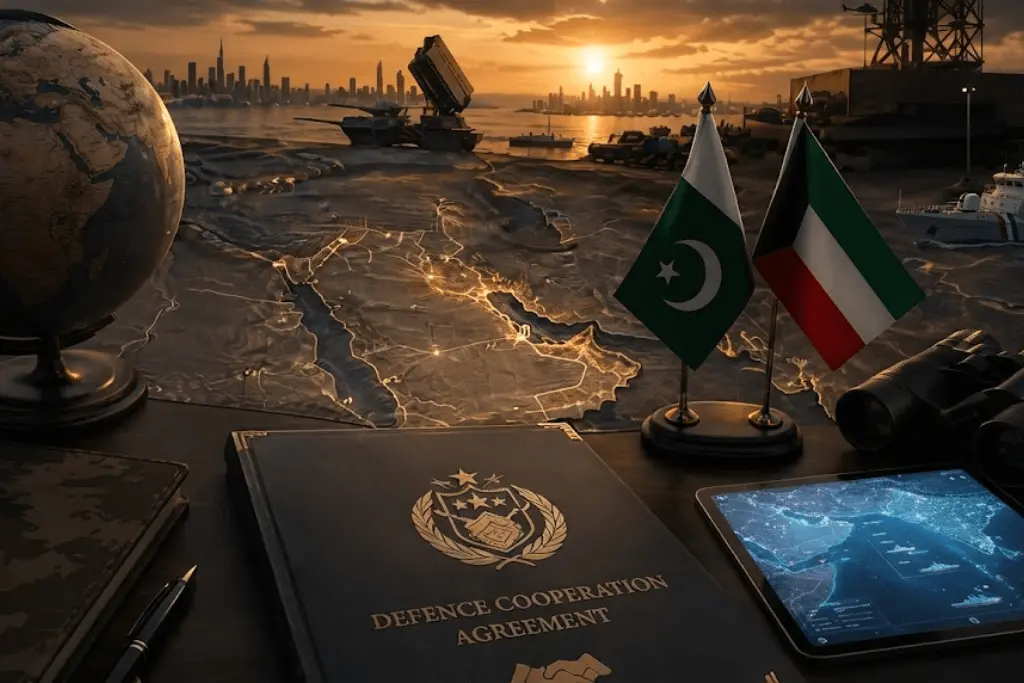
Recent developments in Pakistan Kuwait relations show a common desire to promote regional stability, enhance economic growth and establish stronger institutional ties. In addition to defence cooperation, the governments of both countries have also decided to increase cooperation in sectors that support sustainable development and long-term economic prospects.
For Pakistan, the enhanced partnership consolidates its emerging stature as a major regional partner in the Gulf and opens new avenues for trade, investment, technology exchange and workforce cooperation.
Pakistan, Kuwait Enter A New Phase Of Bilateral Relations
Pakistan-Kuwait relations are rooted in historical mutual respect, diplomatic cooperation and long-standing people-to-people contacts. Collaboration has increased over the years in labour, economic development, education, and regional affairs.
This relationship has been accelerated in recent diplomatic exchanges, with structured mechanisms for deeper cooperation in several sectors. High-level meetings between Pakistan’s Deputy Prime Minister and Foreign Minister Ishaq Dar and Kuwait’s Foreign Minister Sheikh Jarrah Jaber Al-Ahmad Al-Sabah have reinforced both countries’ commitment to advancing bilateral engagement.
The latest agreements point to an all-encompassing partnership rather than cooperation in specific sectors. Officials from both countries have stressed long-term cooperation that helps economic development, institutional capacity and regional stability. This wider strategic approach sets the stage for more cooperation in the coming years.
Officially Ratified The 5-Year Defence Cooperation Agreement
The agreement provides a framework for structured institutional defence cooperation and provides opportunities for regular interaction between the armed forces of the two countries.
The deal does not include the automatic collective defence obligations and combat deployment commitments that traditional military alliances do. Rather, it is about professional cooperation, exchange of knowledge and building of institutional capacities.
The official ratification gives more certainty to future defence cooperation and sets the basis for long-term military engagement.
Defence Cooperation Extends To Several Strategic Areas
The agreement covers a number of areas of cooperation to improve defence institutions and professional capabilities.
Military education and professional training are a key element of the partnership, allowing for greater interaction between defence personnel through structured learning opportunities and joint programs.
The framework also promotes cooperation in logistics, defence planning, military technology, intelligence sharing, electronic communication systems and scientific cooperation. These areas are conducive to enhancing institutional effectiveness while encouraging the exchange of technical expertise.
Other articles provide for cooperation in the defence industries, in the military media, in sports activities, in cultural exchanges and other mutually agreed activities.
Both countries are building professional cooperation based on institutional development and at the same time in line with their national policies and international obligations.
Joint Military Committee To Guide Future Cooperation
For its effective implementation, Pakistan and Kuwait will establish a Joint Military Committee comprising representatives of both countries.
The committee will be responsible for monitoring annual cooperation plans, coordinating official visits, reviewing conducted activities and approving future programs on the basis of mutually agreed priorities.
The meetings are to be held annually, alternately in Pakistan and in Kuwait. This rotating arrangement allows for regular dialogue while keeping up continuous institutional engagement. This kind of structured oversight helps to ensure agreed initiatives are moving forward efficiently and aligned with shared objectives.
Defense Spillover To Economic Cooperation
A lot of attention has been focused on defence cooperation, but economic collaboration is an equally important component of the growing bilateral relationship.
Both governments pledged to deepen partnerships in trade, investment, energy, labour, agriculture, education, health, information technology and food security.
These sectors provide opportunities to foster commercial exchanges and to support sustainable economic growth at the same time. Greater cooperation can also spur more private sector involvement and help build new business partnerships between firms in both countries.
Strengthening economic ties is a reflection of the broader objective of building a more diversified bilateral relationship that will yield long-term dividends beyond simply diplomatic collaboration.
Joint Working Groups Seek Faster Progress
A key feature of the latest diplomatic engagement is the formation of specialised joint working groups on priority sectors.
Special working groups will be established on energy, agriculture, food security, health, information technology, education, labour, and investment to monitor implementation and identify other opportunities for cooperation. These working groups are an institutional mechanism for translating diplomatic agreements into concrete initiatives. With regional economic integration advancing, enhanced Pakistan-Kuwait cooperation can be a plus in broader Gulf-South Asia commercial relations.
Regional Significance: Strengthened Partnership
The expanded partnership is also important for the region as a whole. Pakistan has strong economic, diplomatic and strategic interests in the Gulf region and it is therefore especially important to develop strong bilateral relationships. The defence cooperation agreement underscored Pakistan’s position as a trusted institutional partner that could contribute to regional stability through professional cooperation rather than military confrontation.
At the same time, greater economic cooperation is a reflection of the two countries’ shared desire to promote sustainable development, investment and long-term prosperity. The emphasis on security cooperation and economic development is well-rounded and indicative of a contemporary diplomatic strategy that favours institutional partnerships and mutually beneficial engagement.
Benefits To Pakistan In The Long Run
Improved relations with Kuwait would provide Pakistan with opportunities in all sectors at the same time. Defence institutions will benefit from broader professional cooperation, and businesses may enjoy better access to investment and commercial opportunities.
Educational exchanges, technology collaboration, healthcare partnerships, and workforce development activities can over time help to further deepen the bilateral engagement.
The structured mechanisms of implementation guarantee that cooperation does not stay at the level of diplomatic statements but is made a concrete long-term activity. The growing ties of Pakistan with its Gulf partners also include improved relations with Kuwait, which is part of the broader foreign policy objectives of regional cooperation, economic development and institution building.
Conclusion
The recent agreements between Pakistan and Kuwait are a major step in the development of one of the region’s long-standing bilateral partnerships. The formal ratification of the five-year defence cooperation agreement, in addition to wider commitments concerning trade, investment, energy, education, healthcare and technology, is indicative of a holistic vision of future collaboration.
The establishment of joint military committees and specialised working groups provides a practical framework for implementation of these commitments, while ensuring regular institutional dialogue. The enhanced partnership reinforces Pakistan’s position as a constructive regional partner and opens new avenues for economic development and strategic cooperation.