Sana Khalid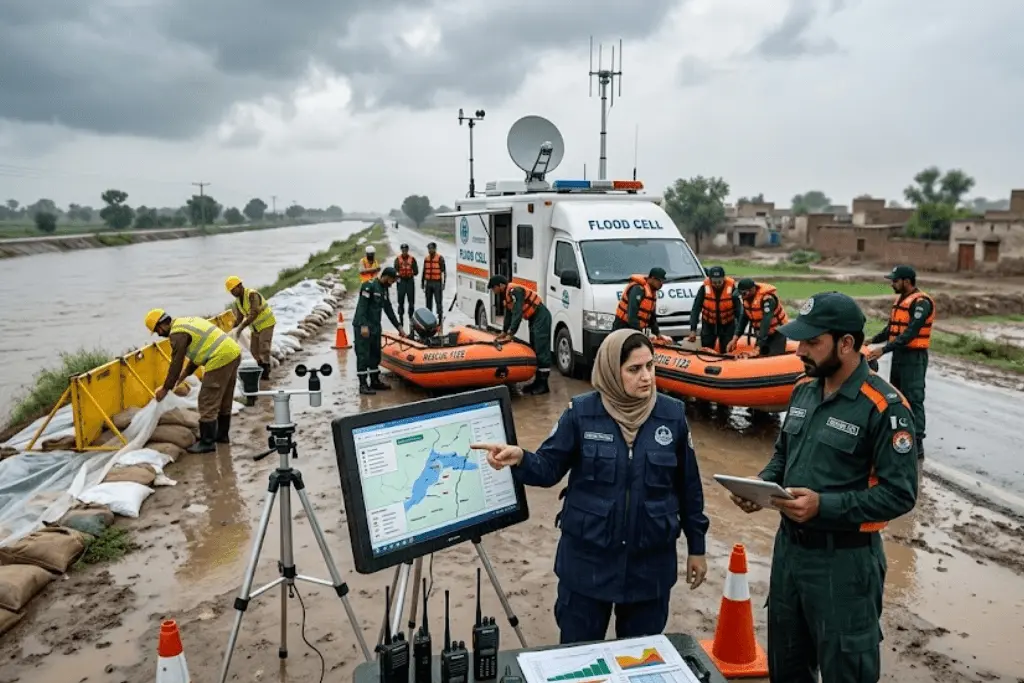
The Provincial Disaster Management Authority (PDMA) Punjab has taken remarkable measures for early preparation under the Punjab Monsoon Preparedness Plan 2026, including installation of state-of-the-art monitoring systems and coordination with district administrations, Rescue 1122, and other agencies to enhance preparedness for possible intense weather events.
Punjab’s proactive steps are part of a wider effort in Pakistan to enhance climate resilience and emergency management schemes in the face of unpredictable weather variations.
The PDMA Teams Start Operating Technology-Based Flood Monitoring And Warning Programmes
A crucial part of the Punjab monsoon scenario planning is the early detection by modern technology and the coordination of emergency response. In the context of One Government Flood Management, PDMA is taking digitisation steps for weather conditions and water level monitoring through digital command systems.
Receiving the same information as the situation from other Government departments in real time can enhance the effectiveness of evacuation planning and emergency response.
It is expected that technology will increase the efficiency in responding to sudden weather events, especially in areas where the risk of sudden floods and river overtopping is high in Punjab.
Rescue 1122 Is Getting Up-To-Date Equipment For Its Work In Emergencies
Teams of Rescue 1122 are now equipped with modern rescue equipment in all the districts of Punjab, which has improved the emergency response capability of Punjab.
The improved rescue fleet features aluminium rescue vessels, air-lift drones for flood rescues, and jet skis. Some can be equipped with 200 kg of life vests and relief materials to the affected regions.
The improvements are especially critical for regions where roads are compromised or water depths rise, making recovery efforts relying on conventional equipment time-consuming.
Improved Drainage Facilities Help To Reduce The Risk Of Urban Flooding
Against this, Punjab expanded the mandate of the Water and Sanitation Agency (WASA) and enhanced drainage management in every district to correct the situation.
On a large scale, the desilting of large drains has been finished to aid water circulation and to prevent water logging in town areas during rainy days. In areas where these enhancements have been made, the time water takes to clear has dropped from approximately 48 hours to 2 to 2.5 hours.
Improved water drainage facilities provide protection for residents’ properties, businesses, and roads against extended waterlogging.
Enhance Flood Protection Infrastructure In Vulnerable Areas
Keeping critical flood protection infrastructure in good shape is part of Punjab’s monsoon plan. Efforts are underway for the improvement of the embankments and completion of key protection works to reduce the flood risk in the river.
Jalalpur Flood Protection Bund is one of the major projects undergoing completion to help manage extreme river flows and safeguard the surrounding communities.
In addition to infrastructure improvement, illegal encroachments along riverbanks and hill torrents in the watersheds are being eliminated. These will help achieve more natural flow of water and reduce the likelihood of increased flooding.
Strengthening flood barriers and maintaining waterways are regarded as important measures to take in protecting the agricultural land, residential areas and the public infrastructure.
High-Risk Districts Mobilise Emergency Relief Provisions
Emergency preparedness has been carried out by the district administrations of Punjab for people residing in high-risk areas. Special attention has been given to sensitive areas such as Dera Ghazi Khan, which is sensitive to floods and hill torrents, and Multan.
Relevant facilities have been set up at the tents for emergency relief, such as mobile medical units, veterinary and livestock facilities, etc.
The set-ups are aimed at providing medical care, needs, and emergency support to impacted communities in the event of extreme weather.
Emergency Housing At Apna Ghar Campaign Focusing On Safety In Housing
The government of Punjab has launched the Apna Ghar Mehfooz Ghar scheme to ensure better storm protection and weather resistance for vulnerable houses.
The programme offers citizens interest-free loans worth up to Rs 1 million for enhancing the structural resilience of houses and protection against extreme weather.
The programme is designed on a preventive principle and aimed at helping the communities by supporting residents not just in case of damage, but to make their housing more resilient.
Public Safety Guidelines Issued Before Heavy Monsoon Rains
The Punjab government is still reaching out to the Pakistan Meteorological Department (PMD) to roll out safety warnings and notifications due to monsoons.
Due to the high likelihood of urban flooding in low lying area with heavy rains, residents should take precautions during rainfall days, avoid needless movement during severe rainfall, and avoid going to low-lying areas.
Temporary road closures, poor visibility and heavy downpour are very critical for travel precautions in the affected region.
It is acknowledged that, to minimise risk, particularly ensuring effective emergency service operations, efforts are required in terms of public collaboration.
Monsoon Plan 2026 For Punjab: Aspiring Towards Long-Term Disaster Resilience
Heat Wave Management (HWM) and Monsoon Management (MM) are united for public protection.
The agro-climatic approach for weather management in Punjab also takes into account the linkage between extreme heat and sudden monsoon rainfall. Shaded facilities, water and hydration relief (rehydration) continue to be in effect across the province.
Punjab Monsoon Preparedness Plan 2026 is a collaborative initiative to enhance disaster management, emergency response and safeguarding communities.