Farhan Qureshi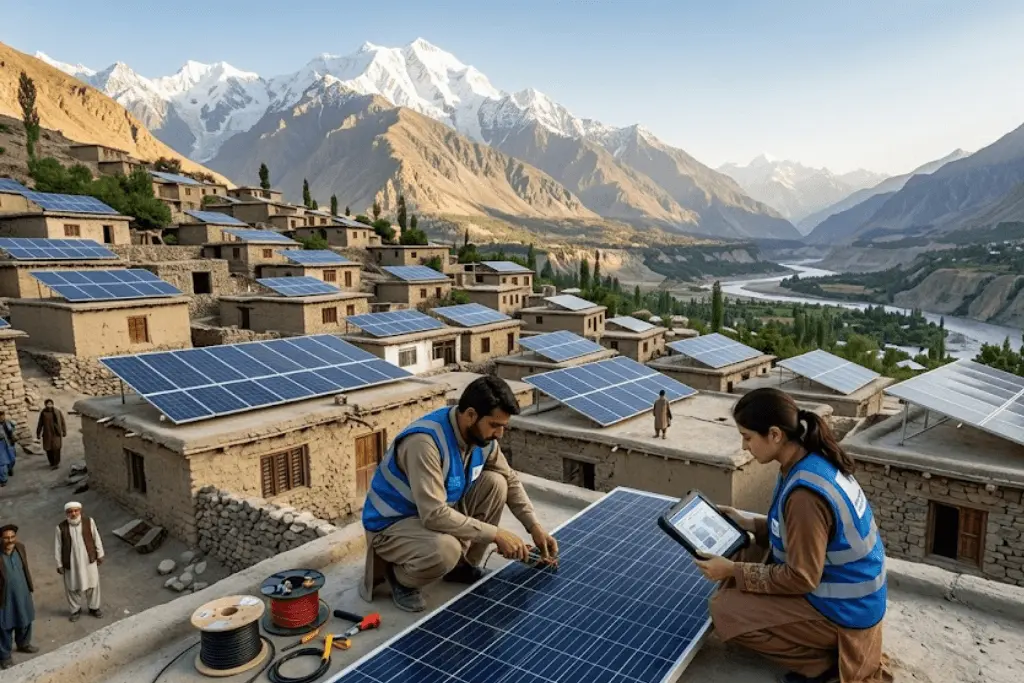
The Gilgit Baltistan Solar Project 2026 will include 82MW of utility-scale solar development and 18MW of rooftop solar. The project for Gilgit-Baltistan was funded by the federal government to address the problems of dependence on imported fuels and sustainable development.
In the long term, the program will help households, tourism businesses and public institutions by providing a more reliable power supply in areas prone to blackouts.
100mw Solar Project In Gilgit-Baltistan – Overview
The project has been divided into two main parts. The first phase will see installation of 18MW of rooftop solar systems on government buildings and selected public facilities. The second part is an 82MW household solar programme to increase access to renewable energy for residents.
The plan for installation on rooftops is designed to generate clean power on existing buildings, without taking any more land. Electricity bills will be reduced and energy independence improved by installing solar systems in government offices, public buildings and other appropriate locations.
The household solar component aims to provide solar solutions in important population centres such as Gilgit, Skardu, Chilas and Khaplu.
Government Buildings And Homes To Get Rooftop Solar Installation Plan
Rooftop solar phase big part of Gilgit-Baltistan’s energy strategy. The government buildings will be equipped with solar panels to reduce electricity costs and improve efficiency in public service.
The residential solar programme will be aimed at verified beneficiaries, including households with financial challenges and communities with irregular power interruptions.
Selected beneficiaries should receive the solar panels free of any direct cost, but some costs relating to ancillary equipment may be met separately. They may include inverters, batteries, transportation costs and installation-related requirements.
This approach allows the adoption of solar energy while ensuring that systems are functional and appropriate for the unique geographical conditions of the region.
Timeline Of Implementation Of Gilgit-Baltistan Solar Project
The rollout of the project is planned in various stages between 2026 and 2027.
Work on solarisation for government buildings in the Baltistan Division is expected to be completed by October 2026. The strategy is to improve energy efficiency in public sector buildings in this phase.
The government buildings in Gilgit and Diamer will have an 18MW rooftop solar project by December 2026.
The bigger 82MW household solar expansion will continue during 2026 and 2027, covering major areas including Gilgit, Skardu, Chilas and Khaplu. The phased implementation approach allows authorities to manage the installations according to regional requirements and geographical challenges.
Energy Cost Savings And Economic Benefits To Pakistan
The Gilgit-Baltistan Solar Project’s one of the biggest advantages is the expected reduction in power costs. The programme is estimated to save around Rs 1 billion a year by reducing the dependence on costly imported fuels.
Lowering energy costs for institutions and households. Good access to power can help small businesses in remote areas operate longer, provide better services and create more economic activity. Improvement of Power Supply Reliability in Mountainous Areas by Means of Solar Energy
The energy challenges in the mountainous terrain of Gilgit-Baltistan are unique. In some areas, geography and infrastructure issues mean that there is no electricity at all.
Solar project is an opportunity to improve the energy security through the development of local power generation capacity. Rooftop solar systems can relieve pressure on existing electricity networks and provide reliable backup when supplies are disrupted.
Local Jobs And Opportunities For Regional Development
The solar drive is an element of Pakistan’s larger agenda to increase clean energy generation and decrease environmental burden.
The solar project could also bring new opportunities for local jobs and development of technical skills. Solar systems need trained workers to install, maintain and manage them and support renewable energy infrastructure.
Local capabilities have been identified by regional officials and community representatives as an important area for development. Solar-related facilities established locally can contribute to economic activity and job creation in Gilgit-Baltistan.
Furthermore, building out renewable energy infrastructure can also help to support local industry in the technology, maintenance and energy services sectors.
Potential Future Impact Of Gilgit-Baltistan Solar Project On Regional Development
The Gilgit-Baltistan Solar Project 2026 highlights Pakistan’s increasing attention to renewable energy and sustainable regional development. The program hopes to address energy shortfalls and stimulate economic growth by combining rooftop solar and utility-scale generation.