Farhan Qureshi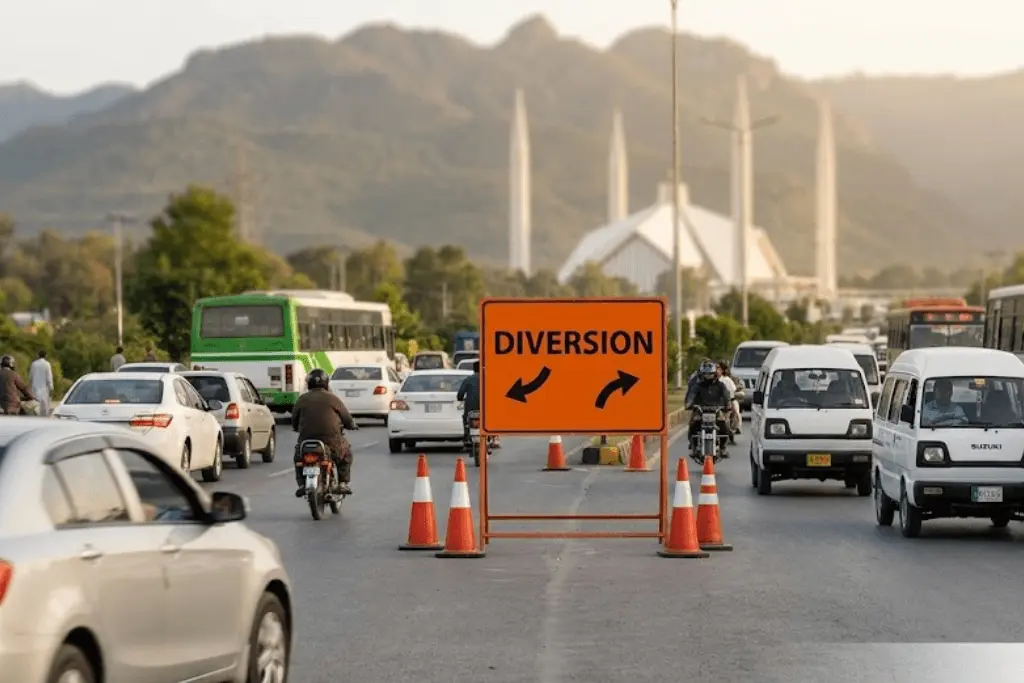
With Islamabad’s growing significance as the diplomatic and administrative capital of Pakistan, Islamabad traffic diversion measures have become increasingly important to support heightened security arrangements during official visits and major state functions. Under these arrangements, a few major corridors of the city will have daily traffic diversions from 7 AM onwards to ensure secure movement and to be able to operate efficiently.
Traffic Diversions Now Begin Daily at 7 AM
The new traffic management plan comes into effect every morning from 7 AM as the busiest commuting hours of Islamabad start. Due to security protocols for foreign delegations, official state business and VIP movements, several strategic routes in the federal capital will be temporarily restricted.
Temporary Road Restrictions on Several Major Roads
The diversion network is part of the most used roads in Islamabad. The Express Highway remains one of the most affected corridors, especially between Koral and Faizabad where traffic volumes are already high on normal working days.
Heavy restrictions have also been seen on Srinagar Highway, especially on the stretch between Zero Point and Dhokri Chowk.
Red Zone Security Measures Remain In Effect
The Red Zone is live, and access is tightly controlled during security operations. Most access points will remain closed to routine traffic during active security periods, with only limited access routes remaining open.
Authorities are still permitting controlled movement through designated approaches, such as Margalla Road and some access corridors near major government buildings and diplomatic areas.
Srinagar Highway Hit Hard In Morning
Srinagar Highway is one of the worst affected routes among all. Due to the closures between Zero Point and Dhokri Chowk, commuters travelling between the northern and southern sectors of the city are badly affected.
Traffic volumes can rise quickly on parallel roads as drivers look for alternative routes to drive during active restrictions. Therefore, morning commuters heading towards government offices, educational institutions and business centres may face longer travel times during diversion periods.
Restrictions for Heavy Vehicles Entering
Heavy vehicles coming to Islamabad during rush hours will be restricted as an important part of the traffic plan. Large trucks, commercial transport vehicles and freight carriers are still not permitted to enter the capital during this period.
The authorities hope the measure will relieve congestion by limiting the number of slower-moving vehicles on major roads that are already operating under capacity constraints.
The restriction could also improve road safety and reduce bottlenecks during times of high traffic pressure. Such measures have been successfully applied in the past for major international conferences and diplomatic summits hosted in Islamabad.
Commuters Find Relief On Alternative Routes
Traffic authorities have identified several alternative routes to minimise disruptions. Margalla Road and 9th Avenue remain the areas of choice for north-south movement within the city.
For those travelling between Rawalpindi and Islamabad, IJP Road and Faqir Aipi Road are viable alternatives to the more severely impacted central corridors. Temporary closures of major highways can also be avoided by motorists using the service roads running parallel to them.
Rolling Closures Allow Roads To Reopen Quickly
The current system is more of a rolling closure than a long shutdown. Roads are only temporarily closed for official convoys, and generally are opened shortly thereafter. This strategy goes a long way to minimising disruption, while maintaining the high level of security required for official visits and sensitive events.
Traffic management teams work closely with security agencies to keep any closures as short as possible from an operational perspective.
Planning Travel Sooner Matters More Than Ever
Authorities advise travellers to plan for potential delays in their journeys. Try to get out earlier in the morning to avoid the worst congestion and temporary street restrictions.
Real-time traffic updates will continue to be provided through official information channels, including Islamabad Traffic Police advisories and FM traffic broadcasts. The Islamabad Traffic Police helpline and emergency response services keep on issuing updated information on diversions and availability of routes during the day.
Pre-planning can significantly lower the level of uncertainty and increase the efficiency of travel times during increased security operations.
Islamabad Still Walking the Tightrope of Security and Mobility
With Islamabad continuing to host international delegations, official meetings and diplomatic events, temporary traffic management measures are likely to be a regular feature of city life.
One of the steps being taken to ensure security without unduly hindering daily economic activity and public movement is the latest diversion strategy. Better coordination between traffic authorities and security agencies has made it possible for Islamabad to deal with the growing complexity of mobility challenges in recent years.
Commuters may have to adjust to morning diversions, but the city’s expanding road network and growing use of digital traffic management tools still underpin smoother transportation across the federal capital.