Urooj Niazi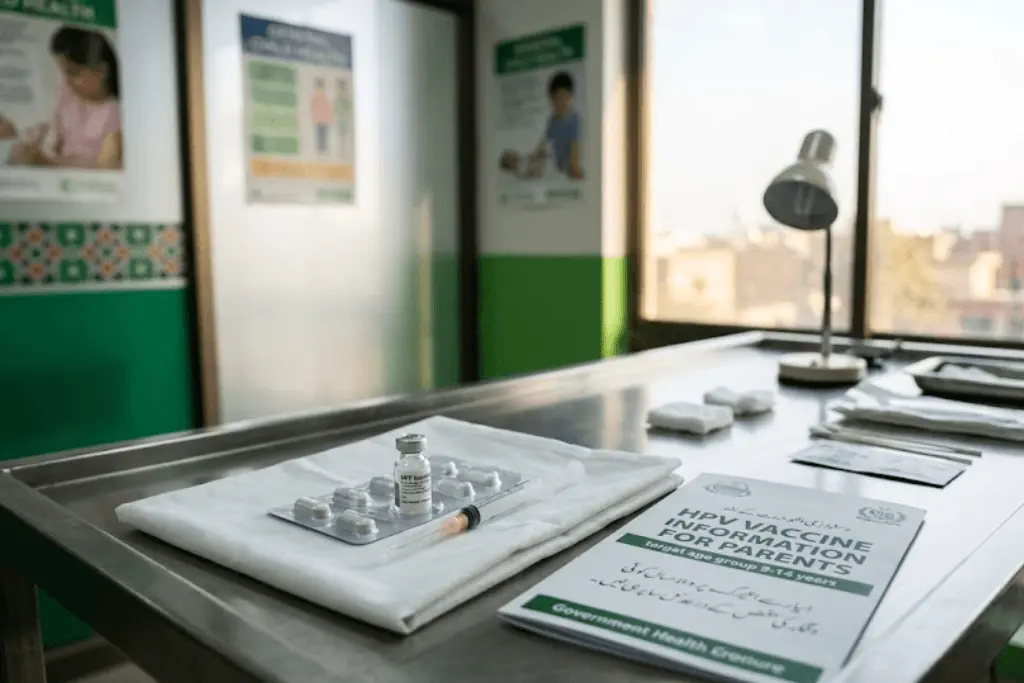
The national vaccination programme is an important milestone in the country’s public health strategy, with the HPV vaccine Pakistan initiative aiming to reduce cervical cancer through early protection and greater public awareness.
Pakistan’s Hpv Vaccination Programme Aims At Young Girls
The national vaccination programme is targeted mainly at girls between the ages of 9 and 14 years. The age group was selected because scientific evidence shows the vaccine produces the strongest immune response in early adolescence.
The programme recommends a single-dose vaccination schedule for girls in this age group. Studies show that a single dose is highly effective and long-lasting in its protection against the types of Human Papillomavirus most associated with cervical cancer.
Vaccine Being Integrated Into Routine Immunisation
Pakistan’s Expanded Programme on Immunisation has been gradually introducing the HPV vaccine in the routine immunisation schedule for eligible girls, especially at 9 years of age.
The integration of the vaccine into routine immunisation services is a major advance in preventive health care planning. Adding HPV protection into the existing vaccination programmes further improves access and gives health authorities a chance to reach more children in both urban and rural communities.
Availability Is Growing Across The Country
First, the vaccination programme was targeted at major population centres and provinces and then extended to other areas.
Currently available in Punjab, Sindh, Islamabad & Azad Jammu and Kashmir and being rolled out in phases across Khyber Pakhtunkhwa, Balochistan & Gilgit-Baltistan. More health facilities and outreach teams are expected to join in delivering the vaccine, which health authorities say should broaden coverage.
Cervical Cancer Still Largely Preventable
One of the most important things about the HPV vaccine is that it can prevent cervical cancer from developing.
Most of the cervical cancers all over the world are caused by Human Papillomavirus. Vaccination greatly reduces the chance of developing the disease later in life by preventing infection from the high-risk strains of the virus.
The Hpv Shot Is Often Referred To As A Cancer-Preventing Vaccine.
The HPV vaccine is an example of a vaccine that can help prevent a type of cancer associated with viral infection, unlike most vaccines that are developed to directly prevent infectious diseases.
This unique characteristic has gained much attention from healthcare professionals and public health organisations all over the world. One of the greatest accomplishments in preventive medicine in the past few decades has been the ability to stop the disease process before any abnormal cellular changes occur.
The Strongest Protection Is Provided For Younger Age Groups
Studies have consistently shown that younger immune systems respond very well to HPV vaccination.
The vaccine works best and lasts longest when given before you are exposed to the virus. The scientific evidence provides the rationale for the strong focus by health authorities on early adolescence rather than on adulthood.
Safety Data Increases Global Confidence
The HPV vaccine has been tested in clinical trials and is being monitored constantly in countries around the world.
They have been administered in millions of doses around the world for years, providing health care experts with plenty of evidence about their safety and effectiveness. The major international health organisations still recommend HPV vaccination as part of routine preventive healthcare programmes.
Schools And Community Clinics Are Essential
Schools are still an important venue for outreach campaigns as they provide an efficient way for healthcare workers to reach large numbers of eligible students. Vaccination services are also available through routine programmes at local health facilities and immunisation centres.
Health departments also conduct outreach camps to ensure access in areas where permanent medical facilities may be limited.
The multi-channel approach is aimed at enabling broader reach across communities in Pakistan.
The Vaccine Is Available At No Cost
The biggest advantage of the programme is that it provides the vaccine free of cost to those who are eligible.
This government-backed project also guarantees that cost is not a barrier to cervical cancer protection. Cost is often cited as an important aspect of successful vaccination campaigns by public health experts.
The vaccine is free of charge, so families of all economic backgrounds can receive the benefits of preventive health care.
The approach underscores Pakistan’s broader commitment to improving health outcomes through accessible medical programs.
Awareness Campaigns Are Becoming More Important
Educational campaigns help families understand how HPV is transmitted, why vaccination is important, and how cervical cancer can often be prevented if caught early. Greater awareness also helps fight the misinformation that can sometimes surround vaccination programmes around the world.
Public understanding remains one of the most important factors in successful healthcare initiatives.
Therefore, it is expected that awareness-raising will remain a critical component of Pakistan’s battle against cervical cancer.
Pakistan’s Preventive Healthcare Initiatives Are Expanding
The HPV vaccination programme is a major example of Pakistan’s increasing focus on preventive medicine rather than just treatment.
Health authorities want to get at cervical cancer before it happens, both to invest in healthier future generations and to cut long-term healthcare costs. The programme also shows an increasing cooperation between national health institutions and international medical partners working towards common public health goals.
With increased coverage and awareness, HPV vaccination could be one of the nation’s biggest successes in cancer prevention and adolescent health in the years to come.