Farhan Qureshi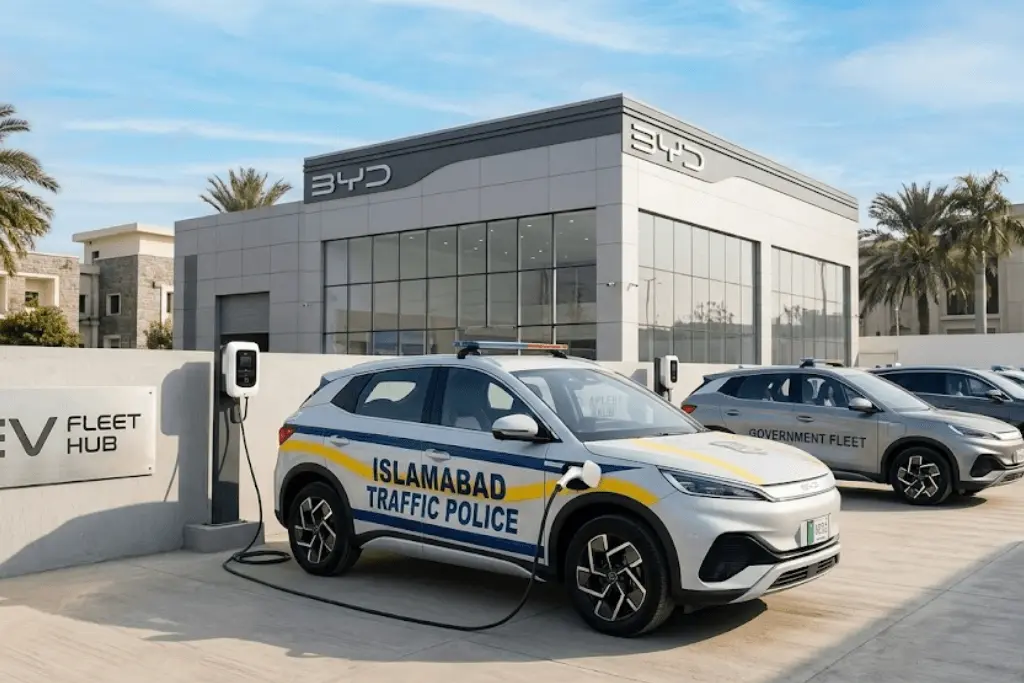
The initiative is part of a broader national effort to reduce fuel costs, improve efficiency, and strengthen the country’s growing EV industry through Pakistan police electric vehicles.
Islamabad Traffic Police Introduce BYD Electric Vehicles
The latest comes from Islamabad, where the Islamabad Traffic Police has started using electric vehicles for patrolling and traffic management duties. The department added the BYD Atto 2 electric crossover to its operational fleet as part of initiatives to modernise law enforcement transportation and improve efficiency in daily operations.
It is one of the first major deployments of electric patrol vehicles to be used regularly by a public institution on the roads of Pakistan. For the federal capital to prove a test bed for technological innovation and government initiatives, the success of this programme could have implications for future decisions by departments across the country.
The New Fleet’s Daily Operations Using Modern Technology
The BYD Atto 2 has a number of features that will be especially useful for law enforcement work. The vehicle has an estimated range of around 410 kilometres on a single charge, meaning officers will be able to remain in service for most of their daily shifts without needing to charge frequently.
The combination of digital technologies and electric mobility is part of wider trends that are shaping modern policing across the world.
Punjab Police Also Moves To Electrification
But Islamabad is not alone in turning to electric policing. The much larger Punjab Police has also added electric vehicles to its fleet as part of a move to modernise patrol operations.
The force has chosen the BYD Atto 3 for several policing roles across the province. Punjab Police is one of the largest law enforcement organisations in South Asia, and decisions taken by them often attract a lot of attention from other provincial administrations.
Operational experience from the deployment may provide valuable information on maintenance costs, charging requirements and long-term performance under Pakistani conditions.
Electric Pickups Broaden Fleet Capabilities
But the electrification programme is not only about passenger vehicles. Islamabad Police has also inducted electric pickup trucks provided by local partners to cater to duties requiring additional cargo capacity and equipment transport.
The introduction of electric pickups indicates that the shift is not just for city police cars. Different departments have different transport needs, and having more electric vehicle options makes it more practical to use them more broadly across government agencies.” The move is another step towards maturity of Pakistan’s nascent electric vehicle ecosystem.
Cutting Running Costs Could Save Substantial Public Money
One of the major benefits of electric cars is the operating costs. Large amounts of petrol and diesel are used by traditional police fleets as patrol vehicles are kept on the move for long periods during each day.
On average, electric vehicles cost much less per kilometre than conventional vehicles that are powered by fuel. Over the years, those savings can add up to serious money, especially for departments with hundreds or thousands of vehicles.
Reduced fuel costs could free up public funds for technology upgrades, infrastructure improvements and public safety projects.
Electric Vehicles Cut Dependence On Fuel Imports
Pakistan is spending a huge amount on imported petroleum products every year. Increased use of electric transport can help to reduce dependence on international fuel markets over time and reduce exposure to swings in oil prices. That means government fleets, often the largest vehicle users in the country, are prime candidates for early electrification efforts.
The Transition Helps To Reach Environmental Goals
The switch to electric mobility is also driven by a wish for environmental sustainability as electric vehicles have no tailpipe emissions. It lowers pollution levels in cities and improves air quality.
Rollout Aligns With Pakistan’s EV Strategy
The initiative is designed to reduce the use of fossil fuels and promote investment in cleaner transportation technologies.
Government procurement is an important tool to support new industries in the early stage of development. Official fleet buying also creates some demand and gives manufacturers more confidence when planning investment and production facilities. So the current rollout is more than a transport decision and is part of a wider industrial strategy.
Local Manufacturing Could Get A Big Boost
Another important development is local production. As part of its long-term plans for the Pakistani market, BYD is setting up an electric vehicle manufacturing plant in Gharo.
Putting BYD vehicles into public fleets can help build a stable market for locally built electric vehicles once they are in production. Local manufacturing could create jobs, strengthen supply chains and boost technology transfer into the domestic automotive industry. “This development is in line with Pakistan’s ambition to become a key player in the region for electric mobility.
The Public Is Currently Debating The Costs Of Buying Up Front.
Despite the potential long-term benefits, discussions continue regarding the higher purchase prices of electric vehicles. Some observers have questioned the wisdom of making large investments in EV fleets during times of economic stress and fiscal adjustment.
Pakistan’s Government Fleet Transformation Is Underway
The introduction of electric police vehicles may be the start of a bigger transformation of public institutions in Pakistan. As charging infrastructure scales and local manufacturing ramps up, similar technologies could eventually be adopted by municipal authorities, administrative departments and service agencies.