Sana Khalid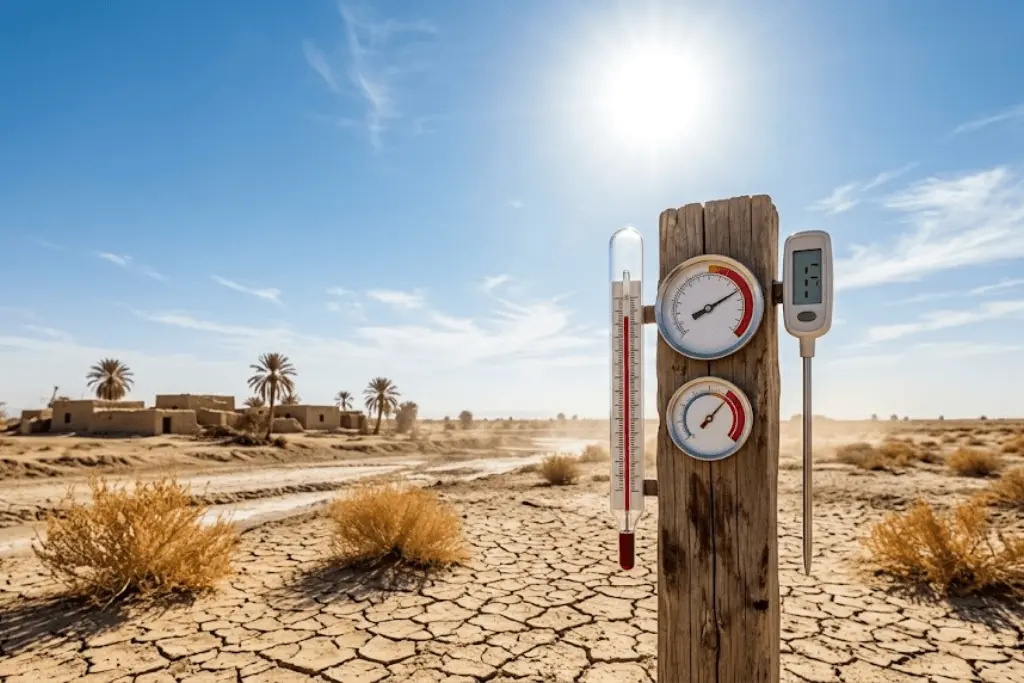
The Pakistan weather outlook 2026 issued by the Pakistan Meteorological Department (PMD) forecasts a hotter and drier June-July-August (JJA) period across the country. The seasonal outlook is generally for below normal rainfall for most parts of the country and above normal temperatures in some areas.
The overall monsoon pattern is still likely to be ‘dominated by irregularity’ with localised heavy rainfall events remaining a possibility, particularly in the north. The situation is being closely monitored, and climate conditions are changing across the summer.
Impact Of The Changing Weather Patterns On The Climate
There are several global drivers of the climate that are affecting the weather outlook in Pakistan this year. Weaker and less consistent monsoon activity is also due to lingering El Niño-Southern Oscillation (ENSO) and the presence of a negative Indian Ocean Dipole.
Sindh And Southern Punjab Are Expected To Experience A Very Hot Day Today
Rising temperatures will be more likely to affect the southern half of the country. Daytime temperatures are expected to often reach more than 45°C in Sindh and southern Punjab, where the humidity level will be high, making the heat index rise.
In cities like Jacobabad, Sukkur, Dadu, Larkana, Multan, Bahawalpur and Rahim Yar Khan, there is a possibility of experiencing long periods of dryness and frequent heatwave-like conditions. A decrease in rainfall may also lead to greater stress on water resources and agriculture in rain-fed regions.
However, the authorities are still taking steps to counteract the effects of the above-average temperatures and raise awareness among the public to reduce the effects of the extreme heat.
The Rain May Be Irregular In Central And Upper Punjab During May
Below normal rainfall overall is forecast for central and upper Punjab. But, meteorologists predict some thunderstorms, strong winds and dust storms from high heat, however.
Sudden weather changes may occur for the entire season in Lahore, Faisalabad, Gujranwala, Rawalpindi and Sargodha. Rainfall may be below normal, but scattered showers could break the heat at times.
Locally, Heavy Downpours May Occur In The Northern Areas
Temperatures are generally anticipated to be below normal, with isolated heavy rain possible in the north, where generally below normal rainfall is expected. Strong thunderstorms and localised cloudbursts are likely over the areas of Gilgit-Baltistan, upper Khyber Pakhtunkhwa, and Azad Jammu and Kashmir.
Warmer temperatures are likely to speed up snow and glacier melt, leading to an increase in the likelihood of flash floods, landslides and Glacial Lake Outburst Floods (GLOFs). Valleys in vulnerable areas of G.B.& mountainous regions of K.P.K. will continue to be closely monitored.
Authorities have been improving disaster management systems and assessment mechanisms to guarantee rapid response capabilities and actions in sensitive areas.
Agriculture And Energy Demands Are Put Under Increased Pressure.
Pakistan’s agricultural sector can be further challenged by below-normal rainfall and high temperatures. Some areas could face moisture deficit, and heat stress could affect crop productivity in rainfed areas.
Electricity use in homes and businesses that rely on cooling systems during long heat waves will also increase significantly. This season, the control of peak power use will continue to be a major problem.
Government departments and utilities are drawing up plans to keep the supply going and boost economic activity in the face of the increased demand.
Public Health Issues Regarding Heatwave Conditions
Children, the elderly and workers are particularly vulnerable to dehydration, heat exhaustion and heatstroke in hot and cold weather. Doctors have told people to drink lots of fluids and stay out of direct sunlight during the hottest part of the day, the afternoon.
Clothing colour and appropriate fluid replacement are expected to be significant factors in the prevention of heat-related illness. And as heat waves become more frequent, community awareness campaigns and emergency preparedness measures have become critical.
Pakistan Is Moving Forward On Climate Resilience
The Pakistan Meteorological Department and the National Disaster Management Authority are on alert and sending timely messages.
Abnormal rainfall and high temperatures may create some problems, but the country’s efforts to enhance forecasting systems, augment emergency response and raise public awareness of the public have shown Pakistan’s dedication towards climate change risk management.
The months ahead will be a test of the nation’s resilience, but it is important to be prepared and act together to navigate the changing weather successfully.