Farhan Qureshi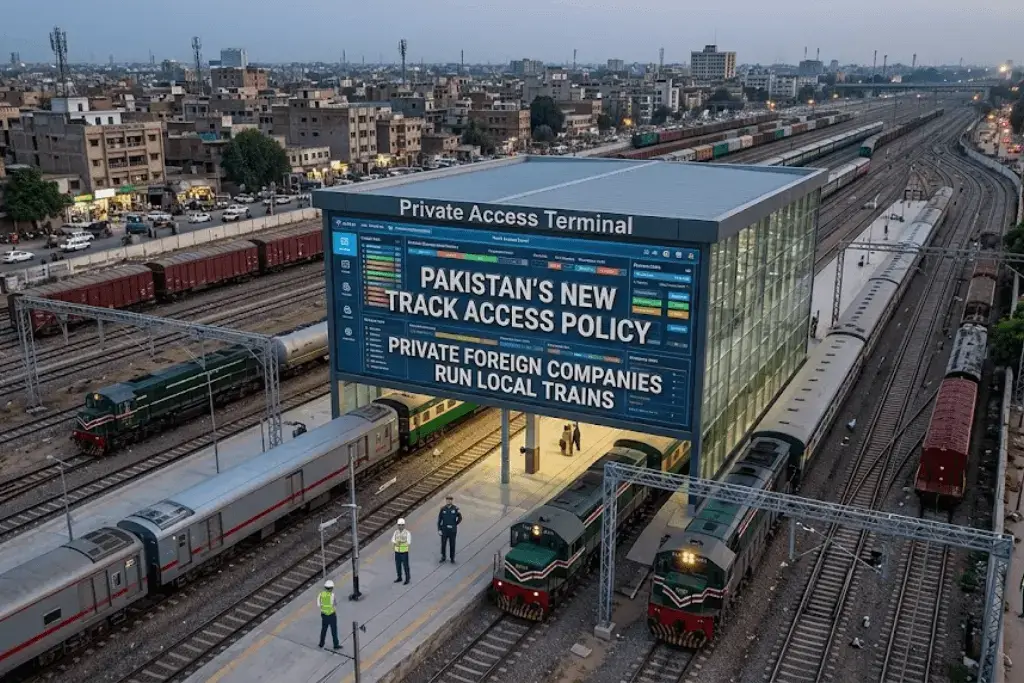
Pakistan Track Access Policy is a key railway reform initiative to modernise the country’s transport sector by allowing private and foreign companies to operate trains on Pakistan Railways’ infrastructure. The policy separates the ownership of railway infrastructure from the running of trains and paves the way for commercial investment, while leaving tracks and national rail assets in state hands.
The move is part of Pakistan’s broader strategy to improve transport performance, ease pressure on state finances and attract international investment into one of Pakistan’s most critical logistics areas. The government wants to make Pakistan Railways a more competitive and financially viable network that can meet the growing demand of passengers and regional trade growth.
How Private And Foreign Companies Will Run Local Trains
The policy allows private and foreign firms to undertake railway operations without buying up state-owned infrastructure. Instead, the operators are given access through contractual arrangements regulated by the Ministry of Railways.
Companies may operate passenger and cargo services on approved routes using their own rolling stock and operational systems. In return, operators will pay track access charges or a share of revenue to the Government.
The policy also provides for long-term concession arrangements like Build, Operate and Transfer (BOT), Procure, Lease and Transfer (PLT) arrangements. These systems encourage investors to fund upgrades to the railways, operate the services for a set period of time, recoup their investment with profit, and ultimately return the assets to the government.
Why Pakistan Is Inviting Investors To Its Railways
Pakistan Railways has been plagued with operational and financial woes for decades. These include old tracks, obsolete locomotives, slow freight handling and infrastructure constraints. The Track Access Policy is intended to speed up the modernisation process, without making the entire financial burden fall on the national budget.
Pakistan’s strategic trade location means rail cargo is heavily underutilised, and authorities are especially concerned with increasing the efficiency of goods transport. More rail-based logistics would relieve some of the pressure on highways, reduce fuel consumption and improve supply chains for industry.
The government is also focusing on foreign partnerships for bringing advanced railway technology, digital signalling systems and modern operational practices in Pakistan’s transport sector.
Focus On Freight Corridors, Economic Connectivity
The main purpose of the Track Access Policy is to enhance Pakistan’s freight capacity and connectivity in international trade. The priority of the authorities is economically important railway corridors where private investment can bring fast benefits.
One of the main projects related to the reform agenda is the modernisation of the Rohri-Karachi railway line. This corridor has high passenger and freight flows and is considered critical for future logistics development.
The policy also supports wider regional connectivity goals by enhancing transport access between Central Asia, western China and Pakistan’s Gwadar Port. Improved rail infrastructure could strengthen Pakistan’s position as a regional transit hub linking South Asia, Central Asia and the Middle East.
Improved freight movement should benefit exporters, manufacturers and agricultural businesses through fewer transport delays and lower operating costs.
How The Track Access Fee System Operates
Private operators using Pakistan Railways infrastructure will not be the owners of the railway tracks. Instead, they will be subject to regulated access charges as determined by operational agreements and conditions of route usage.
These charges in some cases will include track usage, station access, signalling, maintenance contribution and revenue sharing.
The government is likely to impose strict regulations on the pricing structure and operational safety standards to ensure fair competition and public accountability.
Objectives Of Technology And Railway Modernisation
Digitalisation is a cornerstone of Pakistan’s railway reform strategy. The Track Access Policy provides for the introduction of modern signalling systems, smart scheduling, electronic ticketing and upgraded operational monitoring technologies.
Private participation could also help accelerate investment in more fuel-efficient locomotives, better passenger cars, and faster freight systems. They believe these upgrades can improve reliability, reduce delays and improve passenger experiences on major railway routes.
Compared to heavy road-based freight transport, modern rail systems are also considered environmentally beneficial, perhaps reducing long-term fuel consumption and congestion on national highways.
Improved rail services may lower transport costs and improve supply chain efficiency for enterprises, particularly those dependent on long-distance movement of cargo.
The policy also positions Pakistan as a more competitive regional transit economy that can support international trade routes linked to ports, industrial corridors and neighbouring countries.
Pakistan Railways: Future Prospects
Pakistan’s railway reforms are one of the country’s most ambitious modernisation efforts in transport in recent years. The government plans to introduce a balanced model that rests on investment, efficiency and long-term sustainability by granting operational access to private and foreign companies while maintaining public ownership of infrastructure.
If infrastructure upgrades and operational reforms are successful, Pakistan Railways could see a major gain in freight efficiency, passenger comfort and international trade links over the next ten years.