Adeel Hassan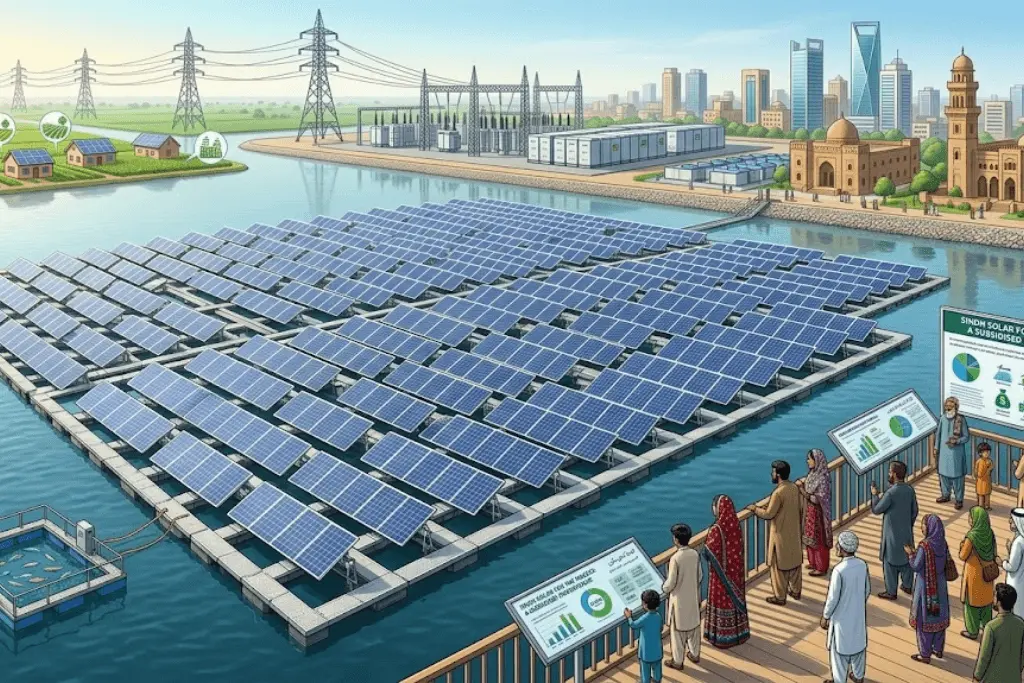
The energy environment in Pakistan is steadily but powerfully changing, and at the center of this transformation is the Sindh Solar Scheme by the Sindh government. This subsidised model was meant to ensure that renewable energy is accessible to the low-income households, but in addition to helping to save the electricity price, it is actually transforming the way Pakistan produces, distributes and consumes power.
Over the decades, Pakistan has been an avid consumer of imported fossil fuels, which means that the economy has been at the mercy of global price shocks and disruption of supply. Soaring electricity charges, which are almost threefold what they were in 2021, have put unimaginable strain on both households and businesses. It is against this context that the Sindh Solar Energy Project (SSEP), supported by a World Bank 100 million dollars partnership, is an important move to a strategic shift to local and sustainable energy solutions.
The model is, at its core, a simple but effective one: solar home systems that are highly subsidised are given to those who require them most. The cost of full solar kits can be accessed by eligible households at roughly PKR 7,000, with the government absorbing about 80% of the cost. These systems usually involve solar panels, battery storage, a charge controller, critical appliances like a fan and LED bulbs-just enough to fulfil basic day-to-day requirements.
Pakistan Turn to Solar Power to Cushion Impact of West Asia War | WION Climate Tracker
A Grassroots Energy Revolution in Sindh
The solar initiative undertaken by Sindh is especially interesting because it is a grassroots initiative. The program decentralises energy production, instead of just using big infrastructure, putting power, literally and figuratively, in the hands of citizens. The scheme is directly aimed at solving energy poverty in rural and semi-urban regions by majoring on households that use fewer than 100 units of electricity per month.
This localised model has already produced specific results. Over a third of all households in the upper Sindh region are using solar solutions, which has given rise to a community-led shift towards renewable energy. This is not an initiative of the government alone- it is becoming a people movement.
Outside the gains within households, the initiative is also setting up a new economic ecosystem. An increasing number of local technicians are acquiring knowledge of solar installation and maintenance with informal education methods such as tutorials offered via social media. This unskilled, trained green workforce is helping in the creation of job opportunities and developing technical capacity at the community level.
Simultaneously, the project does not only cover singular households. Using SSEP, Sindh is building utility solar parks, including the planned one in Jamshoro, and rooftop solar systems on public buildings. All of this will contribute to hundreds of megawatts of clean energy in the grid, supporting the overall renewable energy goal of Pakistan.
Economic Impact and the Road to Energy Independence In Pakistan
The consequences of the solar model of Sindh go well beyond reaching the level of electricity accessibility- they reach to the root of the economic stability of Pakistan. This has saved the country many billions of dollars in energy costs by cutting down its dependence on imported oil and gas. These savings are used as a buffer to the economy in the face of external shocks like global fuel price changes or geopolitical interference.
Additionally, the move to solar also supports the long-term objective in Pakistan of doubling its renewable energy sustainability by 2030 to 60 percent of its energy mix. By doing so, this would not only result in a decrease in carbon emissions but also lead to increased national security in terms of energy, which is key to sustainable growth.
Nevertheless, this does not occur without difficulties. Power distribution companies are at a financial burden, as more households cease to be on the traditional grid and on existing take-or-pay contracts. This poses an engaging balancing act to the policy makers who not only have to ensure that the merits of decentralisation are not destabilising the bigger energy system.
Nevertheless, the trend is evident despite such obstacles. The subsidised solar in Sindh indicates that clean energy is affordable and can be scaled up. It implicates the idea that renewable energy is a luxury and also proves it to be a sensible facility to every day Pakistanians.
Expanding Access Through Policy Innovation In Pakistan
The solar project by Sindh can be singled out not only due to its size but also the emphasis in its policy leading towards inclusivity and sustainability in the long-term. The government, by implementing a subsidised ownership approach, rather than a totally free distribution approach, is also guaranteeing that beneficiaries feel that they have an investment in the maintenance and utilisation of the equipment in a responsible manner.
This will help minimise abuse and will promote the feeling of ownership by households. Also, the inclusion of online registration systems as well as cooperation with local administrative authorities enhances transparency and reach. This policy innovation is an indicator of maturity in the governance system in Pakistan, as welfare programs are being formulated to be efficient, accountable and replicable across provinces.
A Blueprint for Pakistan’s Renewable Future
Solar model of the Sindh has been successful in providing a blueprint that may be replicated in the rest of Pakistan. This framework can be used and adjusted to the localised needs of provinces with such energy shortages, speeding up the national renewables shift. The model builds a sustainable ecosystem with international cooperation, community involvement, and focused subsidies to achieve a balanced environment.
Such a solution would have a substantial impact on overloading the national grid and increase green investments in the event that this is implemented on a national basis. More to the point, it makes Pakistan an outward-looking nation that is eagerly adopting clean energy solutions, consolidating its environmental policies and financial stability in the future.
This model is, in numerous aspects, a point of departure. It indicates that energy independence is not limited to the national level alone- it can start at the home level. The example of Sindh can start by empowering citizens, cutting down the reliance on imports, and innovation can be emulated by other provinces.
With Pakistan prevailing its energy crises, such projects are only a preview of a stronger tomorrow, where no power will be produced, but distributed, maintained and owned by the people.