Maria Imran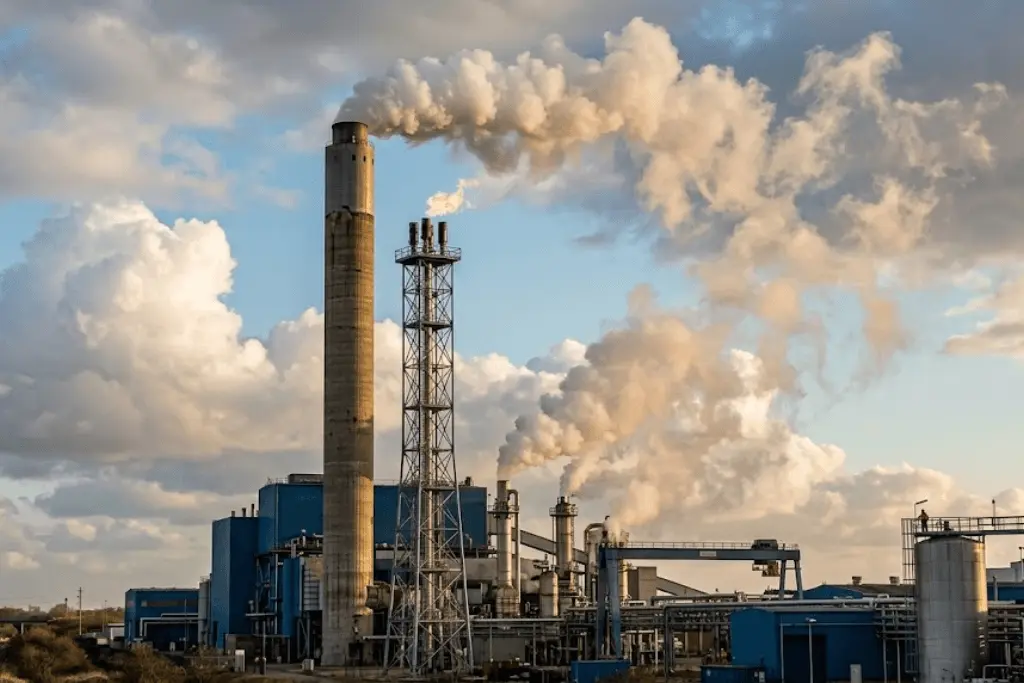
Faisalabad Is Shifting Polluting Units as the city finally admits something Pakistan’s industrial hubs have long ignored: factories don’t become harmless just because homes are built around them. When hazardous units sit inside dense neighbourhoods, the cost is not abstract. It settles into lungs, drains into groundwater, clings to school routes, and turns “economic growth” into a quiet public-health bill paid by workers, children, and the urban poor. Recent reporting shows the city has identified 187 hazardous industrial units for relocation outside municipal limits, with 111 highly polluting units marked for the first phase. The plan also includes new industrial zones with waste management systems and effluent treatment facilities.
This is not just a zoning story. It is an overdue correction to a planning failure that allowed industrial expansion and residential growth to collide in the same urban space. Faisalabad’s own regional development planning has warned for years that pollution in the division is worsening because of industrial expansion, fast urbanisation, traffic, and brick kilns. The document notes that more than 90 percent of the division’s 14,361 industrial units are in Faisalabad district, and that PM2.5 levels were above Punjab’s standard of 35 µg/m3 at most monitored sites.
This Move Is Really About Public Exposure, Not Just Land Use
Officials are framing the relocation as environmental reform, and that is fair. But the sharper truth is this: the old arrangement exposed too many people to risk every single day. Hazardous industries were not operating in remote industrial belts. They were embedded in and around populated urban zones, where emissions, waste, truck movement, and accidental releases affect ordinary life at street level. That makes relocation less a business inconvenience than a public-health necessity.
Faisalabad’s environmental planning record backs that up. The Urban Unit’s regional plan links the city’s poor air quality to heavy traffic, industrial activity, congestion, kilns, road dust, and burning. It also reports elevated sulphur dioxide around the city because of the concentration of industrial units, while nitrogen dioxide was high around Faisalabad due to vehicular and industrial emissions. This matters because toxic exposure in cities is rarely one giant event. It is cumulative. People breathe it, commute through it, work inside it, and carry the burden for years before the state calls it an emergency.
What Toxic Exposure Actually Means In A City Like Faisalabad
“Toxic exposure” can sound dramatic until you make it concrete. In Faisalabad, it means residents living near smoke, dust, flue gases, wastewater, chemical residues, and noise from industrial operations that were never meant to share space with dense civilian life. It also means workers inside those industries are facing a far more concentrated version of the same danger.
The public-health case is strong. The World Health Organization says outdoor air pollution contributes to ischaemic heart disease, stroke, chronic obstructive pulmonary disease, acute lower respiratory infections, and lung cancer. WHO also identifies particulate matter, nitrogen dioxide, sulphur dioxide, carbon monoxide, and ozone as major public-health pollutants.
The Worker’s Body Always Tells The Truth
A 2024 study on Pakistan’s textile industry, focused on Faisalabad, found a substantial health burden from cotton dust exposure: cough in 35 percent of workers, bronchitis in 17 percent, and byssinosis symptoms in 22 percent. The study also found that working in dusty sections was a major determinant of respiratory disease, while mask use reduced illness-related absence. Another 2025 study of flue gas emissions from 109 Faisalabad textile factories found major variations by fuel type, showing how factory processes directly shape local emission loads.
That is why shifting hazardous industries out of residential areas should not be mocked as anti-industry. It is, in fact, pro-life, pro-labour, and pro-city. A city that normalises preventable exposure is not being pragmatic. It is being lazy.
Air Is Not The Only Problem. Water Is Part Of The Story Too
Faisalabad’s risk is not limited to what people inhale. It is also about what seeps underground and moves through drains, canals, and irrigation systems. The Urban Unit’s plan says 43 percent of groundwater samples in Faisalabad division exceeded the prescribed total dissolved solids threshold, and the figure reached 46 percent in Faisalabad district. It also notes that more than 70 percent of industrial wastewater is discharged through major drains into river systems.
Recent academic work sharpens the alarm. A 2024 open-access study on Faisalabad’s groundwater found serious contamination pressures from urban and industrial effluents. A 2025 study on trace metals around wastewater drains in Faisalabad warned of severe groundwater contamination and assessed human health risks through skin exposure. That means the toxic footprint of badly located industry does not end at the factory gate. It enters water, soil, crops, and domestic routines.
This is why relocation alone will not solve everything. If the new zones merely move dirty production from one map location to another, Pakistan will still lose. The relocation only makes sense if it is tied to real infrastructure: effluent treatment plants, emission controls, monitoring, transport planning, and enforcement that outlives the news cycle. Officials say the proposed new industrial zones will include utilities, drainage, waste management, and ETPs. That part is crucial.
Faisalabad’s Decision Should Be A Warning To Pakistan’s Other Cities
What is happening in Faisalabad is larger than Faisalabad. It is a warning to every Pakistani city that kept treating environmental harm as collateral damage of growth. Karachi, Lahore, Gujranwala, Sialkot, and other industrial centres all know this pattern: weak separation between industry and housing, sporadic enforcement, anti-smog theatrics, and years of delay until the health burden becomes impossible to ignore.
The smarter reading of Faisalabad’s move is this: the city is not abandoning industry. It is trying, belatedly, to build a boundary between production and exposure. That is what modern urban governance should have done years ago. The question now is whether Punjab will follow through with transparent timelines, relocation support, monitoring data, and penalties for units that refuse to shift or clean up. Without that, “relocation” risks becoming another comforting word in a country already drowning in them.
FAQs
Why are hazardous industries being shifted from Faisalabad?
Because urban exposure to emissions, waste, and industrial risk has become too dangerous for residents.
How many industrial units have been identified for relocation?
Authorities have identified 187 hazardous units, with 111 marked for the first phase.
What health risks are linked to this industrial exposure?
Respiratory disease, heart problems, stroke risk, groundwater contamination, and long-term toxic exposure burdens communities.
Will relocation alone solve Faisalabad’s pollution problem?
No, it also needs treatment plants, monitoring, strict enforcement, and cleaner industrial processes.
Why does this issue matter beyond Faisalabad?
Because many Pakistani cities still mix housing and hazardous industry without serious environmental safeguards.