Maria Imran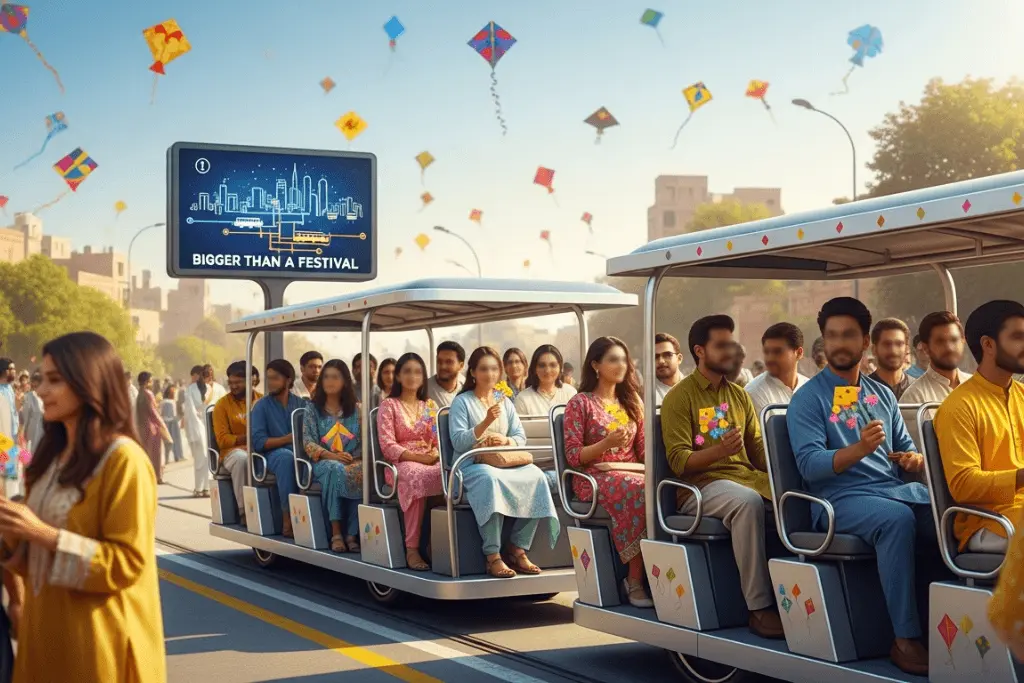
At first glance, Basant 2026 appears to be about reviving a beloved cultural festival marked by colour, music, and community joy. However, when the Punjab government decides to provide free public transportation in the celebrations, it is clear that there is a far greater policy at work here than celebration, extending to city governance and security.
Over the years, the activities surrounding Basant have been a matter of concern with regard to congestion, accidents, and unequal access. Free transport alters the equation by decreasing the usage of personal vehicles, decreasing the chances of accidents, and opening it to a greater number of income groups. It is also an indicator that big cultural events necessitate mobility planning supported by the state and no longer security operations.
Why the Transport Decision Matters More Than the Kites in Basant 2026
The Basant 2026 initiative positions public transport as a tool of inclusion. The state is reshaping festivals as collective civic events instead of elite performances by making them easier and safer to attend. Such a strategy might become a precedent in the future, whether it is for religious or sports events. More importantly, Basant 2026 shows how cultural revival can align with modern urban planning—where celebration, safety, and accessibility move together, not in conflict. Visit homepage for more info.