Adeel Hassan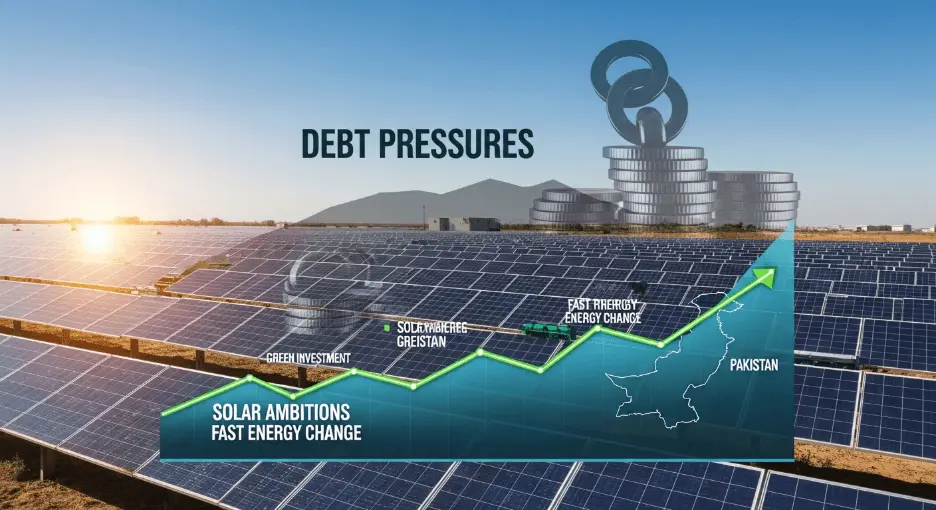
The energy situation in Pakistan is changing drastically, and China’s green investment in Pakistan is driving solar growth amid climate stress and economic vulnerability. Skyrocketing heat waves, constant power outages, and escalating electricity prices have now propelled households and businesses to solar power more than ever before. The keystone of this change is the green investment of China in Pakistan that has changed the face of energy production, consumption, and financing at an alarming pace. As the Chinese solar technology assists Pakistan to jump into renewables, the history of coal operation and the growing fiscal burden leaves very serious questions on how sustainable, dependent and energy justice would be in the long term. This changing alliance indicates hope and taking chances since Pakistan is in a frenzy to get cheap and durable energy.
China’s green investment in Pakistan Sparks Solar Boom
The solar growth in Pakistan has been beyond remarkable. Large scale importation of cheap Chinese solar panels has made rooftops solar power stations both in urban and rural centers. To a great number of families, solar energy has ceased being a matter of environmental preference and became a means of survival in times of long outages and heat waves.
Such a fast adoption has made green investment in Pakistan in China one of the most important facilitators of decentralized energy access. Nevertheless, import heavy dependency on equipment puts the country vulnerable to currency and trade imbalances, which strengthens the structure dependence while facilitating access to energy.
Green CPEC and the Shadow of Coal
The energy projects as part of the China-Pakistan Economic Corridor (CPEC) have comprised of solar parks, wind farms, hydropower and coal-fired plants. Although in recent accounts, a green CPEC is being focused on, coal continues to take a large portion of installed capacity. These projects contributed to the mitigation of the acute shortages of power but also catched Pakistan in the long term financial commitment and environmental hazards.
This paradox characterizes green investment of China in Pakistan: renewable energy technologies are increasing the pace of change, and past coal investments limit the ability to change policy and exert more stress on debts. The dilemma about energy security, affordability, and sustainability has been the main issue facing Pakistan.
Batteries, Inequality, and Policy Gaps
The flood of cheap Chinese lithium batteries has further altered the way energy is used giving now the opportunity to the households to store solar energy in order to use it at night. This transition however, is lopsided. Rooftop solar will still be unreachable to poor households, which will make clean energy a privilege and not a right.
In the meantime, Pakistan does not have a holistic measure of battery safety, grid integration, and e-waste management. In the absence of policy structures, the green surge stands the danger of generating new environmental and social problems as it resolves the past ones.
Geopolitics and the Question of Dependency
In addition to providing access to energy, the Chinese strategy goes to establish technical standards in the Global South. The switching costs increase as the grids and the storage systems match the Chinese technologies. The critical question here is whether green investment in China in Pakistan will be a boon to the local manufacturing, transfer of skills and climate resilience or repeat some extractive trends of the past expansion schemes. Get the scoop and interesting tidbits here!