Sana Khalid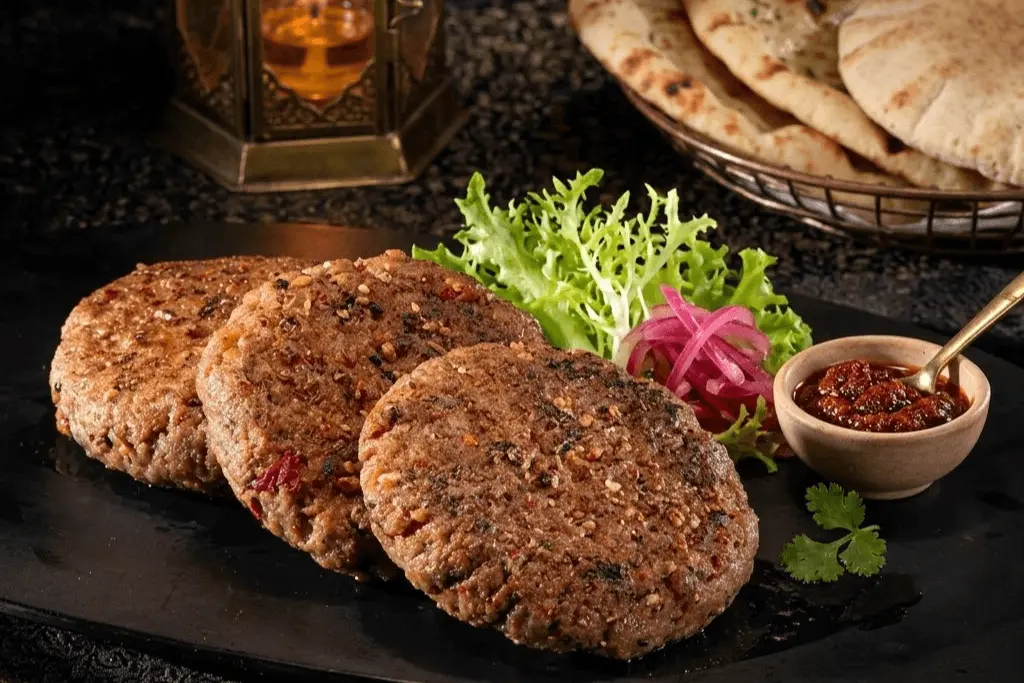
If you want a real taste of Pakistani street food, the Peshawari Chapli Kebab is legendary. Born in Peshawar, this Pashtun favorite delivers a perfectly blistered edge with a rich and intensely seasoned inside. Beyond just being an amazing snack, it’s basically centuries of Pashtun generosity served on a plate.
The History Behind the Bite
The name “Chapli” stems from chaprikh, Pashto for “flat.” While nobody knows exactly when the first one hit a hot pan, historians agree it predates fancy Mughal-era dishes. It originated somewhere along the rugged Afghan-Pakistani border. Political borders like the Durand Line couldn’t stop a great recipe, and it spread naturally alongside traders and migrating families. Walk through Peshawar today, and you’ll find thousands of local spots frying these up. It’s an authentic piece of regional history that survived totally untouched by colonial food trends.
The Traditional Method
Making the authentic version means starting with a coarse grind of beef or mutton. You have to really work the meat by hand, aggressively mixing in chopped onions, tomatoes, green chilies, and crushed coriander. The real secret weapon is anardana (dried pomegranate seeds), which adds a distinct, sharp tang. Cooks shape the mix into wide disks, smash a thick tomato slice right into the center, and shallow-fry them in bubbling animal fat to get that iconic smoky flavor.
Modern and Regional Variations
- The Meat Base: Pakistan mostly sticks to beef, while cooks in India and Afghanistan usually prefer lamb or mutton.
- Lighter Alternatives: Ground chicken versions are catching on rapidly right now if you want something less heavy.
- Local Spice Tweaks: Every neighborhood adds its own spin,some cooks toss in carom seeds, while others really crank up the chili heat.
- Modern Cooking: People are absolutely air-frying them at home now to skip the grease, or even using them as epic burger patties.
- The Gold Standard: Even with all the new upgrades, purists know absolutely nothing beats the fatty, pan-fried original.
Summary
FAQs
1. How’s it different from regular kebabs?
It’s wide, flat, and uses a coarse meat grind. The tangy pomegranate seeds and signature tomato slice also set it apart.
2. Does it have to be beef?
Nope! Mutton, lamb, or ground chicken work perfectly.
3. Why the tomato on top?
It locks in moisture while frying and adds a nice, sour kick.
4. Are they really spicy?
They definitely have a bite, but the actual heat just depends on how many green chilies you decide to toss in.
5. Can I skip the oil?
Baking or air-frying works great for a healthier version, though you’ll miss out on a bit of that classic pan-fried flavor.