Adeel Hassan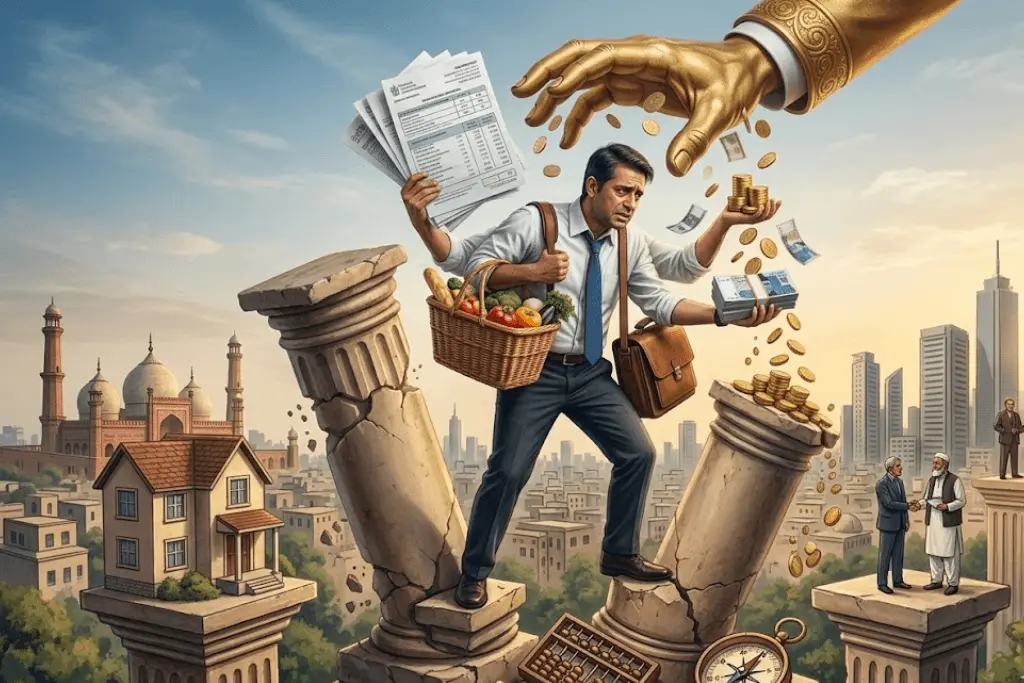
Taxation in Pakistan has been a subject of controversy since time immemorial, primarily with respect to its effect on the middle class within the Pakistan tax system. On the one hand, taxation is crucial to national growth, whereas on the other hand, as it currently stands, taxation is said to be disfavored on the consumers of salaries, who are the main representatives of the recorded sector of the economy.
The pressures on the middle classes have been felt even more in recent years with rising inflation, a growing burden of indirect taxes and constrained growth of the tax base. Salaried people are also likely to have to pay a much larger contribution than other industries, as their income is already registered and taxed at the source.
Nevertheless, we need to realise that the system of taxes in Pakistan is in flux as well. Such gaps are becoming recognised by policymakers and institutions, and this offers a chance to reform and improve the system, which in the future may result in a more balanced and inclusive system.
Why the Middle Class Bears a Heavy Tax Burden
The income tax collection structure is one of the major causes of overburden experienced by the middle class. Salaried individuals in Pakistan are taxed directly by means of source deductions, and as such, it follows that compliance is mandatory and unavoidable. It renders the salaried group one of the most consistent contributors to the tax kitty of the nation.
Yet, this efficiency causes imbalance, as well. The other sectors are left even more in the tax net, especially those in the informal economy. Retail, wholesale trade, and parts of the real estate industries tend to have a small amount of documentation, and this gives opportunities to many to under-report income or not pay taxes at all.
The relatively large exemption threshold is another major problem. The tax cuts are applied to an income of approximately PKR 600,000 annually, accelerating many lower-middle-income earners into the tax bracket before middle-income levels in similar economies. To most households, this minimises disposable income and adds financial strain.
Taxation through indirect means worsens the situation. Everyone is exposed to taxes imposed on the fuel, electricity, food and consumer goods, but the middle class is the clutch victim. As the taxes are levied on the same level, they consume a greater margin of income among middle-income families than among the more affluent.
Another layer of difficulty is that of inflation. With the increase in prices, the real income of the middle classes falls, although taxation tends to stay the same or even rise. This sets a scenario where the household would find it hard to keep up their standard of livelihood although they contribute regularly to the national economy.
Nevertheless, it is not irrelevant to mention that the well-observed level of compliance of the salaried stratum is also indicative of commitment and a sense of duty towards national development. Their contribution constitutes a stable foundation of the government income, which is imperative in supporting the provision of government services and infrastructure.
Why People Don’t pay Taxes | Pakistan Tax System – Problems & Recommendations
Opportunities for Reform and a More Balanced Future
One of the main tasks in the tax system in Pakistan is that of having big untaxed or under-taxed sectors, and the light taxation of agricultural income, which constitutes a big portion of the economy, is also an example. Likewise, big-ticket transactions in real estate and parts of the retail industry often go undocumented.
The result of this imbalance is placing the burden on the people who are already a part of the system, i.e. the main people are the middle class. It also restrains the capacity of the government to expand its tax base, which otherwise would decline on the current taxpayers.
The tax administration has been criticised too. Along with inefficiencies and a lack of transparency. One of the problems is the lack of a modern system of documentation and enforcing the rules, which limits the establishment of equal compliance in all areas. Thus, they leave salaried people, the most easily taxed ones, with a disproportionately high burden.
Nevertheless, positive developments and potential are evident. Currently, digitalisation of work, such as online systems in tax filing and data integration, is contributing to the addition of more transparency to the system. These can be done in stages and could curb tax evasion and promote greater involvement.
Another important reform area is to expand the tax base. To spread the tax burden evenly, Pakistan can enter more sectors into the formal economy. This would not only relieve the middle class but also enhance the general economic soundness.
Considerations of equity and inclusiveness have become a more dominant issue in policy deliberations in the last several years. It is increasingly accepted that a progressive taxation regime should take into account the abilities of various income groups and that contributions should be proportional.
To the middle class, these reforms might bring them the much-needed relief. Some of the measures that can bring financial stability to millions of households include low effective tax rates, increased exemption threshold, and less dependence on indirect taxes.
Notably, a more equitable tax system will also increase citizen confidence. With the citizens feeling that taxation is fair and transparent, chances of having a population more willing to comply on its own increase. This forms a positive feedback mechanism, as the more revenue institutions have, the better the public services, and the more convinced people are of the institutions.
Strengthening Public Trust Through Transparent Spending
One of the factors that is critical but most ignored in the effectiveness of a tax system is the trust that citizens have in the use of tax revenues. The issue is that high taxes and a lack of visible benefits of the tax system in terms of tangible output in the form of social services like health, education, and infrastructure weigh heavily on many middle-class taxpayers.
The increase in the level of transparency in government spending and a clear connection between the tax contribution and actual improvements may substantially increase confidence. The citizens would feel that their taxes play a crucial role when they can see the direct result of their efforts in improving the nation, thus it becomes less of a command and more of a national duty. Reestablishing accountability, control, and reporting to the public could significantly help restore this confidence.
To sum up, the present taxation system of Pakistan presents an opportunity and a challenge to change and develop, although the situation currently imposes a heavy burden on the middle-income group. The challenges expose points that need to be addressed, but they also lead to solutions that can make the framework more balanced and sustainable.
As the nation continues to work towards modernisation and enhancement of policies, there is likely to be a possibility to develop a tax system that will cater to all members of society without any bias. The country can also help evenly distribute economic gains by filling the structural gaps, increasing the size of the tax base- this will eventually empower the country and the individuals.