Farhan Qureshi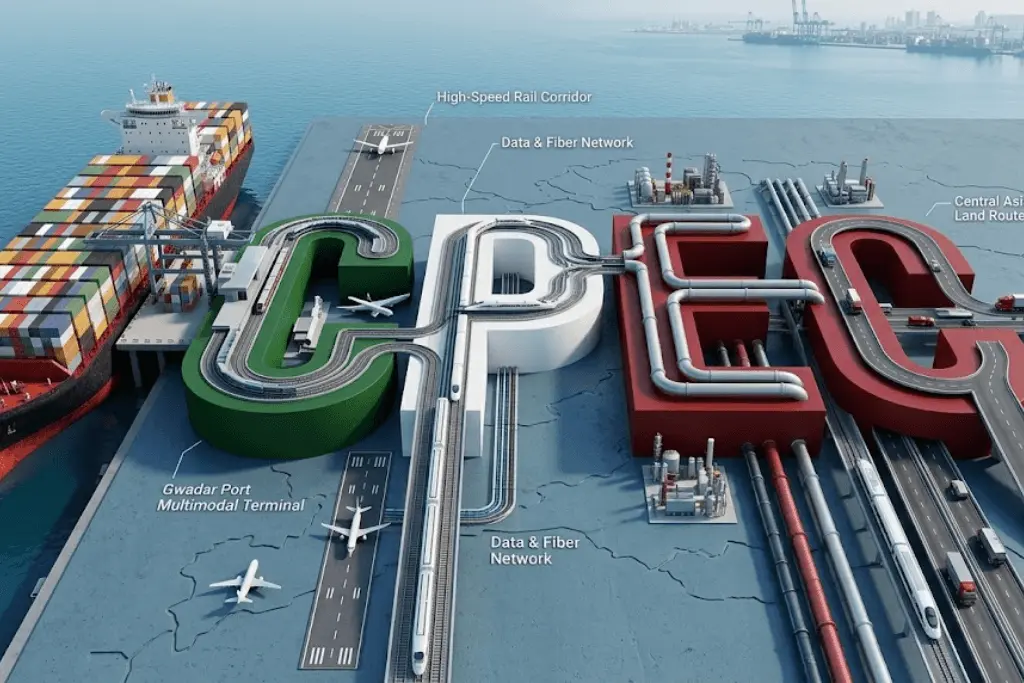
The China-Pakistan Economic Corridor is widely seen as a key pillar of the future, highlighting the CPEC Pakistan impact on the country’s economy. The multibillion-dollar alliance between Pakistan and China was launched in 2015 as part of the larger Belt and Road Initiative, but was initially seen as a quick-fix to infrastructure deficits and endemic energy crises. The discussion is more than a decade old. Instead of posing the question of whether CPEC is a success or a failure, it is more important to consider the real dynamic effects of CPEC in the context of the overall Pakistani economy.
Whether it was highways slicing through the mountainous landscape to power plants illuminating the cities, the initial phase of CPEC brought about a visible, tangible transformation. However, similar to any large-scale development project, its impacts are multi-layered- consisting of short-term positive impacts and long-term difficulties and opportunities. With Pakistan in the second phase, which is commonly known as CPEC 2.0, the initiative has ceased to be all about the construction of roads and power plants. It is concerning reorganising the economic structure of the country.
Infrastructure and Energy Gains That Reshaped Pakistan’s Economic Base
The transformative effect of CPEC on the energy sector of Pakistan has been the most recognised success of the project. Before 2015, the nation had a serious power crisis, and most of the days, it would experience hours of load shedding, which derailed industries and normal living. CPEC contributed to the national grid by placing more than 10,000 megawatts of energy capacity through investments in energy projects worth more than 33 billion. This change of long-term scarcity to relative abundance has been a game-changer in the productivity of industry and investor confidence.
It has also been of great importance to enhance infrastructure connectivity. Other projects like modernisation of the Karakoram Highway and the M5 Sukkur-Multan Motorway have not only shortened the time spent travelling to different places, decreased the cost of transportation and linked remote areas with key economic centres. The effects of these developments have been felt especially in the field of agriculture, whereby farmers are now able to transport goods to urban markets more efficiently.
The strategic vision at Gwadar Port is also highlighted by the development of the Port. Gwadar is strategically located along major shipping routes around the world and has the prospects of being a major trade gateway connecting Central Asia and the Middle East, among others. Although it has been slow, the gradual improvement in port capacity and logistics infrastructure has shown a consistent trend.
In addition to the physical assets, CPEC has also helped in the creation of jobs. Hundreds of thousands of jobs were created during the building stage, and further extension into the industrial sector is offering more opportunities. This is a very important asset to a nation that has a young and rising workforce.
Significantly, the underlying strengths and changes have made Pakistan a more integrated and energy-sufficient economy. Such infrastructure is a competitive advantage in an ever-changing global environment, which is becoming increasingly influenced by realignments in supply chains.
From Construction to Industrialisation: The Road Ahead for CPEC 2.0
Although the first stage of CPEC was dedicated to the issues of the elimination of short-term bottlenecks, the long-term success of the initiative will rely on the effectiveness with which Pakistan will use these advantages. This is where CPEC 2.0 comes in. The second phase, re-launched with a new emphasis on industrialisation, will see the shift of the focus of growth not on the infrastructure but on manufacturing and export-oriented development.
The core of this shift is the creation of Special Economic Zones (SEZs) that are aimed at drawing in domestic and foreign investments. Such areas are likely to boost industrialisation, employment and technology transfer. Efforts like opening automobile assembly plants around Karachi underscore the opportunities of diversifying the industrial base of Pakistan.
Simultaneously, the government is undertaking measures to deal with financial issues related to previous projects. Much of the CPEC investments were in the form of loans, which added to the external debt in Pakistan. The attempts to renegotiate power purchase contracts and enhance financial management are indicative of a pragmatic stance on securing long-term sustainability.
One should also note the greater strategic importance of CPEC. The corridor also offers Pakistan a stable alliance and a regional connectivity platform in a time when alliances in geopolitics and economic uncertainty are changing. CPEC connects South Asia with Central Asia and the Middle East, thereby increasing the importance of Pakistan as a trade and transit hub.
Balancing Opportunities with Economic Realities
Even though the benefits of CPEC are hard to ignore, the true measure of its success is the ability of Pakistan to maintain a balance between opportunity and responsibility. The infrastructural and energy development has already provided a solid foundation, and to ensure that these translate into a sustained economic growth, it needs proper planning and regular implementation of policies.
The difficulty in controlling external debt and making the repayments sustainable has been one of the challenges. Nevertheless, the fact that Pakistan continues to renegotiate contracts and to change the focus to export-oriented industries suggests that the country is proactive. The focus on Special Economic Zones and local production can also be seen as an increasing realisation that the long-term growth would have to be based on productivity and not on construction.
Meanwhile, CPEC provides Pakistan with a strategic edge. The country is able to reduce barriers to regional connectivity and make itself a trade corridor, and this allows it to attract new investment and increase its economic presence. When used well, this stage can lead to sustained industrial and economic development out of early infrastructure benefits.
To conclude, there is no binary of success or failure that can be used to define the actual impact of CPEC on the economy of Pakistan. It has already been able to provide significant returns to energy and infrastructure, which will provide a good base to grow in future. Simultaneously, its success in the long-term will be determined by the capacity of Pakistan to overcome the financial difficulties and utilise emerging opportunities in the industrialisation.
Instead of considering CPEC a one-time agent of economic change, it is better to regard it as a potent driver- one that, together with proper policies and planning, will enable Pakistan to have a more resilient and diversified economy in the coming years.