Farhan Qureshi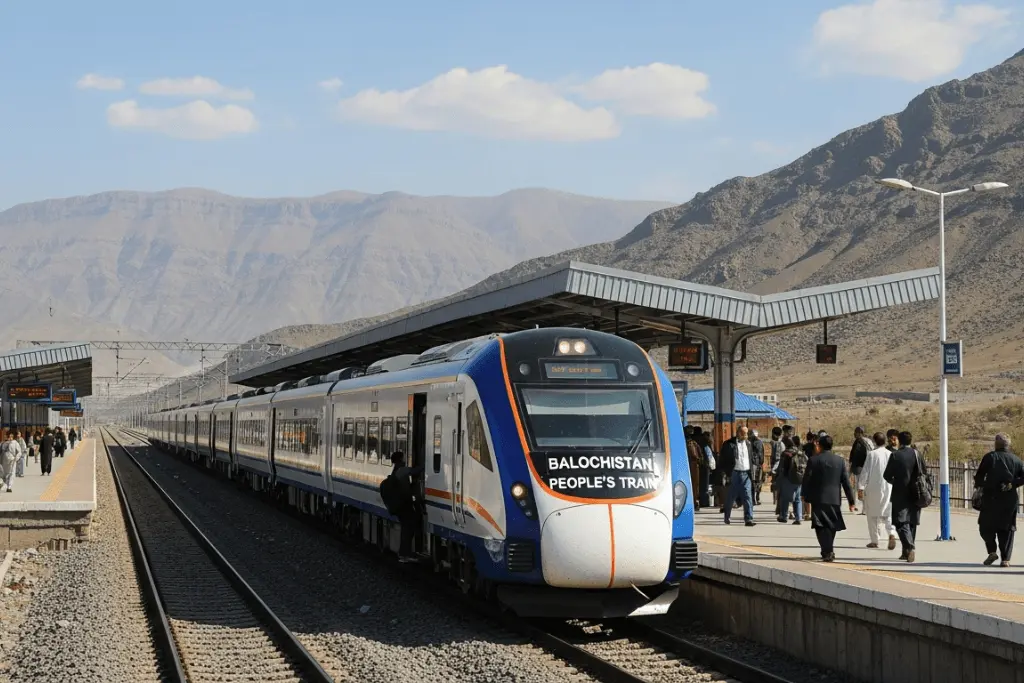
The Government of Balochistan, in a historic collaborative venture with Pakistan Railways, has officially announced the launch of the People’s Train Service. The Balochistan People’s Train Service covers a strategic 32 km distance between Sariab and Kuchlak, serving daily commuters efficiently. The project was completed in January 2026 by a high level meeting between the Chief Minister Mir Sarfraz Bugti and the Federal Minister of Railways Hanif Abbasi. This project is expected to offer a safe, cheap, and efficient mass transit alternative and is set to be the first in the history of Pakistan as the operation of the railways was devolved to a provincial government as its funding has been confirmed at Rs 1.4 billion.
Operational Scope of the Quetta to Kuchlak Train
The operational framework of the new Quetta to Kuchlak train focuses on revitalizing urban mobility. The service will serve five major stations: Sariab, Quetta, Sheikh Manda, Baleli, and Kuchlak operating on the engines and coaches which were bought at the federal railway stock. The provincial government has also intended on modernizing the current track infrastructure to guarantee sustainability and building of modern station facilities. This Balochistan railway project is designed not just as a temporary relief but as a long-term solution to the capital’s growing traffic congestion, with approved plans to eventually extend the network further to Mastung and Pishin.
Directorate of Public Relations Balochistan (@dpr_gob)
Economic Impact of the People’s Train Service
The People’s Train Service represents a significant leap toward economic stability for the region’s working class. The service saves students and those who commute daily a huge financial burden by providing them with a subsidized alternative of travelling. Federal Minister Hanif Abbasi called the project a railroad renaissance, because such a mechanism of federal- provincial partnership establishes a strong example. The effective introduction of this service will lead to increased local business and connectivity, and it will prove that the idea of localized rail solutions as an effective way of developing the region can work. Visit this site for more details.