Maria Imran

Pakistan Moon mission 2035
Pakistan has set an ambitious goal: reaching the Moon by 2035. Pakistan Moon mission 2035 plan was highlighted by Planning Minister Ahsan Iqbal on October 18, with closer work with China presented as key to the country’s space ambitions. The target is a statement of intent, but not a confirmed landing schedule: detailed mission plans, costs and milestones have not been publicly set out.
China partnership is central to Pakistan Moon mission 2035
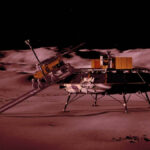
Pakistan’s Space and Upper Atmosphere Research Commission (SUPARCO) has worked with China on satellites and is preparing for a bigger role in lunar exploration. Its next major step is a rover planned to travel on China’s Chang’e-8 mission, scheduled for 2028. SUPARCO says the rover will weigh about 35 kilograms and is intended to operate near the Moon’s south pole, where it will study the surface and test technologies for future missions.
The rover is expected to study lunar soil, map the surface and test new technology. It will use artificial-intelligence-based imaging to spot obstacles, judge distances and choose a path without constant real-time instructions from Earth. Signal delays make direct remote driving difficult on the lunar surface.
First astronaut mission planned for November
Iqbal said Pakistan’s first astronaut is expected to leave from China’s space centre on November 25. Two Pakistani pilots, Khurram Daud and Zeeshan Ali, have been training in China, but Reuters reported in September that the final choice had not yet been announced. The selected person is expected to serve as a payload specialist, carrying out experiments rather than piloting the spacecraft.
The mission is expected to last about a week and depends on China’s training, spacecraft and launch facilities. Reuters reported that four biotechnology experiments were chosen from more than 300 proposals submitted by Pakistani universities. The research aims to support work on food insecurity and climate change.
Space science beyond the Moon
Iqbal has highlighted uses for space technology on Earth, including agriculture, communications, climate monitoring, education and national security. The government has also announced plans for Pakistan’s first Space Museum at the University of Narowal to encourage young people to study science and technology.
A Moon landing by 2035 would require Pakistan to build on its satellite and rover work, train skilled teams and deepen international cooperation. For now, the 2028 rover mission and planned astronaut flight are nearer tests of the country’s growing capabilities as it works towards its longer-term lunar goal.