Farhan Qureshi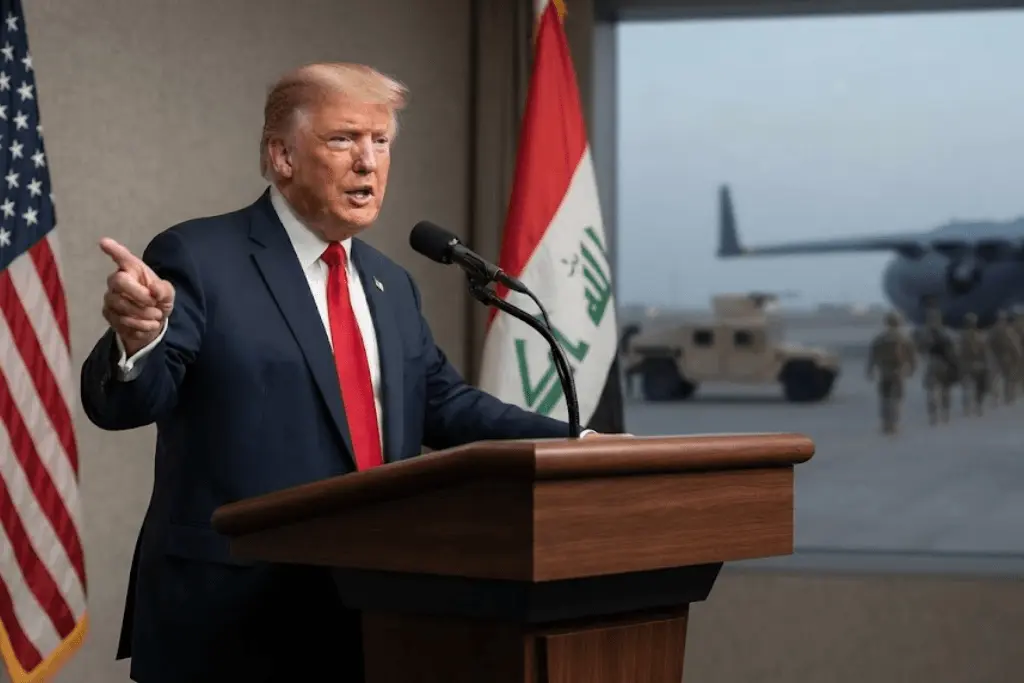
The United States has withdrawn, marking the Trump Iraq withdrawal and ending the US-led military presence that began with the 2003 invasion. The last troops involved in the anti-ISIL mission left Erbil, marking a major shift in Iraq’s security relationship with Washington, the Pentagon said.
President Donald Trump welcomed the withdrawal, saying the end of the military deployment was a victory for both the United States and Iraq. The departure signals a shift from a longer process agreed between Washington and Baghdad to a more traditional bilateral security partnership.
Iraq Takes On Greater Role In National Security
The pullout puts more responsibility for national security on Iraqi institutions. US officials have said Kurdish Peshmerga forces and other Iraqi Security Forces will take the lead in addressing remaining threats from ISIL cells and other armed groups, while Washington continues targeted training and intelligence support.
Iraqi authorities have welcomed the change as an important step toward greater national sovereignty. Meanwhile, regional analysts have expressed concern that Iraqi forces can handle the remaining militant threats and the complicated rivalry between Iran-backed armed groups on their own.
Pakistan Notes Wider Regional Security Shifts
The US withdrawal from Iraq has ramifications beyond Iraq’s borders, including for countries like Pakistan, which have strong interests in the security developments in the Gulf and Middle East. A shift in the regional military balance can affect diplomatic calculations, energy markets, trade routes, and security cooperation across South Asia.
Pakistan has strong diplomatic, economic and people-to-people relations with countries across the Gulf and wider Middle East. Thus, greater stability in Iraq and neighbouring countries would help to sustain Pakistan’s interests in secure energy supplies, regional commerce and ongoing diplomatic engagement.
U.S. Exit May Reshape Middle East Security
It represents a major change in the US military presence in the Middle East. While the Iraqi authorities say national forces can handle any remaining threats, Reuters said concerns remain over the potential for more influence for Iran-aligned militias and a revival of activity by Islamic State sleeper cells.
The changing regional balance means that for Pakistan, diplomatic engagement and stable relations with major Middle Eastern partners matter. It is also possible that developments in Iraq could influence wider Gulf security calculations at a time when the region is already experiencing significant geopolitical tensions.
Iraq Withdrawal Begins New Diplomatic Phase
The end of the US military mission is not the end of US-Iraq relations. Washington is expected to continue a security relationship that emphasises training, intelligence cooperation and bilateral engagement rather than deployment of wartime coalitions.
The development also points to the evolving nature of regional security partnerships for Pakistan. Greater focus on national institutions, diplomacy, and economic cooperation can help open space for countries throughout South and West Asia to seek closer regional engagement while bolstering stability and sovereignty.