Farhan Qureshi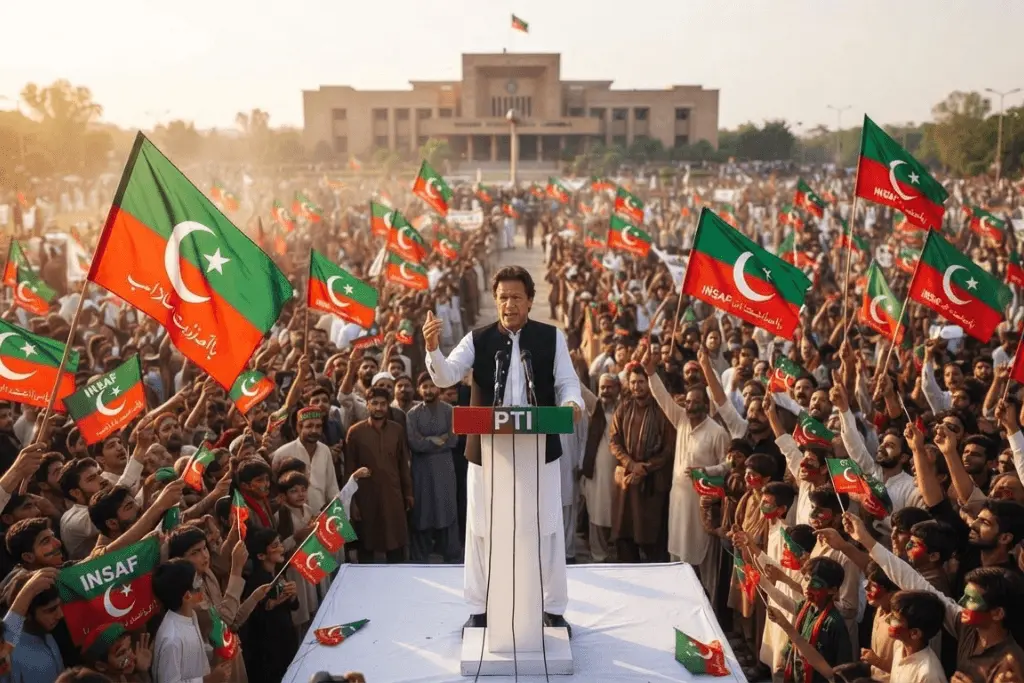
The political confrontation between Pakistan Tehreek-e-Insaf (PTI) and the federal government has further escalated over the PTI Governor’s Rule KP issue and the possibility of imposing Governor’s Rule in Khyber Pakhtunkhwa. Senior PTI leader Naeem Haider Panjutha has challenged the federal government to take such a step, warning that it could further deteriorate the political situation in the province.
Federal, Provincial Governments Remain At Odds
The row has stemmed from broader differences on security, governance and the PTI’s political activities. Federal Information Minister Attaullah Tarar has blamed the KP government for not tackling terrorism properly, while the provincial administration rejected the description and said that fighting militancy is the main responsibility.
Federal officials have held differing positions on the Governor’s Rule in the past. Tarar said on September 23 that the federal government had no intention of imposing such a measure, adding the province needed elected government and better governance. A few days earlier, KP Governor Faisal Karim Kundi had said that consultations were held and the Constitution provided for Governor’s Rule.
Security Concerns Still Central To Federal Position
Security has become one of the main arguments used by federal officials in the confrontation. Information Minister Atta Tarar had said recently that KP had witnessed 2,456 terror attacks in the year and hundreds of members of the police, army, Rangers and Frontier Corps had been killed. These numbers were used by the minister to demonstrate the scale of the security challenge confronting the province.
The federal government has also connected its concerns to the provincial government’s management of law and order. The PTI and the KP government have challenged the federal characterisation, with Chief Minister Sohail Afridi saying the province needs more collaboration and consultation instead of political confrontation.
Sohail Afridi Urges Talks Amid Rising Political Tensions
Chief Minister Sohail Afridi has associated his opposition to Governor’s Rule with the calls for dialogue. Afridi said the provincial government was ready to resolve outstanding issues with the federal government through negotiations, but warned against any steps that could escalate tensions further, after the PTI march was put on hold.
Afridi has been a mix of criticising federal security and political policies and stressing the need to fight terrorism through cooperation. He has said KP bears the brunt of militancy and provincial authorities should have more say in formulating policies that have a bearing on security in the province.
PTI Postpones Islamabad March To 4 October
Preparations for PTI’s proposed march toward Islamabad have brought to the fore the controversy over Governor’s Rule. The party had first planned the mobilisation on September 27, but later announced that it would start from Peshawar on October 4. Afridi said the decision was part of the party’s political strategy.
The delay has created a window for negotiations between PTI and the federal government. Afridi said PTI was still ready to hold talks but would continue its political mobilisation if its demands were not met.
Constitutional Choices Remain In Political Discussion
Governor’s Rule is just one of the several constitutional and political options being talked about in the framework of the KP government. Reports on the current situation suggest that an in-house change, a no-confidence motion against the chief minister and possible dissolution of the provincial assembly are also in consideration.
The provincial assembly has built-in mechanisms to test the chief minister’s support. Under Article 136 of the Constitution, a no-confidence motion can be moved. Under Article 130, too, there is a provision for the governor to ask the chief minister to prove his majority in the assembly.
KP Security, Governance Need Institutional Coordination
The dispute has also highlighted the need for Islamabad and Peshawar to cooperate on security and governance. KP faces complex security pressures arising from militancy, border dynamics and movement of armed groups, thus making coordination between the federal institutions and provincial law enforcement agencies especially important.
Afridi said the provincial government should have a more active role in security decisions, pointing to resources allocated for police and law-enforcement capacity. The provincial administration’s performance has been questioned by the federal government, which also raised concerns about the handling of terrorism.
Political Dialogue To Decide Next Phase In KP
The future political path depends on the immediate situation of the October 4 march, talks on Governor’s Rule and the federal government’s assessment of the situation on the ground. PTI continues to resist any effort to dislodge its provincial government, while federal representatives have discussed a variety of legal and administrative options.
Afridi’s recent offer to hold talks offers a possible way of resolving the dispute without further escalation. Despite differences on political demands, Imran Khan’s imprisonment and management of security and governance in KP, PTI leaders have also expressed interest in negotiations.
Khyber Pakhtunkhwa Debate Moves Into Crucial Political Phase
The PTI challenge over Governor’s Rule has brought the constitutional future of the KP government into sharper focus, but no course of action has been confirmed. The federal government officials have been saying everything from ruling out Governor’s Rule to admitting that constitutional options are under discussion. PTI has warned against any move to dislodge the elected provincial administration.
The next political period will probably be focused on dialogue, the October 4 march, the security situation and the legal instruments available to federal and provincial institutions. Ongoing engagement may provide a forum for differences to be worked out in constitutional and political ways, rather than in sustained confrontation. Visit The Pakistan for more updates.