Sana Khalid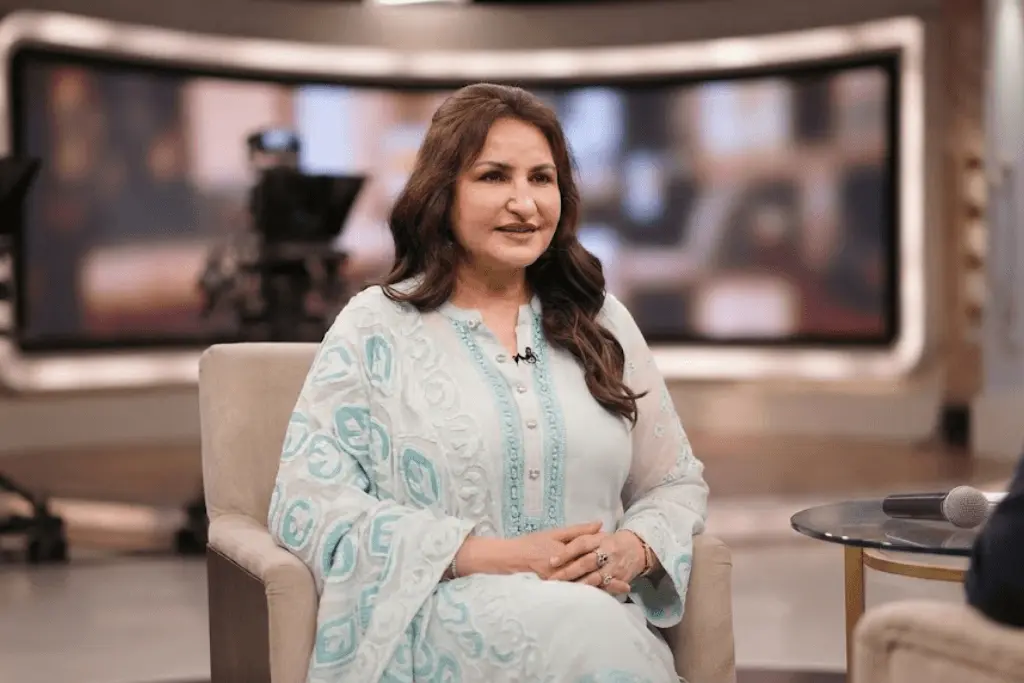
Veteran Pakistani actress Saba Faisal has sparked a new round of public debate over Saba Faisal divorce remarks, marriage and changing social norms after opening up on the subject on Samaa TV’s talk show Gup Shab. Her comments drew a contrast between the way in which families in the past viewed divorce and what she described as a more casual approach among some people today.
Faisal recalled how divorce used to be a major family crisis, and families would mourn for long periods of time and be socially embarrassed when a marriage ended. She spoke especially about pressure on divorced women’s parents and contrasted that older reaction with examples of women continuing their lives after separation, including going abroad.
Since then, the comments have grown beyond entertainment coverage to a broader conversation about how Pakistani society understands marital breakdown. The debate has raised the question of whether less stigma reflects changing social expectations and greater personal independence, or whether it reflects concerns about the seriousness historically attached to marriage.
Divorce And The Choices Of Women Under Discussion
One big disagreement is over how divorced women are supposed to behave after a marriage ends. Faisal questioned the growing normalcy with which some women might speak about divorce and get back to normal life, including travelling. Critics have said that going on with daily life does not necessarily mean that a person has taken marriage or separation lightly.
The argument also points to a difference between the emotional difficulty of getting a divorce and the difficulty of showing that publicly. People may feel grief, uncertainty or family pressure but not have a visible period of mourning. Going back to work, travelling or spending time with family and friends can be someone’s way of coping with a major life change.
This distinction is especially significant when considering Pakistani women, as divorce has traditionally had social consequences beyond the legal termination of marriage. It can include family expectations, financial considerations, concerns for children and social judgment, so individual circumstances can vary greatly.
Zoya Nasir Lashes Out At The Story Behind Divorce
Actress Zoya Nasir openly challenged the narrative built around Faisal’s statement, calling the view a dangerous and twisted narrative. Her answer brought the voice of a leading figure in the entertainment world into the conversation and challenged the assumptions made about women who leave unhappy marriages.
Nasir’s intervention shifted the conversation away from whether divorce should be seen as a serious event to whether divorced women should be judged by how much they visibly grieve. The argument is part of a wider generational debate in Pakistan over individual autonomy, family expectations and the significance of marital decisions.
The response also shows how social media has changed the nature of discussions about Pakistani celebrities. A statement made in a television program can be immediately shared on Instagram and other platforms, allowing celebrities, audiences and commentators to respond almost immediately and transform an entertainment segment into a wider social debate.
Hira Khan Raises Safety, Dignity Issues
Actress Hira Khan also strongly reacted to Faisal’s comments, highlighting the issue of women’s safety and honour. In her reply, she argued that remaining in an abusive marriage should not be considered better than accepting the divorce, thus raising issues of personal safety and wellbeing.
Khan’s intervention redirected attention to the circumstances in which divorce may be a route of escape from serious marital problems, and not an indication that marriage has been taken lightly. This distinction is important because not every separation is due to the same circumstances, and public conversations may miss the reality behind an individual decision.
The response also reflects a wider shift in how younger public figures talk about women’s rights and marriage. The discussion now increasingly incorporates safety, dignity, autonomy and the ability to rebuild a stable life after separation rather than judging the seriousness of divorce by visible mourning or social restrictions.
Pakistani Society Still Suffers From The Stigma Of Divorce
In large parts of Pakistani society, divorce has always been highly stigmatised, with families sometimes feeling pressured to hold marriages together even when relationships become extremely difficult. Faisal’s comments have reignited discussion about how much of that stigma was concern for family stability and how much put extra pressure on women and their families.
Changing attitudes do not necessarily imply that divorce itself has become emotionally unimportant. But in the public debate, there is no question that more and more people are separating the emotional pain of marital breakdown from the social shame that went with it. A family can comprehend the gravity of divorce and assist a family member who must escape an abusive relationship.
Such distinction can lead to a healthier understanding of marriage and separation in Pakistan. It is not to treat divorced women as responsible for social decline to acknowledge the difficulties surrounding divorce, and it is not to present marriage as disposable to accept divorce as a possible end.
Marital Expectations Remain Part Of Larger Discussion
Faisal’s remarks also connected the talk of divorce to broader expectations of compromise between husbands and wives. She has previously said that women shouldn’t compete with their husbands, and her perspective is informed by lessons passed down from older generations, the program reports.
Such views reflect a more traditional understanding of marital roles, while contemporary Pakistani discussions are increasingly including questions about shared responsibility, financial independence and equal participation within households. Such differences can lead to intergenerational disagreements over what a compromise means, and what an unacceptable sacrifice is.
The debate does not have to reduce marriage to a choice between traditional and modern values. Stable marriages can include communication, compromise and mutual respect, but professional, legal or family support may be needed for difficult marriages. Thus, the circumstances of separation remain important for the assessment of individual experiences.
Social Media Has Increased The Conversation Around Divorce
The response to Faisal’s comments points to the increasing power of social media to mould the discourse on sensitive social issues in Pakistan. Instagram posts and short video clips have enabled reactions from Zoya Nasir, Hira Khan and other public figures to reach audiences well beyond the original television program.
Meanwhile, Faisal has separately discussed concerns about viral clips and how edited comments can shape public perceptions. In an interview in September, she argued that comments can be taken out of context and repackaged online, and that such circulation can affect a reputation built over decades.
That context adds another layer to the present discussion. Short clips can amplify conflict, because audiences can see isolated segments of a longer conversation without the full context of what’s being discussed. The published comments have also raised substantive questions about divorce, women’s choices and social expectations.
Divorce Debate Spotlights Issue Of Social Understanding
The controversy surrounding Saba Faisal’s comments is, at its heart, a larger conversation in Pakistan over the generational understanding of marriage and divorce. Traditional expectations still place a great deal of stock in keeping marriages together, while newer perspectives increasingly emphasise individual circumstances, safety, dignity and the ability to rebuild after separation.
The discussion also shows why divorced women should not be judged only by their external behaviour. Going on vacation, returning to work, visiting family or getting back to normal life after a divorce does not necessarily say anything about how deeply a person cared about the marriage ending. Our emotional responses are still our own, and they can vary greatly from one person to another.
The larger conversation for Pakistan provides a chance to talk about marriage more sensitively, not reducing complex personal circumstances to assumptions about social values. Thoughts are changing as reflected in reactions from various Pakistani celebrities, but the ongoing discord shows that questions around family, responsibility, autonomy and divorce are still very important in society.