Farhan Qureshi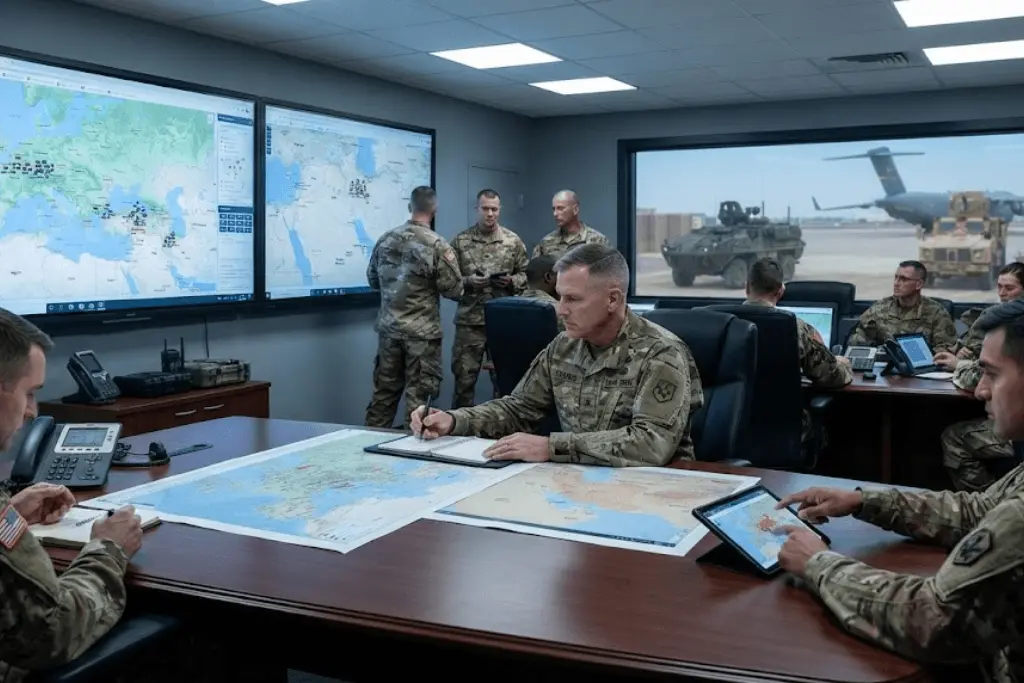
The Pentagon is contemplating sweeping changes in the deployment of American troops in Europe and the Middle East that could transform the Pentagon US military presence in two strategically critical areas. Options reportedly include pulling some 25,000 troops from Europe to as many as 40,000 of an estimated 80,000. It is also looking at future troop and base arrangements in the Gulf after the recent conflict with Iran.
Potential European changes are part of a broader US defence strategy that shifts greater responsibility onto NATO allies for conventional European security. The Pentagon has already announced plans affecting U.S. forces in Germany and cut some capabilities intended for NATO contingency operations. Poland is also in the running for a new permanent US Army base, suggesting any cuts may involve shifting and redistribution rather than just pulling out of Europe.
Europe Could Have More Defence Responsibilities
Any major reduction in US forces would put more pressure on European NATO members to increase their own personnel, air defence, artillery, ammunition stocks, logistics and other capabilities. The International Institute for Strategic Studies recently judged that despite the increased defence spending, European land forces still have major capability gaps. Rebuilding could take years in some areas, the assessment said.
Military mobility would also continue to be a key issue. American forces based in Germany have been major players in the movement and sustainment of forces to the eastern flank of NATO, while American capabilities contribute to maritime surveillance and reinforcement planning. A faster drawdown of the US footprint would therefore require European governments to develop logistics networks, transport capacity and surveillance systems alongside conventional combat capabilities.
Middle East Force Posture Is Being Reassessed Separately
The Pentagon is also reviewing its military posture in the Middle East, after the recent conflict with Iran exposed vulnerabilities at American installations. The fighting damaged US bases in several countries across the region and killed American service members. The Pentagon has yet to decide whether troop and base levels will return to pre-conflict levels.
Traditionally home to some 40,000 US personnel, that figure can swell dramatically in major operations. Recent fighting has also demonstrated the importance of base protection, air defence and the positioning of critical military assets. Questions about future construction, protection and the financial contribution of regional partners are thus becoming part of the broader force posture discussion.
Gulf Developments Key To Pakistan’s Energy Security
For Pakistan, changes in the American military presence in the Middle East are particularly important because stability in the Gulf has direct economic and energy implications. Pakistan is highly dependent on imported energy. It has economic linkages with the Gulf countries in terms of trade, investment, employment and remittance flows. Any sustained disruption to oil production or shipping could thus add further pressure to Pakistan’s external account and domestic energy prices.
The geographic location of Pakistan also adds a wider strategic dimension to regional developments. Pakistan has historic ties with Saudi Arabia, the United Arab Emirates, Qatar and other Gulf states, and Islamabad has always stressed dialogue and diplomatic engagement in the face of regional crises. A shifting U.S. military posture could create additional space for regional diplomatic initiatives alongside existing security partnerships.
Regional Security Changes May Impact Pakistan’s Strategic Planning
Any drawdown or repositioning of U.S. forces in the Middle East could affect calculations among states in the region. Saudi Arabia and other Gulf states may place greater emphasis on domestic air defence, intelligence capabilities, maritime security and bilateral security arrangements. Recent developments in the region have already heightened attention to the protection of critical infrastructure and major shipping lanes.
Pakistan has built defence partnerships with several Gulf partners, with Saudi Arabia still being an especially vital security and diplomatic relationship. Islamabad has a different role from Washington because Pakistan has a direct stake in regional stability, economic cooperation and the welfare of Pakistani workers throughout the Gulf. Thus, a stable regional environment is crucial not only for national economic interests, but also for overseas employment.
US Strategic Priorities Are Shifting Toward Selective Engagement
The European and Middle Eastern reviews reflect a broader debate in Washington over where to put American military resources. The current US National Defence Strategy calls for greater burden sharing by allies in Europe and the Middle East, as the United States aims to devote more resources to other strategic priorities, including China and the Western Hemisphere.
But that doesn’t necessarily mean an end to U.S. involvement in either region. Instead, the reported plans suggest a potentially more selective military footprint, with some bases, capabilities and partners becoming more strategically important. One example of how a smaller overall European footprint could be combined with a greater American concentration in specific locations is the proposed Polish base.
Pentagon Moves Could Change Broader Regional Dynamics
The Pentagon’s review remains a process rather than a policy decision, and the eventual force structure may look quite different from the options currently being reported. European allies are already raising defence budgets and Gulf partners continue to build up their own military capabilities. The timing and nature of any US changes will therefore be a function of strategic considerations, alliance needs and conditions in both theatres.
For Pakistan, the developments highlight the significance of economic resilience and proactive diplomacy as international security arrangements change. Stability in the Gulf is intimately tied to Pakistan’s energy needs, remittance flows, trade ties and overseas workforce, while broader regional stability is in Islamabad’s interest in predictable economic and security conditions.