Adeel Hassan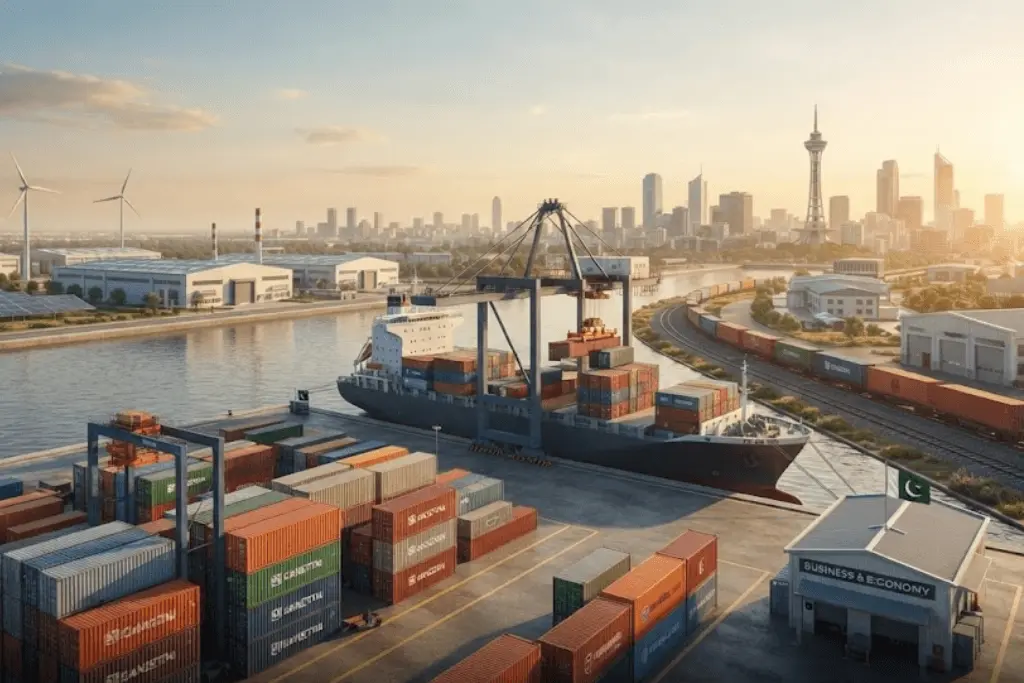
The part of a larger effort to diversify Pakistan economic strategy and improve the country’s standing in international markets.
The government’s export strategy is also more focused on making Pakistani products competitive. Increased quality, better compliance with international standards and increased value addition are being identified as important prerequisites for gaining entry into demanding overseas markets.
Export-oriented growth may forge a tighter connection between industrial production and global demand. Deeper integration of Pakistani firms into global supply chains could help foster investment in manufacturing, technology, logistics and related services, and support broader economic activity.
Diversifying Exports May Broaden Pakistan’s Global Trade Base
Pakistan’s export economy has traditionally been heavily dependent on a few established categories of exports, especially textiles and agricultural commodities. The current strategy aims to broaden that base by promoting additional sectors to develop products for international markets and promoting industries that can yield higher-value exports.
One area with potential for greater international participation is horticulture, especially when agricultural products are supported by modern processing, packaging, storage and certification. Likewise, Pakistan’s surgical instruments industry is also known internationally and has scope for further growth through innovation and improved branding.
Processed foods could also serve to diversify exports by shifting agricultural output further up the value chain. Processing, packaging and product development can add commercial value and create additional employment within Pakistan instead of exporting raw commodities.
Such diversification can also reduce the exposure to fluctuations affecting specific products or markets. A more diverse export portfolio would help Pakistan build commercial links with more countries and sectors, possibly creating more resilience in the structure of external trade.
The Importance Of Global Standards And Value Addition Is Increasing
Raising product quality is now a key part of the government’s export drive. The exporters of Pakistan seeking to enter the international markets are more and more required to meet technical, safety, environmental and certification requirements of importing countries and major international buyers.
Following international standards will build confidence among foreign customers and open up opportunities for Pakistani companies to compete on the basis of quality as well as price. Thus, better testing facilities, certification systems and quality assurance mechanisms can help to support longer-term export growth.
Adding value is the other big part of the economic strategy. Analysts have stressed that instead of depending too much on exports of raw farm commodities or minimally processed goods, a shift to higher value products is needed.
More value addition can mean more export revenues from the same underlying resources, while underpinning industrial development. Pakistan can capture a bigger share of value created through international trade in food processing, advanced manufacturing, specialised engineering and branded consumer products.
Export Development Fund Reorganisation Aids Businesses
As part of the broader efforts to support the business community, Pakistan’s Export Development Fund (EDF) has been restructured. The fund is designed to support activities that can enhance export capacity and assist Pakistani companies to access international markets.
The effective utilisation of export development resources can help to promote trade, international exhibitions, market research, sector development and activities aimed at improving the visibility of Pakistani products. This type of support can be especially valuable to smaller companies that do not have the resources to develop overseas markets.
The government has also identified trade exhibitions as an important instrument for linking Pakistani companies with international buyers. Events such as TEXPO and FoodAg are opportunities for companies to showcase their products, establish commercial relationships and identify potential in different markets.
International exhibitions are more valuable if they are followed by sustained commercial engagement. Product quality, timely delivery, competitive prices and compliance with buyer requirements continue to be critical in turning initial contacts into long-term export relationships.
Trade Exhibitions Unlock New Opportunities For Pakistani Industries
The program of sector-specific exhibitions by Pakistan is an indication of the government’s effort to raise the international visibility of domestic industries. TEXPO offers a large platform for textile and related industries, while FoodAg can link agriculture and food processing companies with overseas buyers.
Such events can also assist exporters in understanding changing consumer preferences and international buying requirements. Besides information available through domestic market channels, direct contact with buyers can be a source of information on packaging, product specifications, certification, pricing and delivery standards.
Industries that have traditionally been less internationally addressed can profit from a wider exhibition strategy. Such platforms can be used by specialised sectors such as horticulture, processed food, surgical instruments and minerals to showcase their capabilities and establish commercial partnerships.
The longer term impact will depend on how successful businesses are in converting exhibition contacts into real trade. Government facilitation, private-sector preparation and follow-up support can all contribute to converting promotional activity into sustained export growth.
New Investment Considerations From Pakistan’s Economic Growth
Pakistan’s economic strategy is also being shaped by the need to attract investment that could support industrial expansion and productivity improvements. Pakistan Economic Survey 2025-26 stated that the provisional GDP growth rate in fiscal year 2026 was 3.70 per cent, which laid the foundation to further boost economic activity.
Investment can contribute significantly to expanding productive capacity and to supporting export-led industries. The focus is likely to shift away from infrastructure to broader economic cooperation, industrial development and opportunities for the private sector.
More investment in export-linked industries could create a self-reinforcing cycle, increased production capacity can boost exports, and better access to international markets can make Pakistani industries more attractive to investors seeking opportunities in manufacturing and services.
The Next Phase Of CPEC Could Be Pro-Business
The second phase of CPEC has been an important part of the discussion on Pakistan’s future investment strategy. A focus on private sector involvement could provide investment opportunities in industrial projects, technology, logistics and other areas related to economic growth.
Private investment can supplement public sector development by adding capital, expertise and modern management practices to productive industries. More involvement of local and foreign businesses could also strengthen links of Pakistani firms with regional supply chains.
In particular, reliable infrastructure is important in the case of export-oriented projects. Efficient transport, energy, digital connectivity and industrial facilities can reduce production and logistics costs, and improve companies’ ability to meet overseas delivery schedules.
Therefore, CPEC-related investment opportunities will have broader economic impacts if they are linked with sectors that can generate export and employment opportunities. Stronger links between infrastructure, industry and international markets could support a more productive economic base for Pakistan.
Strong Business Facilitation Needed For Investment, Export Reforms
To be able to boost exports and attract investment, a business environment with more predictability for companies is required. Administrative delays, cumbersome procedures and uneven implementation can raise costs for businesses and dampen the attractiveness of long-term investment projects.
Hence, apart from export promotion, the current economic strategy of Pakistan also emphasises improving the ease of doing business. Quicker approvals, clearer regulations, efficient customs procedures and stronger institutional coordination can help businesses spend more resources on production and market development.
Pakistan Seeks Trade And Investment To Fuel Sustainable Development
Pakistan’s economic review is an attempt to link export growth with investment, industrial development and deeper structural reform. The shift into new sectors, higher value products and international standards shows a strategy for increasing the quality as well as the volume of exports.
Provisional GDP growth of 3.70 per cent for the fiscal year 2026 provides an economic base to pursue further reforms. Faster expansion could be achieved through stronger export performance and productive investment, provided by improvements in infrastructure, business facilitation and industrial competitiveness.
The restructuring of the Export Development Fund and the continuous organisation of international trade exhibitions offer practical mechanisms to support exporters. At the same time, the second phase of CPEC could open up opportunities for private investment in sectors related to domestic production and international markets.
The longer-term performance of the Pakistani economy will depend on the effectiveness of the implementation of these measures and sustained cooperation between government institutions and the private sector. The combination of a diversified export base with greater value addition, modern technology and productive investment can help to sustain a more competitive economy and open up fresh horizons for long-term prosperity.