Farhan Qureshi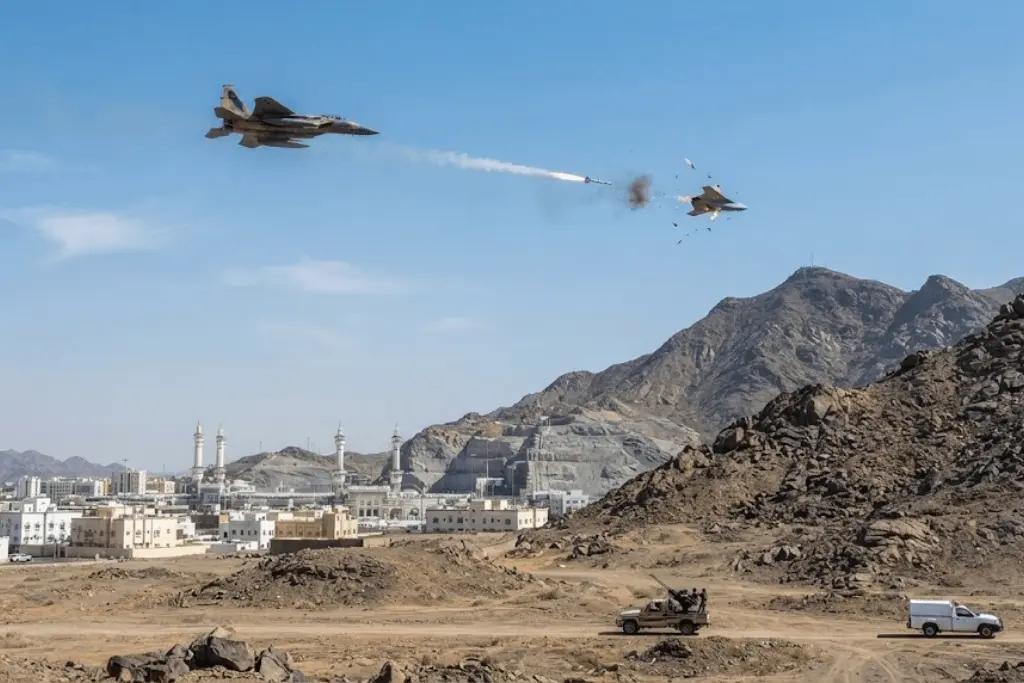
In a wider flare-up involving Yemen, the Gulf and the ongoing conflict between the United States and Iran, Saudi Arabia Houthi drone was shot down by Saudi Arabia on the outskirts of Mecca, Islam’s holiest city. The reported interception has sparked regional concern over the religious significance of Mecca and potential fallout from attacks near major pilgrimage sites.
The drone was destroyed by Saudi authorities before reaching the holy city. The incident has been described as a serious security development, especially as Mecca attracts millions of Muslim pilgrims from across the world every year and is the heart of the religious life of the world Muslim community.
Mecca’s Religious Significance Sparks Security Worries In Region
Mecca is of special significance for Muslims as the birthplace of the Prophet Muhammad and home of the Grand Mosque. It is the location of the annual Hajj pilgrimage and a major destination for Umrah throughout the year. Therefore, the security of the area is a matter of international religious and humanitarian concern.
Saudi Arabia has spent billions of dollars in protecting the holy cities and ensuring safe access for pilgrims. Security measures in Mecca need the close cooperation of the defence, interior, aviation and religious authorities, especially when there are huge numbers of visitors.
Houthi Officials Deny Threat To Mecca
Saudi coalition spokesman Turki al-Maliki said the reported drone attack was a hostile act and that necessary steps would be taken to defend the kingdom. In Saudi statements, the incident was put within the framework of a broader pattern of Houthi activity against Saudi territory.
But Houthi officials denied that the group had threatened Mecca. The conflicting accounts underscore the difficulty of independently verifying military events in an active regional conflict, especially when information is given by opposing sides with differing strategic goals.
OIC condemns alleged attack near Islamic holy site
The Organisation of Islamic Cooperation denounced the alleged incident, saying that attacks and attempted attacks near holy sites endanger the sanctity of places of worship and spread terror among civilians. The 57-member organisation comprises a wide spectrum of Muslim-majority and Muslim-minority nations.
The condemnation emphasises the importance of Mecca to the wider Islamic world. Any security incident in the area is likely to attract the attention of governments and religious communities outside Saudi Arabia, particularly in times of increased regional instability.
Houthi Attacks Intensify Pressure On Saudi Arabia
The interception of the reported drone comes after a spate of Houthi missile and drone attacks against several Saudi cities, including Khamis Mushait, Abha and Taif. Saudi authorities say civilians were injured in previous attacks, and the Houthis have also claimed responsibility for an attack on a Saudi military base.
Recent developments have put Saudi Arabia in a difficult strategic situation. The kingdom backs Yemen’s internationally recognised government and has a major stake in regional security, but continued Houthi attacks put pressure on it to respond without triggering a wider conflict.
Wider Energy Risks From Red Sea Developments
The Houthi escalation coincides with rising tension over the Red Sea and the Strait of Hormuz. Control of sea lanes has become more important in the broader clash between the United States and Iran that is impacting shipping, energy infrastructure and regional security.
Heightened concerns about alternative routes for Saudi oil and refined product exports have been triggered by the reported Houthi takeover of a Red Sea port city and an island off a key waterway. Any prolonged outage would add to the pressure on world energy markets.
Difficult Strategic Choices Face Saudi Security Response
Saudi Arabia needs to defend its territory but not with a military response that could pull the kingdom deeper into the Yemen conflict. The reported interception near Mecca adds a particularly sensitive dimension, considering that any further incident near the holy city could provoke a strong regional and international reaction.
Repeated missile and drone threats make Saudi air defence systems a key part of the kingdom’s security arrangements. But air defence cannot address the political and military roots of the conflict, especially when armed groups are operating in complex terrain and have access to external support.
Pakistan Has A Keen Interest In Gulf Stability
Pakistan has longstanding religious, economic and diplomatic ties with Saudi Arabia, making stability around Mecca and the wider Gulf especially important. Pakistani diaspora often visits Saudi Arabia for Hajj and Umrah or for work and business. Saudi Arabia is a major destination for Pakistani workers.
Pakistan also has a significant stake in preventing disruption of Gulf energy routes. Higher oil prices and shipping instability impact Pakistan’s import costs, inflation and foreign exchange pressures. Thus, regional stability is still very much linked to Pakistan’s economic planning and energy security.
Continued Regional Tensions Jeopardise Civilian Safety
The reported downing of a drone near Mecca shows that regional conflicts can create risks far beyond active conflict zones. Missile attacks, maritime pressure and energy security concerns are increasingly linking Yemen’s conflict, military activity by the Houthi movement and the wider US-Iran confrontation.
The civilian populations still pay the price of these developments, such as injury, displacement, fear and increased cost of living. When religious sites are enmeshed in military threats or political confrontation, faith groups have added concerns.
The recent incident again shows the need for restraint, reliable communication and more international efforts to avoid further escalation. The preservation of Mecca and other holy sites should remain a common concern for regional governments and international bodies alike. The security response from Saudi Arabia, the condemnation from the OIC and broader regional diplomatic efforts will remain important in determining if tensions are contained.
Pakistan and other states with close ties to Saudi Arabia have a major stake in stability in Mecca and the Gulf. Given the need for a peaceful and secure environment for pilgrims, energy markets, trade links and regional cooperation, diplomatic restraint and sustained dialogue become more and more important.