Farhan Qureshi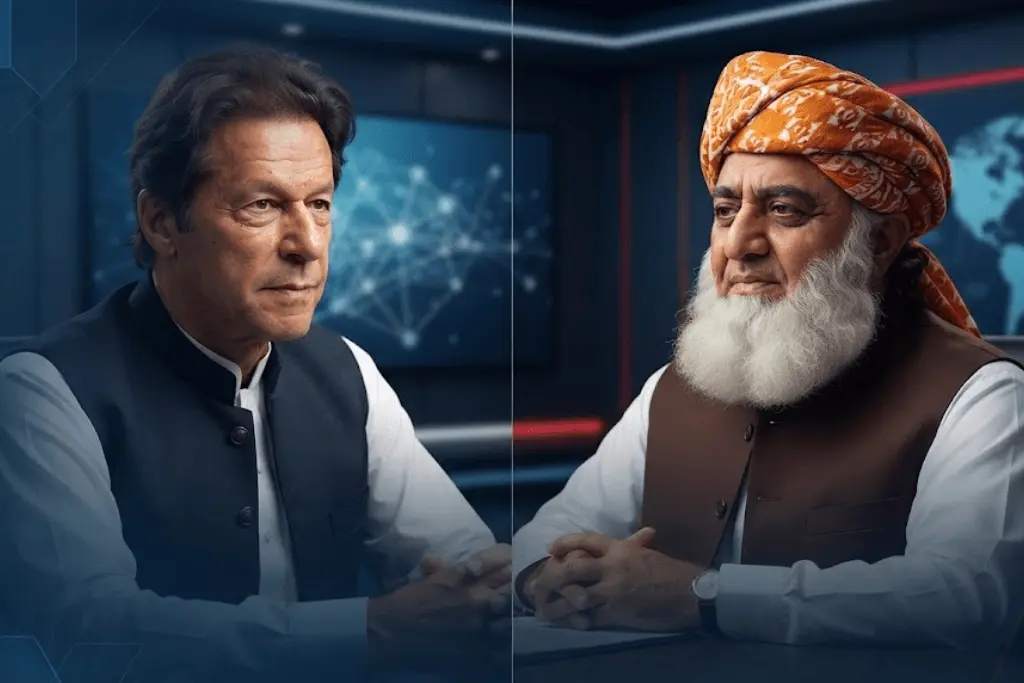
The Jamiat Ulema-e-Islam-Fazl has agreed in principle to join the JUI-F PTI opposition multi-party campaign led by the PTI, marking a significant development in Pakistan’s changing political scenario. The development comes after a high-level meeting between JUI-F chief Maulana Fazlur Rehman and Pakistan Tehreek-e-Insaf leaders in Islamabad.
Discussions centered on improved coordination among opposition parties in Parliament and on developing a more coordinated political strategy.
JUI-F has agreed to participate in the multi-party conference being arranged by the PTI. The conference is expected to provide a broader forum for opposition parties to discuss political, economic and security concerns and to consider areas where coordinated action might be possible.
A multi-party platform can unite groups that might otherwise pursue separate parliamentary strategies. More communication can help opposition parties to find common priorities, while enabling parties to maintain their own organizational structures and political positions.
The conference could thus become an important test of the opposition’s ability to coordinate itself on more than one political issue. Success will hinge on the participants’ ability to find practical common ground while navigating disagreements on larger national and political matters.
Opposition Parties Highlight Pakistan’s Security Concerns
Security and law and order are major issues in the talks between opposition parties. Deteriorating security conditions and the challenges faced by some provinces have raised concerns among political representatives who have identified the need to pay more political attention to internal stability.
The security environment in Pakistan remains complex across various regions, and public safety remains an important national concern. Discussions on employment, prices, and public services can also lead to a greater focus on policies to protect vulnerable sections of society.
Sustained political engagement on economic priorities can further a stronger national policy debate for Pakistan. Parliamentary scrutiny and competing policy proposals can offer additional perspectives on how we can bolster economic growth, investment, employment and public welfare.
September 27 Plans Could Trigger Wider Opposition Mobilization
The political coordination is being done ahead of the PTI’s planned long march and public demonstration on September 27. Opposition parties are discussing their positions around the planned activity, and the emerging JUI-F involvement could add a broader political dimension to the mobilization.
Holding big political rallies remains a popular feature of Pakistan’s democratic culture, and such rallies provide a platform for political parties to directly reach out to their followers and focus on national issues. But responsible political mobilization must also consider public safety, due process of law, and the continuity of daily life.
The political importance of the plans for September 27 could increase if several opposition groups join in. The parties’ response to the event, and what they say about their demands, will be important in determining whether the mobilization turns into a sustained opposition campaign.
Democratic Debate Could Be Strengthened By Parliamentary Cooperation
More understanding between JUI-F, PTI and other opposition parties could change parliamentary politics in the National Assembly as well as the Senate. A united opposition could improve the way debates are run, enhance the scrutiny of legislation, and draw more attention to issues raised by various groups.
Such cooperation need not mean complete agreement on all questions of policy. Parties can have different views, but they can still work together on some things, especially when a lot of people are affected by things like security, the economy, and public welfare.
Meaningful parliamentary debate and peaceful political competition serve Pakistan’s democratic institutions. Strong opposition participation is a way to encourage accountability and to allow government and opposition representatives to present competing approaches to national challenges.
Political Differences Could Strain Emerging Alliance
However, the emerging coordination is also facing challenges as JUI-F and PTI have had big political differences in the past. Political alliances in Pakistan have frequently been the result of specific circumstances and have changed as national conditions changed. The success of the current effort will thus depend on the ability of the parties involved to turn the initial understanding into lasting parliamentary cooperation and a coherent political program.
The multi-party conference could be an early opportunity to build that framework. Clear discussions on common priorities, parliamentary conduct and political mobilization may help define the strength and longevity of the emerging opposition arrangement.
Pakistan’s Political Process Is Still Concentrated On Democratic Engagement
The decision of the JUI-F to join the opposition led by the PTI is a significant development in Pakistan’s continuing political evolution. The development also underscores the need for dialog among the political groups despite differences in ideological and electoral strategy. Broader coordination may help to create a more active democratic process if it is channeled through parliamentary institutions and peaceful political activity.
The focus will now be on whether the nascent partnership develops into an enduring parliamentary strategy as preparations continue for the multi-party conference and the planned mobilization on September 27. The result could have implications for opposition politics and add another significant chapter to Pakistan’s changing democratic landscape.