Adeel Hassan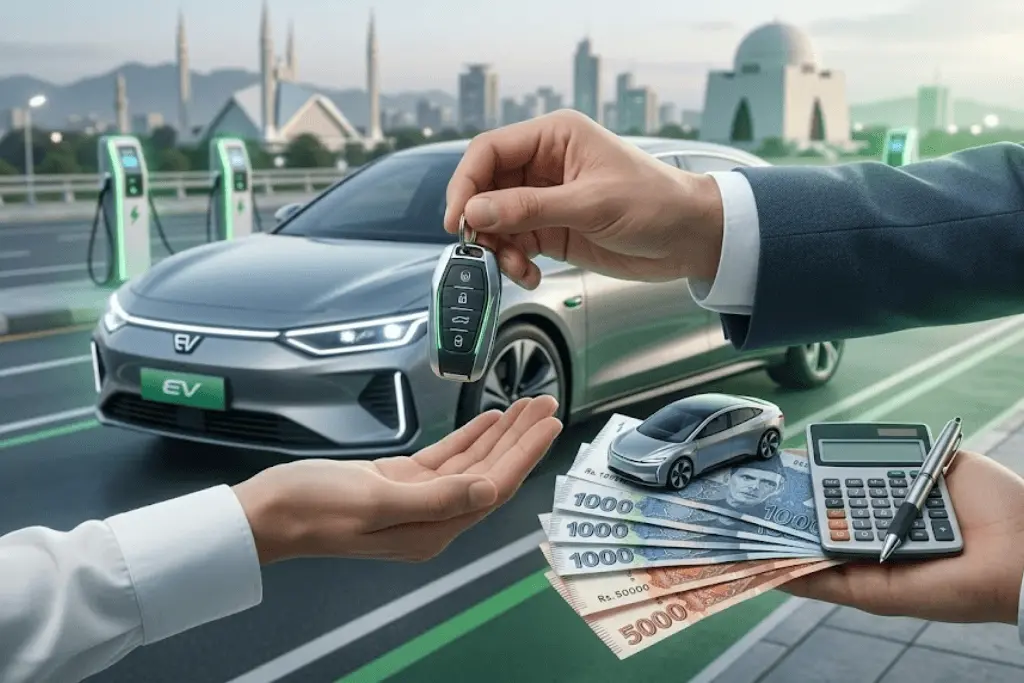
Pakistan auto financing policy is becoming a vital part of the country’s drive toward electric and New Energy Vehicles. The policy direction is to make cleaner vehicles more affordable, reduce dependence on imported petroleum and encourage a gradual transformation of the domestic automobile market.
The New Energy Vehicle framework puts greater emphasis on affordability, access to financing and supporting infrastructure. The policy can help overcome one of the biggest hurdles for potential electric vehicle buyers: the relatively high upfront cost of newer technologies by making financing terms more attractive.
The larger goal is more than just changing the types of vehicles that drive on Pakistani roads. Greater EV uptake can also help diversify energy sources, ease pressure on fuel imports and drive investment in vehicle manufacturing, components, charging networks and related services.
Increased Financing Limits Could Help NEVs Become More Affordable
The reforms to auto finance rules proposed would considerably increase the credit limit for New Energy Vehicles. The proposed ceiling would be raised from PKR 3 million to PKR 10 million, which may allow financed buyers to access a wider range of electric and plug-in hybrid models.
The second important characteristic of the proposed framework is the longer financing period. Increasing the maximum tenure from three years to five years can help reduce the size of monthly instalments and make the purchase of an electric vehicle more affordable for households planning to switch from traditional petrol-powered cars.
More favourable financing terms might also help open up demand to more than premium buyers. With the availability of financing and the price of vehicles becoming competitive, a larger segment of the Pakistani market could gradually think of electric mobility as a practical option for transportation.
Tax Incentives To Boost Pakistan’s Electric Vehicle Policy
Tax incentives are another important part of Pakistan’s strategy to encourage the adoption of New Energy Vehicles. The proposed incentives include a low 1% sales tax on eligible NEVs, parts and raw materials, and exemptions from federal excise duty, capital value tax and withholding tax.
Such incentives can help bring down the overall cost structure around electric vehicles and encourage manufacturers to step up local production, and lower taxes on components and raw materials can also encourage investment in assembly facilities and associated supply chains in Pakistan.
A stronger homegrown EV ecosystem could bring economic benefits beyond car sales. As the market develops, new opportunities for industrial investment and skilled employment could include local assembly, battery-related services, charging infrastructure and component manufacturing.
Pakistan To Construct More Electric Vehicle Charging Stations
The availability of charging infrastructure is still one of the most important success factors for electric mobility. Therefore, Pakistan’s policy framework has been formulated with measures to make charging facilities easy and commercially viable at major urban and transport locations.
Proposed measures include a reduction in import duties on electric vehicle charging stations to 1%. Also, viability-gap funding for battery swapping infrastructure can be a solution for some categories of electric vehicles, especially two-wheelers and commercial fleets.
Strategic expansion of charging facilities can help ease fears about driving range and the availability of charging, and up to 3,000 charging stations along key transport corridors and urban hubs could help to build a more reliable national EV network over time.
Pakistan Has Set A Target Of A Sharp Rise In EV Sales By 2030
Pakistan’s New Energy Vehicle Policy 2025-2030 has outlined an ambitious roadmap toward electric mobility. The framework wants to see electric cars and motorcycles make up between 30% and 50% of new vehicle sales by 2030, which could mean a big shift in the country’s transport market.
Achieving these goals will require coordination among government agencies, banks, manufacturers, energy companies and consumers. Financing reform can boost demand, tax breaks can make vehicle ownership more affordable, and infrastructure investment can solve practical concerns about ownership.
And it’s probably going to be a slow change, not an overnight change. For electric cars and motorcycles to be widely adopted in Pakistan, their prices, performance, reliability and charging convenience will have to be increasingly competitive.
Pakistani Buyers Still Face High Upfront Cost Challenges
Despite policy support, affordability remains a key consideration for the Pakistani automobile market. Financing reforms can help deal with part of this challenge by spreading the initial purchase cost over a longer period of time. But sustained uptake of EVs will also require higher consumer confidence, better after-sales support, dependable batteries and more charging facilities.
Transport policy in Pakistan is closely linked with the external account and energy security of the country due to dependency on imported petroleum. A larger fleet of electric vehicles could slowly reduce the demand for petrol and open up the possibilities for more diversification of energy sources for transport.
The benefits would be somewhat dependent on the development of Pakistan’s electricity system. The increased use of EVs would mean additional demand for electricity, which would be supported by reliable generation, transmission networks and efficient charging systems to support the wider transition.
However, a carefully managed transition to electric mobility could support Pakistan’s long-term energy goals, and greater use of domestically generated electricity to power vehicles could reduce some exposure to international oil-price volatility and help spur investment in cleaner and more efficient technologies.
EV Transition Could Be A Boon For Pakistan’s Auto Industry
Electric vehicles could usher in a new chapter for Pakistan’s automobile industry. There will be opportunities for local manufacturers and international companies operating in the country in EV assembly, battery systems, charging equipment and specialised components.
The sector could have greater certainty for companies looking to invest in it with policy incentives, and a predictable regulatory framework with financing support and infrastructure development can incentivise manufacturers to bring more electric and plug-in hybrid vehicles to market.
It could also stimulate technological development in Pakistan, and training and investment in technical skills can equip workers to meet the new demands of battery maintenance, electric drivetrains, charging systems and automotive software.
Pakistan’s EV Policy Has Potential To Accelerate Greener, More Efficient Transportation
For Pakistan, the transition to electric vehicles is about much more than an automotive policy shift; it is part of a wider drive to improve energy efficiency, to reduce our dependence on petroleum and to build a modern transport system which can adapt to the changing world of technology.
The financing reforms, tax incentives and measures on charging infrastructure that are being proposed offer a range of tools to accelerate that transition. Their success will hinge on effective implementation, consumer affordability, reliable infrastructure and continued investment in the auto and energy sectors.
Pakistan can build a stronger local electric mobility ecosystem with the right support that can help solve urgent economic and environmental problems. Continued policy support and coordinated investment could make the country’s EV market increasingly important to modern transport and long-term energy security.