Farhan Qureshi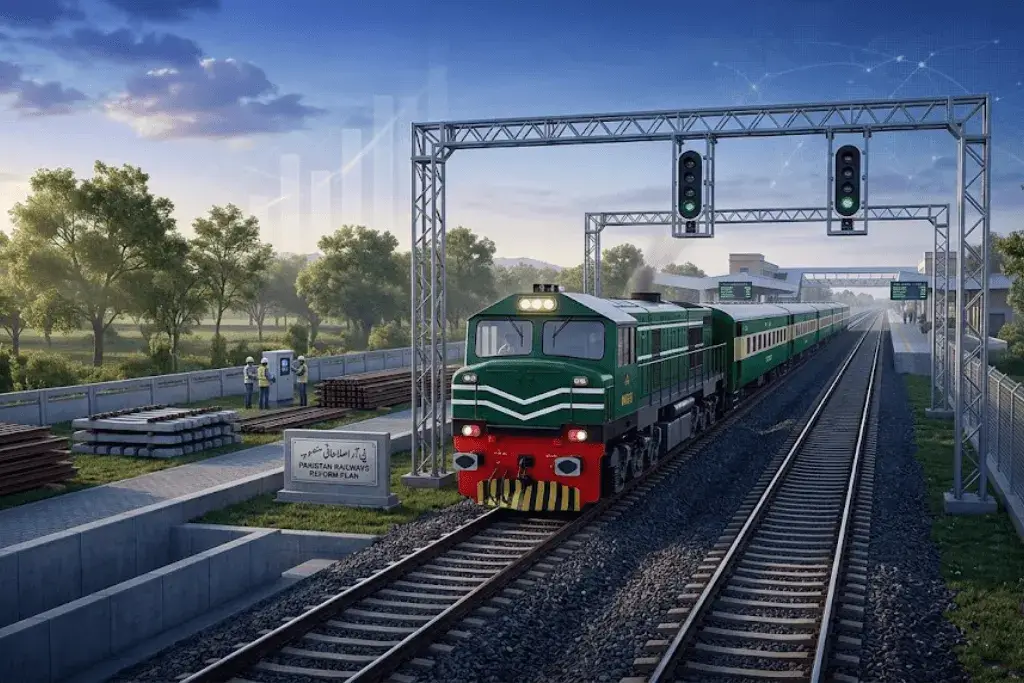
Pakistan Railways reform has gained momentum as Pakistan Railways has approved a comprehensive strategic roadmap to modernise its operations, improve passenger services and strengthen the organisation’s financial sustainability. The plan is part of a wider push to overhaul the national rail network through investment in infrastructure, digital systems, private sector involvement and improved operational efficiency.
The reform program is more focused on attaining competitiveness of rail transport in passenger and freight transport. Pakistan Railways has identified stronger freight operations as an important route toward higher revenues. Improvements to coaches, stations and tracks are aimed at making rail travel more reliable and attractive.
The roadmap also stresses the need for long-term institutional reform. The strategy is aimed at improving the operation of Pakistan Railways, how it makes money and provides services across the national network, rather than focusing on individual infrastructure projects.
Pakistan Railways To Earn Revenues By Freight Expansion
One of the main objectives of the reform plan is to raise Pakistan Railways’ share in the freight market from around 8 percent to 20 percent. The target highlights the huge economic potential of rail freight, particularly in the movement of bulk commodities and goods along Pakistan’s major commercial corridors.
An increased use of rail freight could increase operational revenues as well as make the movement of goods more efficient. Rail transport can contribute significantly to creating opportunities for Pakistan Railways to strengthen its position in the national logistics sector through connecting ports, industrial centres, agricultural zones and major markets.
Better goods services could also help broader economic activity by giving firms another reliable way to move goods. Better scheduling, better infrastructure and modern cargo-management systems will be important to attract commercial customers and develop confidence in rail-based logistics.
The freight target is thus a key element in the financial sustainability strategy. More freight traffic and better efficiency could help Pakistan Railways build stronger revenue sources and reduce reliance on conventional passenger operations.
Digital Transformation May Enhance Railroad Operations
Another important pillar of Pakistan Railways’ strategic roadmap is digital transformation. Modern digital systems can deliver more efficient scheduling, ticketing, asset management, maintenance planning and operational monitoring across a large and complex railway network.
Better digital infrastructure could also mean better customer service in terms of the accessibility of travel information and ticketing systems. Technology offers Pakistan Railways an opportunity to eliminate administrative inefficiencies and increase visibility in the various aspects of railroad operations.
The transition to digitally enabled operations would necessitate investment in technology, resourcing and reliable connectivity. However, successful implementation could give Pakistan Railways a more solid foundation for long-term modernisation.
Ml-1 Upgrade Remains Key To Railroad Modernisation
The Main Line-1 project is still one of the most important parts of Pakistan’s railway modernisation agenda. The first phase will span a 480-kilometre stretch between Karachi and Rohri or Sukkur, creating a major upgraded corridor connecting key parts of the country’s commercial network.
The project is expected to cost around $2.5 billion, and authorities hope to start work in January 2027. The proposed upgrade is expected to boost the railway infrastructure and improve operational performance on one of Pakistan’s most important routes.
Pakistan has also been talking to the Asian Development Bank on how to speed up the implementation of the project. International financial and technical cooperation can assist in modernising railway infrastructure and help promote a project of long-term national economic significance.
Beyond railway operations, the ML-1 corridor, in an enhanced version, could yield benefits. Better connectivity between Karachi and interior Sindh could enable trade, logistics and passenger mobility, and enhance links to broader national transport networks.
Partnerships With The Private Sector Could Help Pakistan Railways
The strategic roadmap also envisages more involvement of the private sector through public-private partnerships. These arrangements could also bring additional investment, technical expertise and operational experience into selected areas of Pakistan Railways.
Private sector involvement could potentially assist in improving services and infrastructure and help ease pressure on government resources, and well-structured partnerships could also demand higher performance standards and spur innovation across commercial railway operations.
However, effective oversight would still be important, especially where public assets and vital transport services are concerned, and clear contracts, transparent procurement, performance monitoring and appropriate regulatory safeguards could help ensure partnership support for national objectives.
The broader reform approach therefore combines public-sector responsibility with opportunities for private investment. Such a model would help Pakistan Railways mobilise resources, while keeping a keen focus on service quality, affordability and national connectivity.
Passenger Services A Key Element Of Reform Strategy
Another key element of the roadmap is modernisation of passenger services. Upgrading coaches, stations and tracks would make travel more comfortable and also more reliable on Pakistan’s passenger rail network.
Passenger rail still has an important role to play in linking major cities, small communities and economically important areas. Therefore, improvements to stations and rolling stock could have a direct impact on mobility, particularly for passengers looking for cheap long-distance transport.
The quality of service will also depend on the timeliness, cleanliness, safety and customer support, and better operational management and investment in infrastructure could enable Pakistan Railways to improve these areas and increase public confidence in rail travel.
And the freight strategy could be paired with a more robust passenger network, and higher freight volumes, along with increased passenger demand, would lead to a more diversified operating model, helping Pakistan Railways develop a wider and potentially more resilient revenue base.
Pakistan Railways Reform Aims For Long-Term Financial Stability
Financial sustainability is one of the key ambitions behind the reform program. Pakistan Railways requires a modern operating structure that is able to generate stronger revenues, while controlling costs and directing investment to areas that can produce the greatest economic and social returns.
Growth in freight, digital transformation, better passenger services and partnerships with the private sector will serve that objective. These measures can be introduced in a phased manner to move Pakistan Railways toward a more commercially sustainable operating model.
Only if it is implemented consistently and if institutions coordinate with each other will the strategy work. ML-1 and other mega infrastructure projects require long-term planning. Reforms of the digital and services that are sustainable in terms of investment, not short-term fixes.
Pakistan’s railway network has huge potential for economic connectivity, trade and mobility. A coordinated reform program could help unlock that potential, and position Pakistan Railways as a more modern, efficient and financially sustainable part of the country’s transport infrastructure.
Pakistan’s Economy Gets A Boost From Railway Modernisation
The reform roadmap of Pakistan Railways is a huge opportunity for modernisation of a national institution that is central to transport and economic connectivity. Improvements in infrastructure, freight operations, passenger services and digital systems could benefit a range of sectors.
The underlying strategy is based on the critical infrastructure base of ML-1, especially the Karachi to Rohri or Sukkur segment. International co-operation, including talks with the Asian Development Bank, could help further accelerate modernisation.
If done carefully, with stronger governance and continued investment, Pakistan Railways could improve service standards and at the same time build a more stable financial base. The reform program ultimately provides a framework for making rail transport a stronger contributor to Pakistan’s economic development and national connectivity.