Farhan Qureshi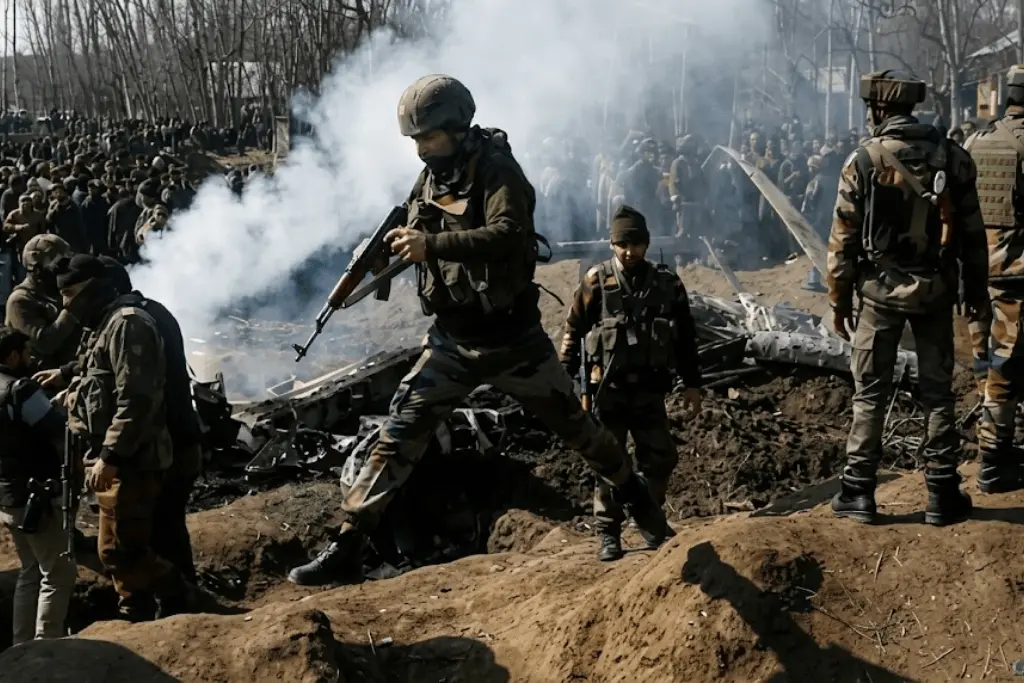
The Pakistan Kashmir position is closely tied to the history of the 1947 partition of British India and the continuing territorial dispute between Pakistan and India. Pakistan says Kashmir is a disputed territory and its final status should be decided by the wishes of its people and not be treated as a settled issue between the two countries.
The issue is still one of the most significant sources of tension in South Asia, especially as Pakistan and India are nuclear-armed neighbours. Pakistan has continued to raise the Kashmir question at diplomatic and international forums, highlighting the significance of political engagement, the rights of Kashmiris and a peaceful resolution in line with international commitments.
Pakistan Considers Kashmir An Unsettled Regional Dispute
Pakistan says the whole of Kashmir is disputed and calls the issue an unfinished business of partition. The Pakistani position does not recognise the territory as being in the permanent ownership of either Pakistan or India but rather stresses the right of the Kashmiris to decide their political future.
The principle of self-determination is at the heart of Pakistan’s diplomatic position. Pakistan has repeatedly referred to United Nations resolutions on Kashmir and supports a plebiscite, or a direct vote, through which the people of the disputed territory could express their preference on its future.
Pakistan expresses this position as a political and diplomatic promise to the Pakistani people. The issue has remained central to Pakistan’s foreign policy as developments in the region have direct implications for national security, regional stability and relations with India.
Pakistan’s Position Still Hinges On Un Resolutions
The Pakistan case on Kashmir is still heavily reliant on the UN. Pakistan cites historical UN resolutions that establish the framework for determining the future of the territory by the wishes of its people. Pakistan administers Azad Jammu and Kashmir and Gilgit-Baltistan, and India administers Jammu and Kashmir and Ladakh.
The Line of Control separates the Pakistani- and Indian-administered regions. It is a heavily militarised dividing line, but not an internationally recognised border for either side. Both Pakistan and India still assert claims over the wider territory. Movement, security concerns and political developments along the dividing line remain important factors in the broader regional relationship.
2019 Pakistan-India Tensions Rose
A major development in the dispute was India’s decision in August 2019 to rescind the special constitutional status previously associated with Jammu and Kashmir. Pakistan strongly opposed the decision and said that any change in the status of the Indian-administered territory cannot resolve the underlying dispute.
The decision damaged relations between Pakistan and India, and diplomatic and economic links became more constrained, and Pakistan was worried about the political and constitutional changes, and international attention was focused on the developments in Kashmir.
The episode also illustrated how constitutional decisions on one side of a contested territory can reverberate far beyond local administration; for Pakistan, the events underscored the need for sustained diplomatic engagement on the Kashmir issue.
Military History Continues To Influence Regional Security
Kashmir has been the centre of gravity for many of the major India-Pakistan conflicts. In the first few decades after independence, the two countries went to war in 1947 and 1965, and the Kargil conflict of 1999 again showed the dangers of the disputed territory.
Kashmir is very sensitive, and both countries are nuclear powers, and any escalation on the LoC has its consequences. The military aspect of the conflict is not simply about the immediate neighbourhood, but it could raise wider issues of peace and stability in the region.
Pakistan also continued to stress the importance of dialogue and peaceful means of dispute resolution as a critical element of tensions management. It is important to reduce military activity and keep open lines of communication so that a local incident does not escalate into a larger confrontation.
Human Rights Central To Kashmir Discourse
Pakistan routinely raises the issue of rights and welfare of people in Indian-administered Kashmir. Pakistani officials and institutions have repeatedly highlighted human rights violations, and the need to protect civilian rights and political freedoms has been stressed.
India has rejected many of Pakistan’s charges, and has accused Pakistan of supporting militancy across the border. These competing claims have added to the complexity of the dispute and made independent assessment, credible evidence and international scrutiny all the more important.
The humanitarian angle remains a key part of the wider Kashmir debate. Protecting civilians, respecting fundamental rights and allowing peaceful political participation can all contribute to a more stable environment, whatever the eventual political settlement.
Pakistan Continues To Stress Political And Diplomatic Support
Pakistan’s position is to provide moral and political support to the people of Kashmir in their struggle for self-determination. Islamabad has always held that the dispute needs a political solution rather than permanent dependence on military confrontation.
Pakistan’s diplomatic approach has also correlated Kashmir with wider principles of international law, peaceful resolution of disputes, and protection of the rights of civilians. Maintain focus on the issue, including ongoing engagement with international partners.
Mechanisms that are able to defuse tensions and deal with long-standing political differences are essential for South Asia’s long-term sustainability. Pakistan’s continued emphasis on dialogue, self-determination and international engagement is reflective of its larger stake in regional stability and peaceful relations.
Kashmir Dispute Key To South Asian Stability
The Kashmir issue continues to be one of the thorniest problems in Pakistan-India relations, and the historical claims, competing political positions, military deployments, and humanitarian concerns have created a complex situation that cannot be solved by short-term measures alone.
Pakistan remains committed to the status of Kashmir as a disputed territory and a process based on the wishes of its people, also diplomacy, restraint and peaceful engagement remain important in safeguarding regional stability.
For Pakistan, the Kashmir question remains intimately tied to national security and foreign policy, but also to the wider goal of a peaceful South Asia, and a lasting settlement would require meaningful engagement, respect for the rights of the communities affected, and a political process able to address the long-standing dimensions of the dispute.