Farhan Qureshi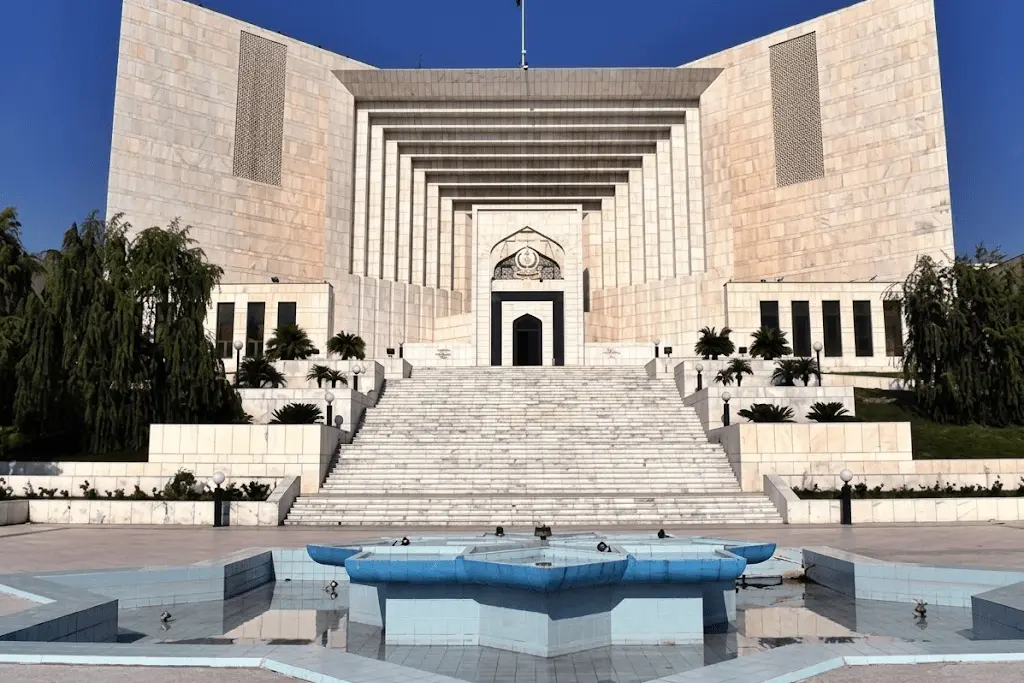
The Supreme Court Registrar’s Office has returned a petition challenging the Pakistan 27th Constitutional Amendment, stating that such petitions should be filed in the Federal Constitutional Court. The development situates the constitutional challenge within the jurisdictional framework that has evolved following changes to Pakistan’s judicial structure.
The former Justice Shabbir Raza Rizvi had filed the petition seeking declaration of the 27th Constitutional Amendment as null and void. The petition also challenged the lifetime immunity under Article 248 and raised larger constitutional issues regarding the independence of the judiciary, the basic structure of the Constitution and the power of Parliament to change its basic features.
Supreme Court Registrar Rejects Petition On 27th Amendment
The Supreme Court Registrar’s office on Friday refused to accept the petition, saying such challenges could be made to the Federal Constitutional Court. The decision deals with the forum in which the constitutional challenge can be brought and is not a decision on the merits of the claims made against the amendment.
The petition sought a court order against the 27th Constitutional Amendment, claiming the law had affected several constitutional provisions. The petitioner argued that the provisions included articles 6, 175, 175A, 175E, 200, 206, 248 and 260, the changes to which were beyond the permissible scope of constitutional amendment.
The development emphasises the importance of jurisdictional processes against the backdrop of the evolving judicial framework in Pakistan. It is to be remembered that constitutional petitions are to be filed with the forum empowered to consider the relevant questions. The decision of the Registrar indicates that the challenge is to be directed to the Federal Constitutional Court for consideration under the applicable structure.
Petition Against Pakistan Constitution
The petitioner argued that the Constitution of Pakistan was made by the Constituent Assembly and under the constitutional framework of 1973 the Supreme Court was made the apex court. The petition claimed that the present Parliament could not be regarded as a Constituent Assembly with unlimited power to change the basic features of the Constitution.
The legal argument was based on the concept of constitutional basic structure and protection of salient features of the Constitution. The petition said amendments allegedly destroying the basic structure of the Constitution can be termed as abrogation or subversion and not a normal exercise of the Parliament’s power of amendment.
The petition also contended that the changes brought about by the Constitutional (27th Amendment) Act, 2025 could only be made by a new Constituent Assembly. The claim thus presents a broader constitutional question: how much an elected legislature may change basic institutional arrangements established by the Constitution.
Centre Of Constitutional Challenge: Judicial Independence
One of the main issues raised in the petition concerns judicial independence. It was argued on behalf of the petitioner that judicial independence is a salient feature of the constitutional framework of Pakistan and its protection is intimately linked with the functioning of democracy and the rule of law.
The petition referred to the provisions on the judiciary and the appointment and transfer of judges concerning judicial independence. The challenge specifically cited articles 175, 175A, 175E, 200 and 206, which mirror concerns about the institutional structure and independence of the judicial system.
Petition Challenges Article 248 Immunity
The petition also challenged specifically Article 248’s lifetime immunity. The petitioner sought that the impugned provision may be declared invalid by the Supreme Court, as it is in contravention of the constitutional and legal principles mentioned in the petition.
The challenge raises a different but related constitutional question about accountability and the extent of protections given to public officials. The importance of the interpretation of Article 248 in the constitutional landscape of Pakistan is therefore due to its protections regarding the performance of official functions.
The petitioner further argued that an Islamic state could not allow lifetime immunity. The claim is one of a series of constitutional challenges to the amendment and seeks a judicial review as to whether the changes concerned comply with basic constitutional principles.
Federal Constitutional Court: Important Constitutional Role
The Registrar’s decision is a reminder of the evolution of the Federal Constitutional Court’s role in the judicial system of Pakistan. The petition’s return suggests the Supreme Court anticipates constitutional challenges within the FCC’s jurisdiction will be presented to that forum and not originate in the Supreme Court.
The development sheds more light on the institutional path for constitutional disputes. The petitioner has challenged amendments that impact a number of provisions, arguing that basic features of the Constitution, especially the independence of the judiciary, cannot be changed by normal means of amendment.
The Supreme Court Registrar’s decision does not resolve the constitutional issues. Instead, it finds that the petition should be filed with the Federal Constitutional Court, and that the substantive arguments are thus available for consideration in the appropriate judicial forum.
The distinction is significant, because constitutional litigation requires appropriate jurisdiction as well as substantive arguments. A petition returned by a Registrar’s Office is not a determination of the legal merit of the claims made therein. It determines the procedural path for the pursuit of the claims.
Pakistan’s Constitutional Process Under Judicial Scrutiny
The latest development follows the Registrar’s return of a petition against the 27th Amendment, which has again brought Pakistan’s constitutional framework under legal scrutiny. The petition raises important questions relating to the basic structure of the Constitution, independence of the judiciary, authority of Parliament and protections under Article 248.
The Supreme Court Registrar’s Office’s decision refers the matter to the Federal Constitutional Court, instead of resolving the substantive challenge. This offers a procedural avenue for the arguments to be presented before the forum identified as competent for hearing petitions of this nature.
The proceedings could be a significant part of Pakistan’s ongoing constitutional evolution, as questions about institutional powers and judicial independence are formally being considered in a legal setting. An open court proceeding can help to define the limits of constitutional power, as well as emphasise the importance of due process.