Farhan Qureshi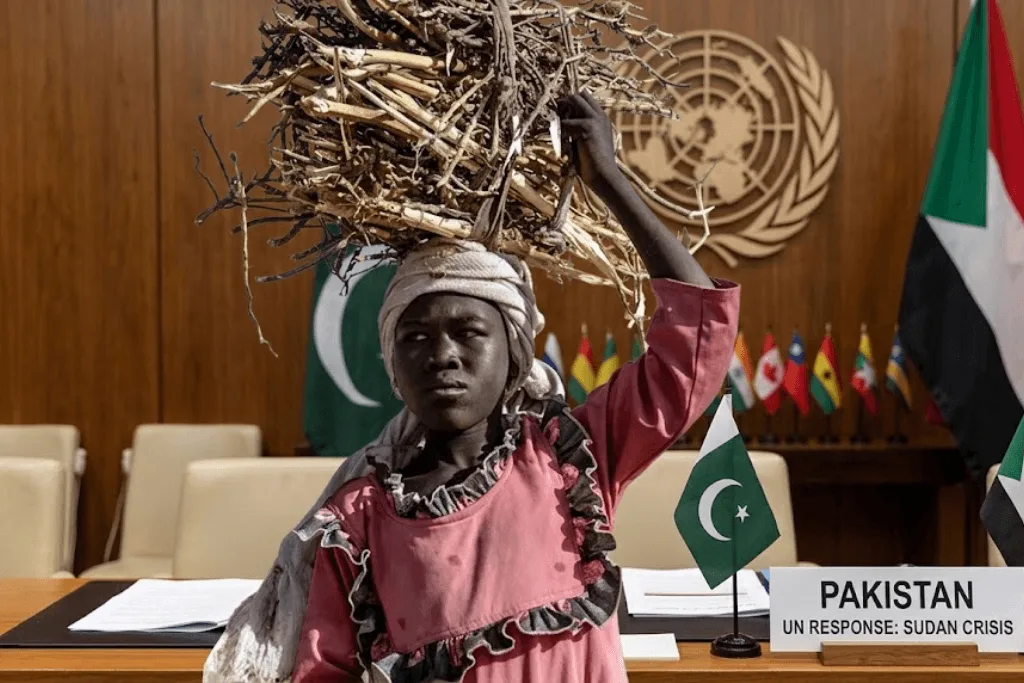
Pakistan’s Permanent Representative to the United Nations, Asim Iftikhar Ahmad, said the Pakistan Sudan crisis requires a peaceful political settlement, stronger international coordination, civilian protection and support for Sudan’s stability.
Pakistan Raises Alarm Over Worsening Humanitarian Crisis In Sudan
Pakistan’s action in the UN Security Council followed a continuous spate of violence and dismal humanitarian conditions in Sudan. The fighting has placed huge strains on civilian populations and sparked wider fears about regional instability.
The Pakistani position highlighted the need for sustained international focus rather than permitting the Sudan crisis to be eclipsed by other world conflicts. The emphasis highlighted Pakistan’s support for humanitarian principles and peaceful resolution of international disputes.
Pakistan Opposes Military Solution To Sudan Crisis
One of the main points of Pakistan’s position was the assertion that the Sudan conflict cannot be resolved by military means. Islamabad said that a sustainable settlement can only be reached through a political dialogue involving the people and stakeholders of Sudan.
This position is consistent with Pakistan’s overall emphasis on dialogue to resolve complex conflicts. Further fighting risks increasing humanitarian suffering and making reconciliation and institutional recovery more difficult.
Pakistan Condemns Attacks In Relation To Aggression By RSF
Pakistan also strongly condemned the Rapid Support Forces and its reported attacks on civilians. The statement expressed concern that further aggression could lead to the further destabilisation of a fragile humanitarian environment.
The Pakistani position stressed the effect of violence on normal Sudanese communities. Attacks on civilian areas, critical infrastructure and humanitarian operations can cause more displacement and limit access to food, healthcare and other basic needs.
Pakistan Reaffirms Sudan’s Sovereignty, Territorial Integrity
Another important aspect of Pakistan’s position was respect for the sovereignty, unity and territorial integrity of Sudan. Islamabad emphasised that international efforts should be geared to support the Sudanese national institutions and avoid any action that could further fragment the country.
Respect for sovereignty forms the bedrock of Pakistan’s foreign policy. The approach emphasises empowering national institutions and Sudanese stakeholders to determine the country’s political future.
Pakistan Calls For More Cooperation Among Nations
Pakistan urged the international community to ensure sustained coordination on Sudan, instead of piecemeal responses, the foreign office said. More coordination among international players could improve humanitarian assistance, while backing diplomatic efforts for a political settlement.
The call is especially important as the crisis in Sudan is characterised by overlapping humanitarian, security and political challenges. Effective international engagement requires collaboration between the United Nations, regional organisations, humanitarian agencies and national governments.
Humanitarian Protection At The Heart Of Pakistan’s Response
The humanitarian dimension continues to be one of the most serious aspects of the Sudan crisis. Ongoing fighting has resulted in conditions where civilians are at risk of displacement, insecurity and difficulty accessing essential services.
The intervention by Pakistan shows that the international community should pay attention to the people suffering from the conflict. Humanitarian assistance requires safe access, adequate resources and cooperation from parties to the fighting.
Pakistan Backs Sudan-Led Political Dialogue
The emphasis on national ownership is evident in Pakistan’s support for a political process led by the Sudanese. Sudanese stakeholders need to be at the centre of decisions about the political structures and governance of the future for a lasting settlement to have a chance of success.
External diplomatic support can help such a process, but Pakistan’s position indicates that international engagement must complement rather than replace Sudanese decision-making.
Sudan’s Instability Has Broader Regional Implications
The Sudan crisis has consequences beyond the borders of the country. Ongoing instability can trigger refugee flows, put pressure on neighbouring states and raise concerns about cross-border security.
Pakistan’s warning at the Security Council therefore put Sudan in a wider regional and international context. A stable Sudan is essential for its people and for its neighbours and for humanitarian agencies working throughout the region.
Another potential result of prolonged instability is economic disruption. Even when active fighting diminishes, recovery can be much harder because of damage to infrastructure, disruption of trade and falling economic activity.
Pakistan’s Role At The UN Reflects Broader Diplomatic Outreach
Pakistan’s involvement is indicative of its continued involvement in multilateral discussions on international peace and security. The UN Security Council is an important forum for states to raise humanitarian concerns and call for diplomacy.
Asim Iftikhar Ahmad’s statement positioned Pakistan’s stance squarely in the framework of dialogue, protection of civilians and respect for sovereignty. These themes constitute a significant part of Islamabad’s engagement with conflicts outside South Asia.
Pakistan’s engagement also allows the country to ensure that the voice of the broader developing world is heard at the table, especially on humanitarian crises affecting civilian populations. Diplomacy can keep the world’s attention on wars that threaten to drag on with great suffering.
Pakistan Urges World To Keep Focus On Sudan
Pakistan’s latest move suggests that it is worried that the crisis in Sudan requires sustained international attention, not simply a short-term diplomatic one. This coordination is essential in the long term given the continued violence and humanitarian suffering.
The main message of Islamabad has been that the future of Sudan should be decided through peaceful political dialogue and not military escalation. Almost as important is the protection of sovereignty, territorial integrity and national institutions.
Pakistan also highlighted the need to protect civilians and respect humanitarian law. Improved international coordination could help to increase humanitarian assistance and support efforts to bring the parties toward meaningful dialogue.