Farhan Qureshi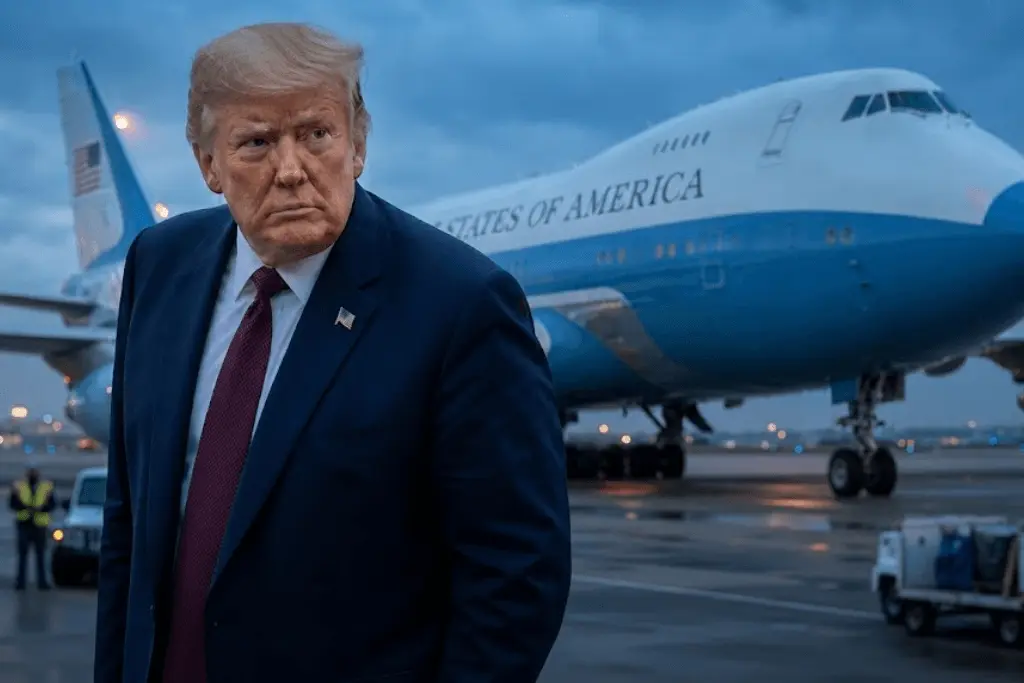
The reported switch of aircraft for US President Donald Trump after the NATO summit in Ankara has sparked a wider debate over Trump’s Air Force One switch, presidential security, operational secrecy and government transparency. The unorthodox move allegedly involved Trump flying publicly on the traditional Air Force One before switching to a smaller military plane in secret.
Why Trump’s Air Force One Swap Was Significant
The reported departure was a sharp departure from the usual choreography surrounding a US presidential flight. Trump was seen boarding the vintage Air Force One plane in Ankara, indicating that the presidential trip to the United Kingdom would be made aboard that aircraft.
Trump then exited via a secret route involving a catering vehicle before changing to a military C-32A plane, reports said. The smaller aircraft then took the president to the United Kingdom while the original aircraft was kept as a decoy.
How The Reported Decoy Operation Was Carried Out
In the report, the deception relied on preserving the illusion that Trump was still on the larger presidential plane. Members of the press and public observers therefore had ample reason to believe that the plane at the airport was the president’s actual plane of departure.
Reports indicate Trump exited the aircraft via a catering truck before boarding the C-32A. This was an additional layer of camouflage, divorcing the actual movements of the president from the publicly visible sequence of departure.
What Iran Threat Allegedly Did To Presidential Travel
The warning was reported amid a notably tense regional atmosphere. Relations between Washington and Tehran had deteriorated sharply, and increased military activity and threats involving Iran had heightened fears of attacks against American officials and assets.
An aircraft carrying a US president is a highly sensitive target. Flight paths, departure times, aircraft identities and communication patterns could possibly provide information to hostile actors able to monitor aviation activity.
How The New Presidential Jet Became A Talking Point
The reported incident has also brought renewed attention to the newer Boeing 747-8 aircraft associated with the presidential fleet as well. Questions have been raised about its defensive capabilities and whether its configuration differs from the protection systems available on older presidential aircraft.
The plane had drawn interest because of its unusual history and planned presidential use. Security concerns over the reported Turkey departure have therefore created more scrutiny of how soon the newer aircraft will be able to meet the full requirements of presidential travel.
Why Journalists, Staff Became Part Of Controversy
The biggest transparency question is what about the people who stayed on the apparent decoy aircraft. It seems journalists and White House aides were not aware that Trump had switched to another plane.
From a security perspective, keeping information to yourself can prevent sensitive operational details from reaching a broader audience. But from the perspective of press access, the absence of information is troubling; were journalists put in an awkward position without sufficient warning?
How The White House And Trump Explained The Decision
Trump reportedly justified the change of aircraft as a reaction to the orders of security and military personnel. The explanation put the decision within the framework of the existing precedent of presidential protection overriding normal travel arrangements.
The White House also defended wider security measures around the departure. Seen in that light, the weird movement was not just a political ploy but a defensive response to a credible threat.
What The Episode Teaches Us On Presidential Security
What happened shows that today’s protection of presidents is more than the old arrangements of bodyguards. Threats include missiles, aircraft, drones, cyber intelligence, surveillance networks and proxy groups that can watch movements across borders.
Thus, a presidential itinerary can be a security hole if hostile actors can correctly identify the aircraft carrying the president. Decoy strategies are designed to make that calculation more difficult by creating uncertainty about the president’s real location.
Will Transparency Follow Security Operations?
The controversy does not require a choice between total secrecy and total disclosure. A well-designed post-operation notification system could provide journalists and staff with information after sensitive details no longer present an immediate security risk.
Such a framework could help explain when a security deception had occurred, why personnel had been kept in the dark, and whether anyone on a decoy aircraft was at materially increased risk. Independent briefings can also help determine whether established protective procedures were followed.
What The Air Force One Switch Means For Future Travel
The change reported could shape planning for future presidential trips during times of elevated tension. Intelligence agencies could identify credible threats, and the use of decoy movements, alternative aircraft and last-minute itinerary changes could become more prevalent.
But the episode could also lead to another review of the presidential fleet. Presidential aircraft must be able to operate in a wide variety of threat conditions without emergency changes that create additional uncertainty.
Visit The Pakistan for more updates.