Farhan Qureshi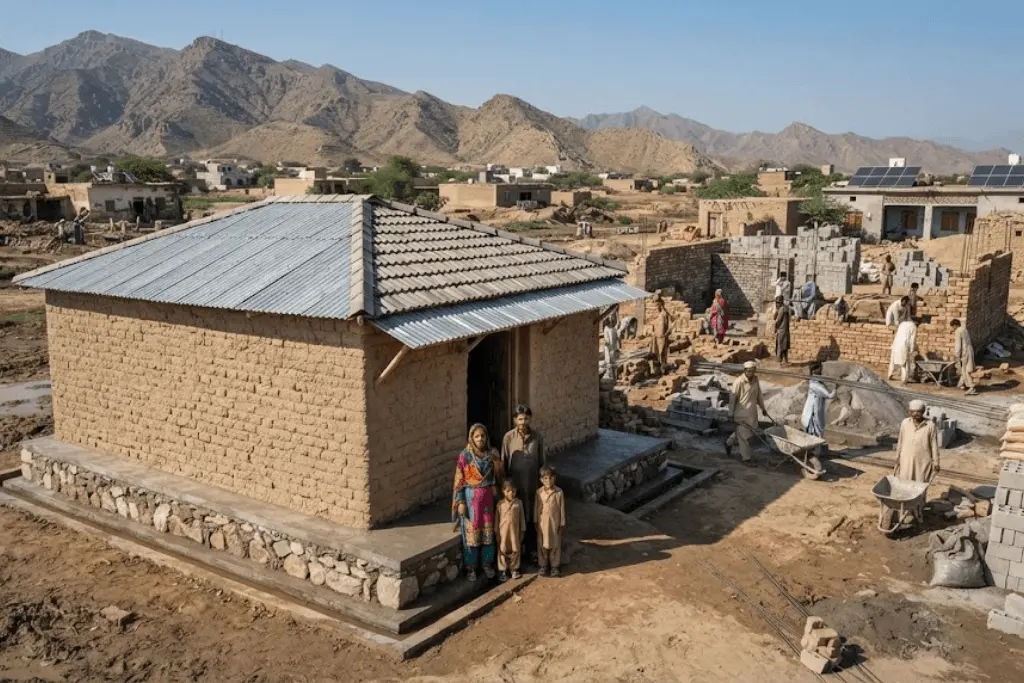
The Balochistan housing fund program was intended to deliver resilient housing through a community-led, owner-driven approach. The restructuring, therefore, is a key test for Pakistan on how to ensure international reconstruction financing reaches vulnerable communities while maintaining strong standards of verification, transparency and financial management.
The Dispute Is Still Over World Bank Funding
The Integrated Flood Resilience and Adaptation Project was launched as a major project to assist Balochistan after the 2022 floods wreaked havoc on homes, infrastructure and livelihoods. The Planning Commission said the larger program had a financing envelope of some $400 million, of which $245 million was already signed up.
Of that, approximately $155 million was allocated to the housing component under the new structure. The World Bank also refused an additional $180 million in proposed extra financing, which could have increased reconstruction support to more flood-affected families.
Over 134,000 Families Still Dealing With Housing Crisis
A key issue for the project is the scale of housing demand. Another dimension to the restructuring is concerns about project reporting. Project steering committee meeting minutes indicated a discrepancy between the number of houses claimed to have been presented as complete and the official records.
There were reports of putting before the prime minister a figure of around 15,000 completed houses, while the official reporting showed 8,694 completed houses at the relevant stage. The discrepancy raised concerns about possible misrepresentation and led to calls for more investigation.
The Fund Allocation Debate Is Not Only About Housing
The restructuring has prompted debate as to whether the remaining funds should continue to be targeted on housing or be used for other areas included in the wider rehabilitation program. The Planning Commission has stated that the project includes various development sectors and that the funding should be consistent with the approved scope.
Satellite Verification Can Reinforce The Housing Program
Satellite imagery should be employed to monitor the progress of construction, the Planning Commission has proposed. The Planning Commission denied that the housing program had been abandoned. The overall implementation figures are still under review, but the approved allocation is still safe, officials have said.
Questions Over Finished Houses Still Under Review
Government institutions have given different figures, increasing the uncertainty about the progress of the project. The Planning Commission said that about 75,000 fully damaged houses were being built and nearly 26,000 were finished, and also talked about the original approved coverage of 68,922 homes.
World Bank Concerns Underscore Need For Better Project Governance
The World Bank’s concerns over project leadership and financing arrangements have raised wider questions about governance in the rehabilitation program. Discussions have been required on the differences between Pakistani institutions and the development partner on the future direction of the program.
Balochistan Needs Housing And Broader Climate Resilience
IFRAP’s integrated nature allows for an opportunity to link housing reconstruction to infrastructure, irrigation, public health, livelihoods and skills development. A broader recovery model can help ensure reconstruction results in longer-term economic and social benefits.
Implementation challenges are reported to have been due in part to difficulties in opening financial accounts and land-title issues. Removing those bureaucratic barriers could speed up actual reconstruction and cut down on the possibility of duplicate claims or incorrect beneficiary information.
Sindh Housing Program: A Different Model Of Reconstruction
The Sindh program is often cited as a relatively large-scale model for post-flood housing. However, the Planning Commission has cautioned against direct comparisons, as the two programs operate under different institutional and funding arrangements.
IFRAP is a single federal budget project. It is under one World Bank loan to the federal government. The Sindh program is a Section 42 nonprofit and uses financing from multiple lenders, which creates different disbursement and oversight requirements.
What The Reorganisation Means For Pakistan’s Flood Recovery
The Balochistan housing dispute is a hard but important governance challenge facing Pakistan. The magnitude of the flood damage, the number of families registered and the complexity of international financing make strong institutional coordination essential.
The decision to investigate reporting discrepancies and enhance verification can help protect development funds while ensuring that legitimate beneficiaries remain at the centre of the recovery process. Independent scrutiny also builds confidence with international partners and affected communities.
A Stronger Housing Framework Can Protect Future Development
The Balochistan case is an example of why large reconstruction efforts need something more than financial pledges. Funding must be supported by accurate identification of the beneficiaries, independent verification, efficient administration and clear accountability at each stage of implementation.
Pakistan’s continuing engagement with the World Bank offers an opportunity to address these issues through a well-established development partnership. Review of evidence to resolve disagreements can help to protect both the programme’s credibility and the interests of flood-affected communities.